Some deliveries may take a little longer than usual due to regional shipping conditions.

DOWNLOAD THE APP


Customer Services
Copyright © 2025 Desertcart Holdings Limited
DOWNLOAD THE APP
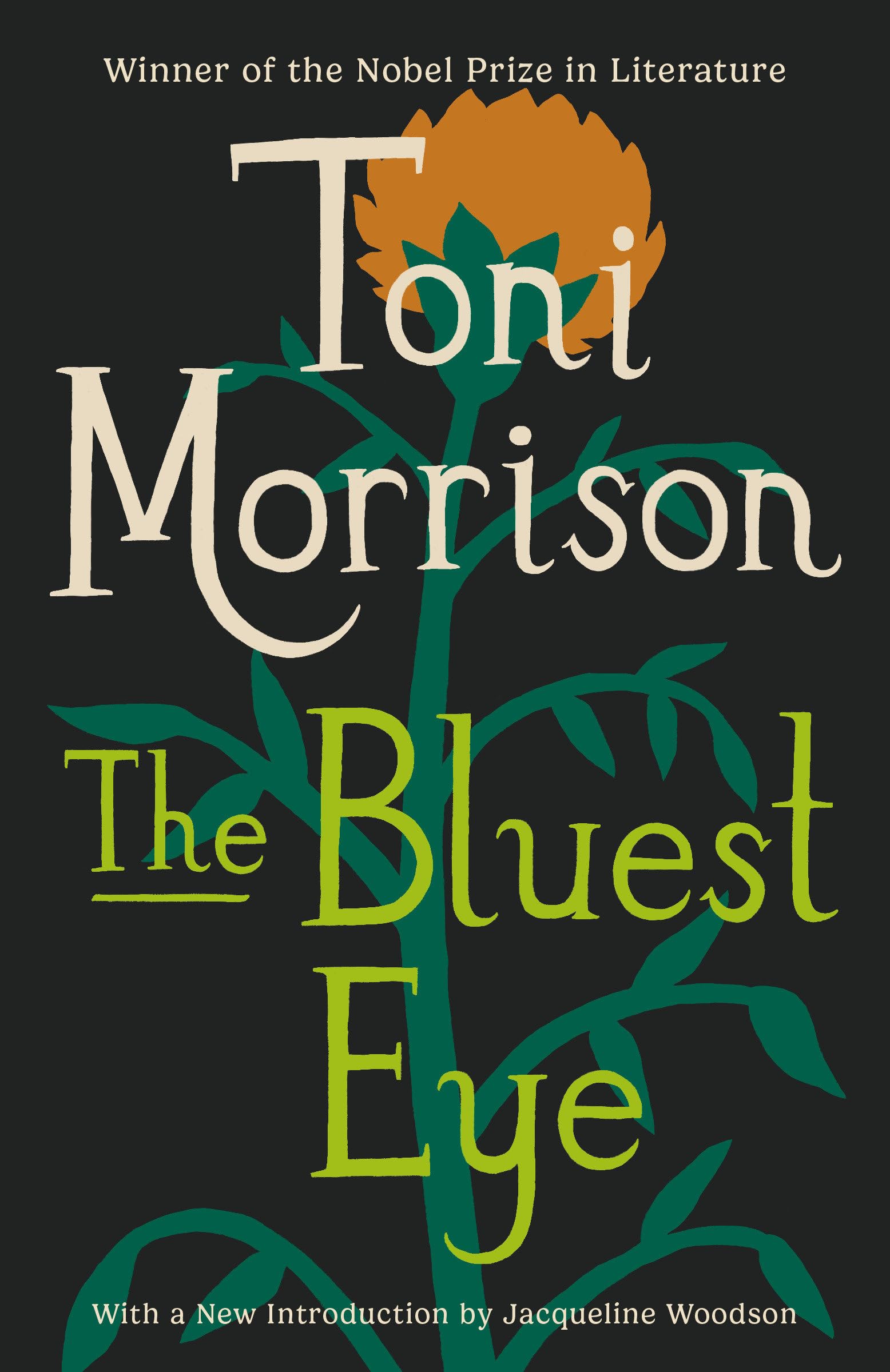
desertcart.co.jp: The Bluest Eye (Vintage International) : Morrison, Toni, Woodson, Jacqueline: Foreign Language Books Review: Super great condition! - Very neatly wrapped. The book itself was also in a really good condition! Thank you so much! Review: good - good

| Amazon Bestseller | #30,361 in Foreign Language Books ( See Top 100 in Foreign Language Books ) #48 in Love Poems #60 in Black & African American Literature #91 in Censorship & Politics |
| Customer Reviews | 4.5 4.5 out of 5 stars (16,825) |
| Dimensions | 8 x 5.25 x 0.8 inches |
| Edition | Reprint |
| ISBN-10 | 0307278441 |
| ISBN-13 | 978-0307278449 |
| Item Weight | 1.05 Kilograms |
| Language | English |
| Print length | 225 pages |
| Publication date | May 8, 2007 |
| Publisher | Knopf Doubleday Publishing Group |
M**M
Super great condition!
Very neatly wrapped. The book itself was also in a really good condition! Thank you so much!
ま**こ
good
good
R**R
Beautiful story
This story is absolutely beautiful.
追**憶
とてもとても哀しい物語です。 この女の子達と同世代の子供達にこそ読んでもらいたい1冊です。
M**N
ただ悲しい物語として読むのではもったいない。今回はkindleで読んだが、ペーパーバックで一語一語をかみしめながら読み返したい作品。それにしてもPecolaの存在のなんと悲しいことか。友だちのフリーダ、クローディアの存在が読者としての私にとって救いだった。
A**R
1940年代のオハイオを舞台に描かれる、貧しい黒人家庭の物語です。短く簡単な英語と、黒人独特の口語で綴られる本書はまるで詩集のようです。今独特のファッションに身を包んで街を歩く黒人はとても自由で堂々として見えますが、Black is Beautiful という標語が使われるようになったのも70年代を過ぎてからのことです。 こんなに悲惨な毎日じゃ生きていてもあんまり良いことはないんじゃないか、と一瞬考えてしまったのは私のとんでもない思いあがりで、こういった人々が黒人文化を必死に支えてきたおかげで現在の繁栄があるのでしょう。完全な平等への道のりはまだまだ遠いようですが。
K**A
人為的に白人によって作られた美意識的価値観にどれだけ黒人社会が影響されていたか、その影に翻弄されたかのように、おのれ自信を正当化するために犠牲者を求める人々。人種ののるつぼと呼ばれるアメリカとそういう感覚は違っても、排他主義な傾向は日本でもみられるのではないでしょうか。 さすがノーベル文学賞をとった作家だけあって、ナレーションも結末をにおわせる様なスタイルをとったり、時代設定を支える周りの描写のし方も凝りに凝ってます。
ミ**ン
大学の卒論用に購入しました。
J**O
dramático e pungente
J**E
I read this book because it was banned. I was looking to see why it was given that sentence. What I found was a story that reflected something that was neither black or white but struggle in an awful world. As white man I feel shame as what men do to women and we hold the colour of our skin over others as if we somehow should be elevated over them. We are all humans and should act that way! The Bluest Eye should be read by everyone. You will learn the power of words.
F**A
Non semplice da apprezzare. Studiarlo per un esame di letteratura l’ha reso più fruibile e alla fine mi è piaciuto molto. Consigliato.
S**R
Synopsis: Nine-year-old Claudia lives with her parents and her ten-year-old sister. In her nine-year-old narrative, she remembers Pecola who was placed with them by child care services. Pecola, who becomes a woman from a ten-year-old girl while she lives with them. Pecola's life with her family is shown next, where her brand of life makes her wish that she had the bluest eye thinking that it may have made her more loveable and more acceptable. But life is not that simple, as there are more hardships in the life of that little girl with unimaginable consequences. Review: This is my second Morrison and it doesn't get any easier. But in this case, the first book written by her, the difficult thing was to read it without it devastating me. There's this sense of impending doom even with the little bit of innocence that there is. This one starts with a description of a family, in the midst of war and depression in the 1940s, and its way of narration reminded me of this (which seems quite silly now) children's song in Hindi - Aao Milo Seelo Saalo. We used to clap animatedly, after pairing up with another person, while reciting the rhyme in a complete sing-song voice. Of course, this is a story narrated by a nine-year-old child which at once drips with innocence while carrying a vat of pain. The beginning itself will numb you because it's evident that this story is going to be full of agony. But it is equally interesting to note how such a complex, 'grown-up' story was narrated in part by such a young child. Especially when we often refuse to believe them to be worldly-wise and aware, to the extent of having banned the book then, in schools and libraries. "Jealousy we understood and thought natural – a desire to have what somebody else had; but envy was a strange, new feeling for us." What is beauty? Most of us, in one way or other, can be accused of defining beauty through unnatural standards. I share the blame for being harsh on not only others but myself. And however much we speak about inner beauty is the only thing that matters, some of us also have tried the rub-de-dub once in a while, for that glowing, fairer skin. An unnecessary legacy that resurfaces in almost all the dark-skinned Indian households every once in a while. Was that magical realism when Pecola wished for herself to disappear? How sad I felt for her, even before her major problems began. To be living with constantly feuding parents, to be wishing for death. Either for self or the others. And to feel such an inadequacy that she ended up wanting blue eyes, it was all so heart-breaking. "All were engrossed in early-night reminiscences about dreams, figures, premonitions. Their stuffed comfort was narcotic and had produced recollections and fabrications of hallucinations." Pecola's experience with the White Mr Yacobowski reminded me of Untouchable by Mulk Raj Anand. Quite the same premise, where shame at being less than deserving morphs into anger for the inequality that is there in the world. I was astounded at the way Morrison not only wrote about Pecola's inferiority complex of being an African-American in a White community but also inserted internalised racism in the form of a mixed-race girl and how a scale is brought out to measure who is lighter in the skin and prettier than whom. The overbearing – will do what I want to, others (especially women) be damned – men of this story need to be mentioned too. Pecola's father's childhood doesn't let me hate him, while his deeds do not make me like him! This was a female-dominated story, with a major chunk of the characters being female, especially the three prostitutes who are a major part of the story even after them not being one of the central characters. But will I call it a feminist story? I honestly don't know, since this is such a sad story where women don't seem to understand the plight of a young girl, where apart from men, women are also bringing down others of their kind, be it conditioning or judgement. "He responded to his father's controlled violence by developing hard habits and a soft imagination." Divided into four parts, each a season, the squalor in which them Black people live is described in stark detail. While it is Pecola's story, the weight of the narration falls on young Claudia's shoulders which she does in the first-person. But, interspersed is Cholly (Charlie) and Polly (Pauline) Breedlove's story in third-person narration. (I wonder as to the significance behind their names?) It is followed by a dialogue at the end, the same dialogue that wrecked me. "We looked for eyes creased with concern, but saw only veil." Maybe Sula wasn't it for me since The Bluest Eye hit me right where it hurt. I remember Baishakhi's @thebooklizz Instagram Post where she mentions feeling unsettled after reading a Morrison. That is what I felt too, after reading this one. It made me uncomfortable with its truth. P.S. I read this book as a part of Toni Morrison Book Club by Aayushi @_penandpapers, where we pick up one book by the author every month. This was the February pick. This is also my entry for Prompt 18 of the Reading Women Challenge 2018: A Book by a female Nobel Prize winner. Originally posted on: My Blog @ Shaina's Musings
Z**R
I love the style of writing.
Trustpilot
1 month ago
1 month ago