Desert Online General Trading LLC
Dubai, United Arab Emirates
Desert Online General Trading LLC
Dubai, United Arab Emirates

Full description not available
J**E
The literary equivalent of a neutron star
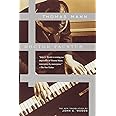
I have to give this five stars because its neutronium solid literary credentials are so space-warpingly gravid as to make what I actually think of it hardly relevant, seeing as it will certainly go on to be pondered by people much cleverer than me, long after my atoms have dispersed. Still, it is a tough book, and I think few would deny that. The prose is not easy, eloquent without being elegant, and I am told this is not just a matter of the translation. This impression is made more so by the frequent harkening back to archaic provincial German dialects, which this translator has attempted to render with results that verge at times on the Joycean in effect, if not in intent. I cannot say if other translators have plumped for more obviously amenable strategies. As to whether I found the struggle worthwhile is something I am still pondering, some weeks after completing it. It is clearly a great 20th Century novel, with all that that might connote, it being a novel about many things, and about everything and nothing.There is a sense in which, like a complex piece of music, I could only see the meta-level form of the novel after I had finished it. While reading it one is subjected to a stream of episodes, ostensibly unified as the biography of the composer Adrian Leverkhun. But Leverkuhn is portrayed as such an enigmatic cipher that it is hard to hold these episodes together in the mind as a narrative about him. Only when I had finished did I find that switching my perspective, such that the book became the autobiography of Serenus Zeitblom, the first person narrator and supposed biographer, was I able to discern some kind of recognisably human story by which to pull it all together.The novel is about many things but its key theme is that of music, the art of composition and of the exquisite aesthetic and moral difficulties and dilemmas confronting the composer, who cannot help but be alone for being only dimly understood by his fellows. Leverkuhn is the manifestation of the Nietzschean superman, which is one of Mann's recurring obsessions by all accounts, and an idea which I find conceptually suspect and perhaps therefore a source of some of my reservations about the novel. All the people I know who value this novel value it primarily for its musical insights. Having said that, all the people I know who value it came to Thomas Mann first through even more monumental works such as The Magic Mountain and Joseph and his Brothers. I will stick my neck out then and say that you would probably do best coming to this book already acquainted with Mann through one or more of his other works. I came to grips with it as someone who'd bounced more than once on the rather dry prose of The Magic Mountain, and who took up with it on the recommendation of music lovers.The novel is about more than just music, but music often serves as a window onto the wider issues of the world. Central to the novel, quite literally, is Leverkuhn's Faustian compact with the devil by which his greatness as a composer is guaranteed at a price too subtle for my comprehension. The devil, specifically Mephistopheles, is amusingly portrayed as a most urbane and cultured gentleman, whose only wish is to assist people in accomplishing their chosen goals. However, it has to be said, at the end of this critical section I was unclear as to the actual nature of the agreement. This agreement is then presented as a metaphor, a strained one to my mind, for the pact that the German people have made in taking up with Nazism, in return for the realisation of potent but ill-defined dreams of national greatness. And that, I guess, is the novel's other main theme - Germany, Germanness and what it means to be German. The novel presents a vivid window into the mindset of the educated German bourgeoisie throughout its tumultuous 20th Century. We see this both in the run up to and through WWI, which is seen almost as something of an embarrassment, a collective slip of decorum. But we then see the willing renunciation of freedom and individuality, and the almost wilful descent into apocalypse that culminates in the catastrophe of WWII. Zeitblom is completing his biography as the bombs are quite literally falling around him, and as he contemplates the obliteration of all culture, particularly musical, which has been the other expression of German greatness, and its magnificent gift to the world.The novel includes a large supporting cast of vividly portrayed characters whom I find myself remembering more fondly with retrospect. Quite a few of these characters are not a little eccentric, and from these some quite memorable comic moments are extracted.In truth I am not entirely comfortable with giving this five stars. Several serious lovers of classical music of my acquaintance consider this, if not their favourite book, then up there with their finest few. But otherwise I can't think of anyone else I could recommend it to with any conviction that they might enjoy it, and I do have some very literate friends. I'm certainly glad I read it, but then I am a masochist and will try extra hard with stuff that I've been told is good for me. Having read it I find that there continues to be a lot to go back and think about. What I would really like is to be able to select a `random' star rating between perhaps 5 and 3, such, that the number of stars lit up would vary according to some sort of radioactive decay process. That would give a far more accurate indication of my present feelings around this book that was such difficult going, but that insists so massively on its own validity and significance.So, I have absolutely no idea if you, potential reader, will enjoy the book. I can only hope to have given some clues as to whether it might provide the kind of challenge you wish to undertake.
T**E
The destruction of genius portrayed - in an outstanding translation
I don't find Thomas Mann's books, such as Doctor Faustus at all easy to read. They are both long and highly complex, written not as a novel as such but to transmit a message, in this case, the similarities between the Faustus legend and the rise of Nazi Germany. However, I have been fortunate to read both this book and another major work of Mann, The Magic Mountain, in new translations by John E Woods which bring a clear and smooth passage through these undoubtedly great works of literature.Dr Faustus is on the face of it, a fictional biography of Adrian Leverkuhn, a brilliant composer who came to fame in the 1920s and 30s. The biography is recorded by his life-long friend Dr Serenus Leitblom, who happens to have possession of Leverkuhn's journals including a secret manuscript, which comes to light about half way through the book, which gives an account of the terrible evening when Leverkuhn entered into a pact with the devil, to exchange his soul for 24 years of brilliant musical composition.Dr Leitblom has a hard time of it with Adrian Leverkuhn, the friendship never achieving an easy intimacy, and several times there are references to Leverkuhn's refusal to use the personal pronoun with even his closest associates. He is unapproachable and isolated, and takes private rooms in a farmhouse, some distance from Munich. His almost hermit-like existence is relieved by train journeys into the city where he takes part in musical and philosophical soirees, described in some detail by Mann and showing his command of the most complex musical ideas.Leverkuhn's music is rarely well-received, being appreciated by only a select band of critics, the message being that it is too rarified for the common concert-goer, but will eventually be vindicated by generations to come. The implication is that only listeners similarly in league with the devil would be able to appreciate its complex abstractions.Dr Leitblom writes his biography during the dark days of 1944 when Germany's collapse was seen as inevitable, and the tragic destiny of Leverkuhn is contrasted with occasional short accounts of the unfolding disasters caused by allied bombing of the great cities of Germany and the breaches of its borders by invading armies. This gives the whole book an atmosphere of burning cities and the inevitable doom which awaits Leverkuhn all who sup at the devil's table, the final chapter being a revelatory denouement which shows the dark forces which have worked through Leverkuhn's music throughout his life.By the time Mann wrote this book he was living in America and broadcasting radio messages into Germany criticizing the Nazi regime. Dr Faustus is in some ways Mann's ultimate critique of Nazism, something he had been fighting since its first appearance in the 1920s. Dr Faustus is not an easy read, far from it, but it is an important element of world literature and great piece of art in its own right which can only enrich the reader who perseveres with it.
J**O
An excellent book
I came to this book after reading the fascinating The Rest is Noise: Listening to the Twentieth Century, which describes the intellectual trajectory of music from classical(romantic) to modern.Doctor Faustus starts rather oddly, with a lot of self-referential comment and doubt. I found this off-putting, but was very glad that I persevered. As other reviews have described the content, I will just say that I enjoyed reading this book very much. It is a serious literary examination of art in the form of european music, and a very rewarding read.
A**N
Deep but very readable.
I really enjoyed reading this book slowly from cover to cover. It can be enjoyed on many levels which makes it accessible for readers of many different backgrounds. I enjoyed it first as a very convincing fictional biography of an early-twentieth century German composer. I later discovered the book's potential to be read as an allegory for Germany's shift to Nazism.I think the beauty of the writing lies in the way in which Thomas Mann chooses to convey deep psychological truth not through long impenetrable sentences filled with complex vocabulary but with telling descriptions of the nuances in his characters' appearance and physical mannerisms. I find this more 'everyday' language far more enjoyable to read and, for the most part, more effective in conveying meaning.I would recommend this book to anyone who wants to learn more about German history, German music or anyone who simply wants to be told a good story in sophisticated but not stifling language.
Trustpilot
5 days ago
3 weeks ago