
DOWNLOAD THE APP



Desert Online General Trading LLC
Warehouse # 7, 4th Street, Umm Ramool, Dubai, 30183, Dubai
DOWNLOAD THE APP
Desert Online General Trading LLC
Warehouse # 7, 4th Street, Umm Ramool, Dubai, 30183, Dubai
Full description not available


B**R
Superb History Book.
This book is excellent in its incredibly informative content and the way it is presented by this superb historian.
J**O
Excellent coverage of the topics and very well written
This was a riveting read, I really enjoyed his style of writing and his knowledge of the topics covered.
E**T
Civilisation half told
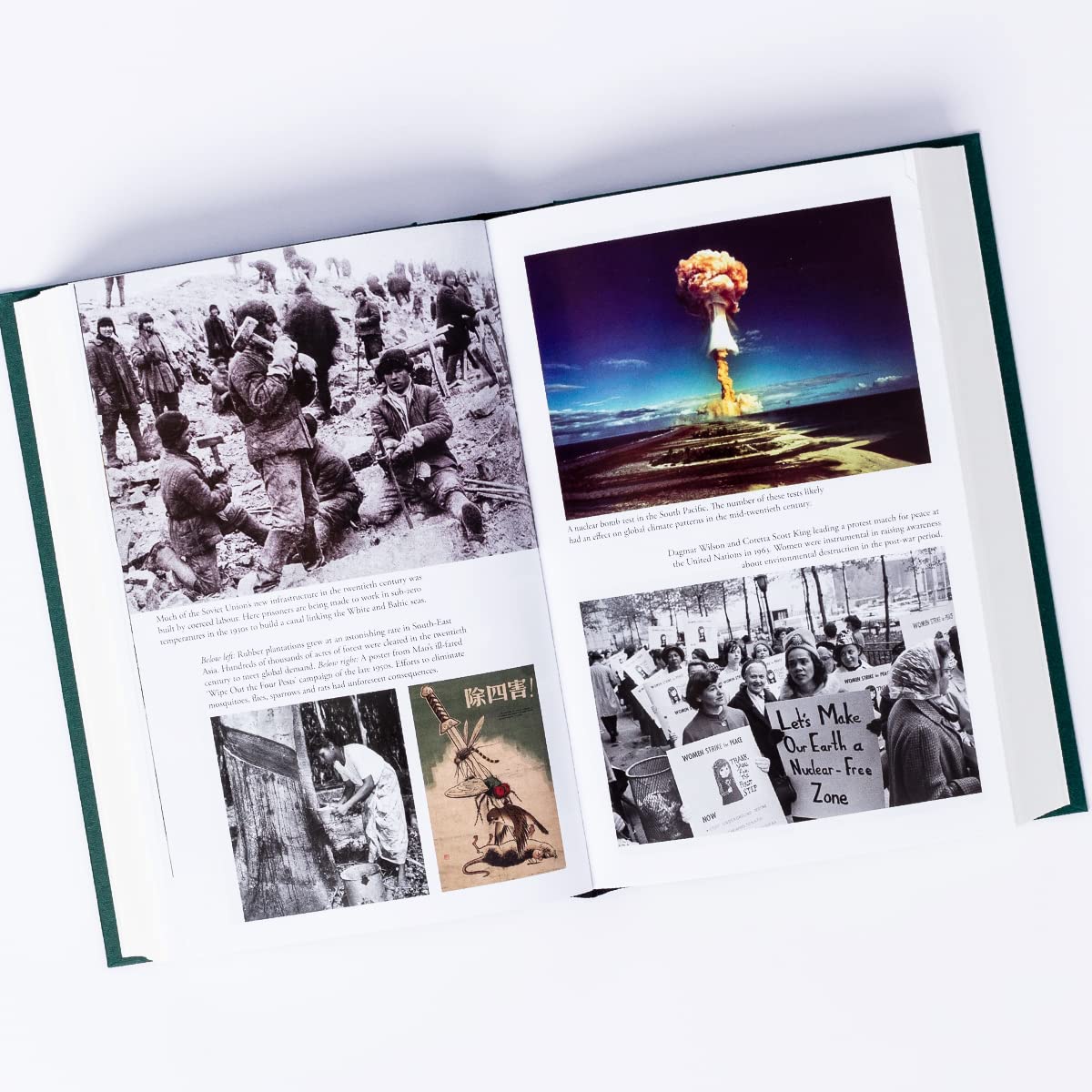
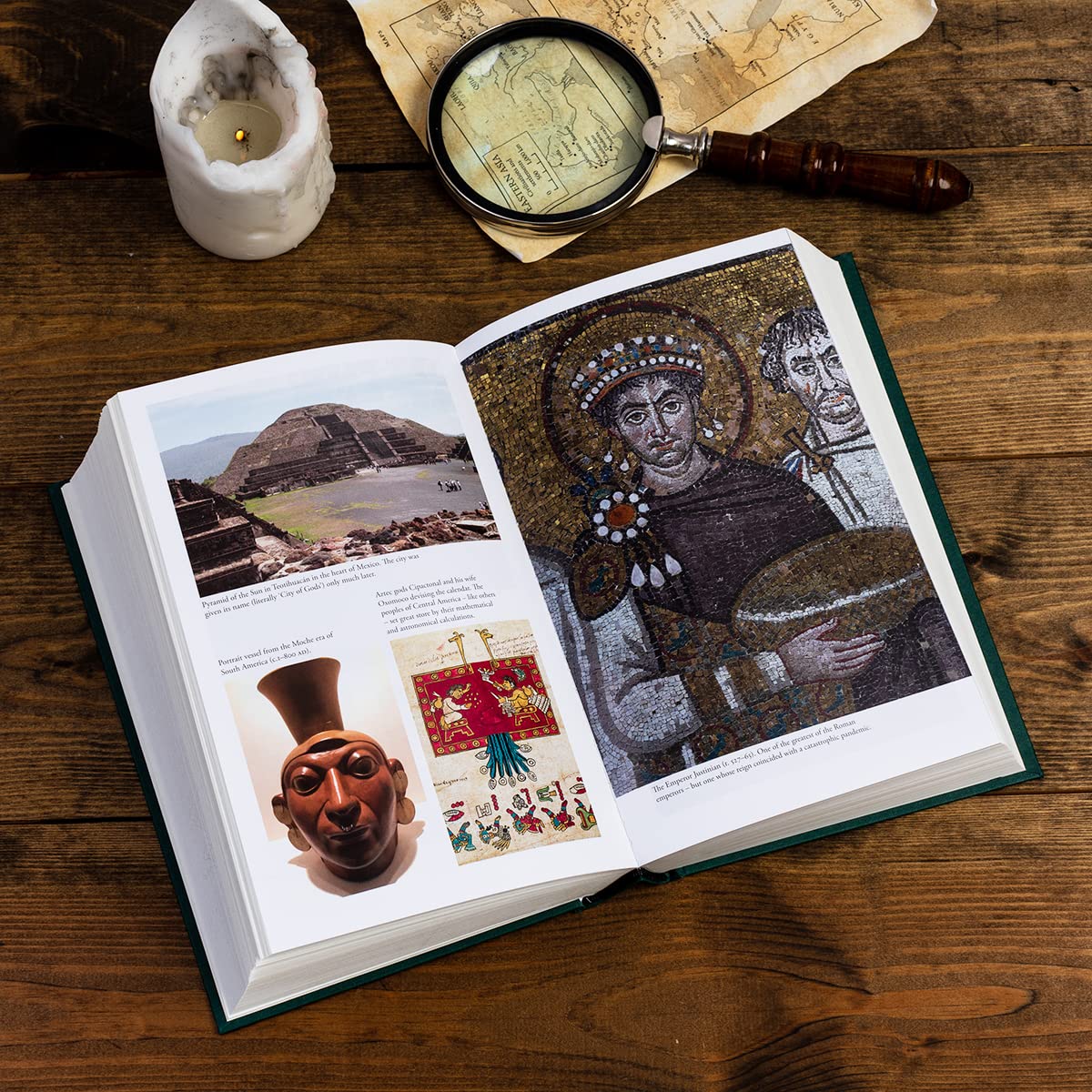
I’m only 250 pages (start Chapter 9 of 860 pages plus stuff, kindle) into this interesting read about the different ways humans have collected over thousands of years. I got it as a desire I had to get away from the intervention story. Lost civilisations in the ice-age teaching humans after the great flood.But the author dismisses this story out-of-hand. Serpent Mound is just a series of mounds no mention of it clearly being serpent shaped and the Pyramids were made over a 30 year period by 10000 slaves. No waste, no trace of that kind of human activity, no mention of the high-mathematics and design necessary to even contemplate such a project. And why does that level of engineering skill not exist elsewhere around it?He is honest enough to keep saying the difficulties in drawing conclusions as to why a city state may have collapsed. But this Holocene period we now live in was Made for the thinker. After the comet strike, which created a dark cold world for the Younger Dryas period, the planet was enriched by volcanic action and up to now some 12000 years of relative stability.He also dismisses any ‘missing link’ between Neanderthal and homo sapiens. He states that brains grew due to eating more types of food and learning to cook with heat. I don’t know if there is archaeological evidence for skull shapes in-between Neanderthal and homo sapien.The danger is in making up stories. Connecting dots which may or may not be connected. Before my journey into the possibility of intervention I have usually thought of the Universe and Earth as part of a completely random set of events. The ‘Life is a hick-up’ perspective.I actually find my hick-up analysis the most useful as it makes me responsible for Everything. I think, you think. We think. Therefore the planet has grown is own gardener. Anything that moves away from our own responsibilities is flawed. Stories are for children.HARDBACK: Immersed in the text so much I ordered the on-offer hardback version if only for the colour photos but mostly to ensure I always have a copy of this enlightening book. But its on-offer for a reason. The book arrives unsealed and loose in its cardboard envelope top to bottom although apart from slight indents top of spine in excellent new condition. But the main reason is Footnotes. Footnotes are numbered the same as Kindle but do not exist in book.Above the Image Credits at back of book the author notes: ‘The endnotes for this book are extremely extensive and run to more than 200 pages. To spare the reader the extra weight of carrying these around I decided to post all the notes’...then website given.I am fairly certain that the much longer page numbers for Kindle is entirely due to number of words on a page. 860 Kindle v 658 Hardback for text body.Just finished reading this important book. Important as it is I stand by my four star assessment. He is scientific and his evidence is about science. For me ‘education’ is a problem. There is no room in the text for being. Yes, indigenous peoples are analysed but not sought. The idea of ‘perfection’ studied but not sought. Being not having is too simplistic I agree. High-fallutin notions of wisdom equally off-side. But Students are ruining this Earth. Nobody seems to be doing the actual living. Those that do the actual living have zero influence/power. It could be the answer to all the planet’s problems lie in not having a plastic existence. [that line cost me a milkshake]
R**D
Astonishing
I was brought up to think history was about monarchs, Generals and geniuses. And I always felt this wasn't history. The Earth Transformed tells a meaningful global history - about people, societies and civilisations. As the author says, the environment (and especially climate and weather) isn't just an actor on the stage that most histories ignore - it is the stage, and when the stage collapses (which it often does) the show can't go on.Arguing that climate has repeatedly brought down civilisations has become overly fashionable but this isn't the line this book takes - societies collapse when they fail to respond to climate or prepare for adverse weather, and they are then replaced by more appropriate ones. Time after time, this is what we can learn from history. Time after time, we ignore the lesson.The Earth Transformed has been criticised as lacking a clear and convincing central message. But this is exactly the point. History is messy. Human society is messy. Real life ain't simple. It's so refreshing to read a grown up book that doesn't grasp for populist platitudes.There are flaws in this book. Sometimes, the author's love of history cause him to stray from his central theses. And in the final chapters, he seems unable to get across the magnitude of the impact of our current 'Great Acceleration' and how the risks we are exposed to now dwarf those of former civilisations. I also think he has missed an opportunity to draw out comparisons between our current predicament and those that human societies have faced in the past. So his very last chapter is less history and more environmental polemic (and therefore more derivative than it could be).But it is nonetheless a monumental, sweeping, illuminating, intelligent, challenging, rewarding, masterful and astonishing achievement.
A**A
Great book
Great book
S**E
Too ambitious
Monster read, but lacking in actual detail for me. Tends to jump from subject to subject with no in depth discussion. Some chapters deserve a whole book with more discussion rather than a simple statement of the authors viewpoint and a citation to the references. A bit disappointed. Could have been much better.
S**E
The long lesson of the importance adaptation
Having read Silk Roads I knew I would be in for a similar epic with The Earth Transformed. The author has a gift for telling stories on a global scale and is pushing that to the limit with this book. I was initially trying to keep track of the shifts and switches between civilisations but found this hard to keep track of and this is when I realised because I was thinking on too small a scale. This book comes into its own when you widen your conceptual sense and take a truly global view. Settlements, city states and nations are just parts of the stage on which this book is set. Examples are not there to tell the story of any one state, empire or peoples, but the wider planetary narrative.The book is about how the people cope with the story the planet is telling. Humanities fluctuating fortunes when faced with changing climate and environmental conditions is what emerged as the central thread. The imagery of networks and connectivity appears often in the book, time and again these networks were being stress tested by the demands that were placed on it and those that were not able to respond fell, whilst others survived or flourished.As a history teacher I will now be thinking hard about how to synthesise the messages from this book so that I can put it into my lessons.
Trustpilot
5 days ago
1 week ago