Desert Online General Trading LLC
Dubai, United Arab Emirates
Desert Online General Trading LLC
Dubai, United Arab Emirates


Full description not available
G**S
Required reading for a yoga teacher
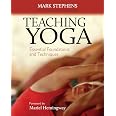
With the increasing number of training programs for yoga teachers and the proliferation of yoga studios, many people, and especially yoga students, are demanding higher standards from their yoga teachers. There have been many debates as to whether or not it is advisable to have the yoga profession, and particularly the training of teachers, regulated. In 2007, the Consumer Product Safety Commission reported that in the previous three years, around 13,000 Americans suffered yoga-related injuries as reported by doctors' offices and emergency rooms. Many injuries are the result of teaching practices from incompetent teachers. Many teachers have not received proper training or do not have any certification; it is estimated that among the 70,000 yoga teachers in the United States, only three quarters have any sort of certification. Furthermore, while there are strict training programs that demand a minimum of 200 hours of training, others provide a diploma after a few days of exposure, or just by e-mail.In the middle of such a situation, the arrival of Mark Stephens' book is more than a blessing. The author has trained more than 700 yoga teachers and is the Director of the Teacher Training Program at Santa Cruz Yoga (CA). He has studied various yoga styles (Iyengar, Ashtanga Vinyasa, yoga therapy, and Vinyasa Flow) and is well versed in yoga history and philosophy. The book includes various practical tables for easy consultation, numerous photographs, a rich bibliography, a very helpful list of yoga teaching resources (yoga websites, yoga associations, and institutes and research centers), a comprehensive list of yoga poses, and a summary of the yoga sequences followed by six major yoga schools.The first four chapters present the roots of modern yoga and the physiological and mental components of yoga practices. Other chapters deal with teaching yoga poses, breathing techniques and meditation. Three excellent chapters (5, 6 and 10) give useful guidelines and tips for yoga teaching, such as options in conducting a class, the teacher's language and voice, the relationship between teacher and student (including how to deal with feelings of attraction), the use of props and music, how to organize the sequencing of a class, and many other critical subjects. In these chapters, Stephens shares with the readers the lessons he learned as a seasoned teacher. He properly illustrates his instructions with the philosophical foundations of yoga, based mainly on Patanjali's almost two-thousand year old Yoga Sutras.Inspired by the idea that in yoga, like in travelling, what is important is the journey, not the destination, Stephens affirms, "Yoga is not a practice of attainment; it is an unending process of self-discovery and self-transformation," and teachers are just facilitators and guides. Through the entire book, he is guided by the idea that the role of the yoga teacher is to assist in the discovery of the inner teacher that all of us have inside ourselves; this is indeed the Socratic approach to teach. He also insists on the beneficial powers of adaptation and innovation in teaching yoga to better respond to the needs of every student. The last chapter is dedicated to the yoga profession; here, Stephens mentions some difficult topics such as regulations, teachers' fees, liability insurance, teacher's training and certification, how to start teaching as an apprentice, and other interesting subjects. Although he does not provide his personal views on many of these points, he raises them and alerts us to give proper consideration to them.This is an excellent book, full of wisdom and information for anyone interested in yoga practice or in teaching. Nevertheless, the book could be improved by taking care of some caveats. It is desirable that in a revised edition the index would incorporate all the authors, as well as the yoga poses mentioned in the text. The name of the poses should appear with both the Sanskrit and English names.
E**A
A Must-Have reference for all yoga teachers and practitioners
Mark Stephens' "Teaching Yoga" is a must-have book for all yoga teachers and practitioners. The book is well written and organized. It is easy to read (compared with some yoga classics) and is very informative. It is not only a good reference for many common poses (asanas) , it also covers many aspects that advanced students and teachers are interested in: history of yoga, pranayama, bandhas, sequencing, etc.Someone mentioned that Mark uses too many Sanskrit in his book. I must say I disagree! I actually appreciate Mark using Sanskrit name for the asanas as I already know the English names. I want to learn the Sanskrit names as well! As yoga originates from India, it is logical to use Sanskrit terms.Last but not least, Mark is a very detail-oriented and insightful teacher. I found myself re-reading sections of his book and picked up insights that would allow me to become a better, safer practitioner and teacher. I also found the Appendices (the list of asanas and the asana elements) extremely useful for planning a yoga class. I highly recommend this book to anyone who does yoga.
A**R
I would recommend this book to everyone whether you are planning on ...
I read Teaching Yoga during my yoga teacher training. I would recommend this book to everyone whether you are planning on teaching or not. . It is a great resource for current and future yoga teachers. It explains the risks of poses, how to guide students in and out of poses and what to look for and emphasize. I believe it will help those that want to teach to be better teachers. I also believe it will help those that do not want to teach to get the most out of the yoga classes they take. It will give you a better understating of the history and philosophy of yoga. You will gain a better of understanding of what you should expect out of your yoga instructor.
T**Y
Great for Students, Too
This comprehensive guide to yoga instruction is also a boon for students. It complements your teacher’s directions by offering cues he or she may not include, thereby helping you refine your poses, and by explaining the poses with different phrasing. I’ve had great instructors, but still found that a substitute teacher might word things in a way that made more sense to me and helped me better execute the asanas. This book also can fill in any gaps that your class may have, such as the omission of certain types of poses, breathing, or meditation exercises.For the student whose practice is primarily home-based, this book is your instructor. Stephens discusses 92 different asanas, including preparatory poses, how to get into the pose, suggestions for refinement, and follow-up positions. His recommendations for sequencing a class will help you create more effective routines that will maximize the benefits of pose. For example, backbends tend to be energizing and are best placed early in your program. Follow up with twists and core work to neutralize the extreme positions of the backbends. Forward bends calm the nervous system and help the body wind down from your practice. Stephens offers basic templates for beginning, intermediate, and advanced classes if you prefer to follow a pre-set routine. He also offers suggestions on yoga poses and modifications for various injuries, stating clearly that this is not to take the place of advice from your health care provider. Other sections address the chakras, the menstrual cycle, and each trimester of pregnancy.The book covers more than just asanas. It also explores the history and development of yoga from its ancient sources to the varieties available today. Subtle energies affected by yoga are described--chakras, bandhas, nodi, prana, gunas, and doshas. Detailed anatomy, including musculature, joints, and movement, educates the reader about the interplay of the body and the asanas. A number of chapters focus on instructor concerns such as creating a welcoming and conducive class environment, running a class, how to give cues, and professional issues, which gives students an insight into teaching.Stephens ends with appendices which cover notes for each chapter, a glossary of terms, pronunciation and translation of asana names, teaching resources, and a useful table of 111 asana elements.While directed at the yoga instructor, this book also benefits the yoga student by providing information that the self-directed individual can use to enhance and further her or his practice. It’s a fabulous contribution to the yoga community.
Trustpilot
3 weeks ago
1 day ago