

Desert Online General Trading LLC
Dubai, United Arab Emirates
Desert Online General Trading LLC
Dubai, United Arab Emirates
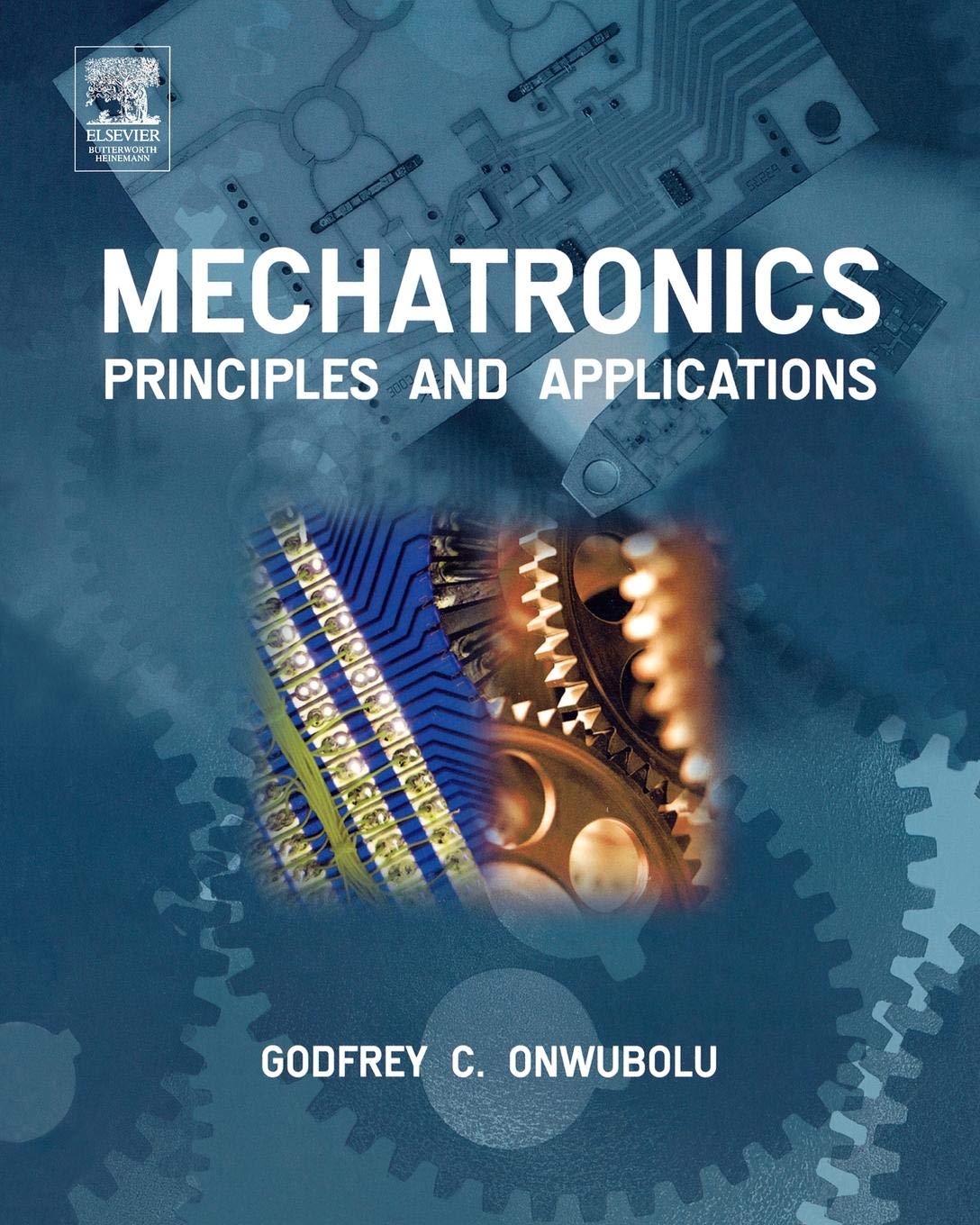


Full description not available
D**R
Definitely not recommended
This is a very poorly written book. I cannot recommend it.The problems with this book start at the outset. The author states that the book should serve as an introductory course, an advanced textbook, and a resource material for practicing engineers. This attempt to be "all things to all people" is commendable, but, alas, unrealistic. The engineering process is top-down, while the learning process is "bottom-up". Therefore, the author's stated goals are contradictory.The logical consequence of the author's aims is that there are no stated prerequisites. This means that the book should be self-contained. Again, this is not a realistic goal. As a result, this book is no more than a few pages cut from various introductory textbooks and pasted together.There is no apparent logic in the organization of this book. For example, the chapter on digital electronics comes before analog electronics, which makes absolutely no sense. Another example is the discussion of motor control on pages 331-348, which includes the use of the Laplace transform. However, the concepts of control theory are not introduced until later in the book: The Laplace transform is defined on page 418.The discussion of the Laplace transform is very lacking. The author does not even state the rule for Laplace transform of the derivative of the function, but he certainly uses it. A similar comment applies to the final value theorem. It is used without being explicitly stated.The author discusses Bode plots without stating how they are used to determine the system stability. On page 524, he uses the concept of the gain margin, but never defines it. He discusses two examples of the Nyquist plots, but, again, never states the Nyquist stability criterion.At various points throughout the book the author uses examples of various analog and digital circuits without explaining how they actually work. This makes the book very unsuitable as an introductory text. The professor who decides to adopt it will have to spend a lot of time preparing lectures and answering questions during the office hours. The book will certainly be a source of frustration for students.The book is just as useless for a design engineer, who would have most likely passed the EIT exam and, therefore, should have a complete command of all the background such as Kirchhof's laws and partial fraction expansions. The book does not provide any information about how to actually design the mechatronic systems.Therefore, I do not recommend this book.
P**X
Keep Looking
As the previous reviewer noted, this book is poorly written and isn't focused enough on any one group of readers (students, practitioners, professionals) to be of use to anyone. Best to keep looking.
Trustpilot
3 days ago
2 weeks ago