
DOWNLOAD THE APP


Customer Services
Copyright © 2025 Desertcart Holdings Limited
DOWNLOAD THE APP
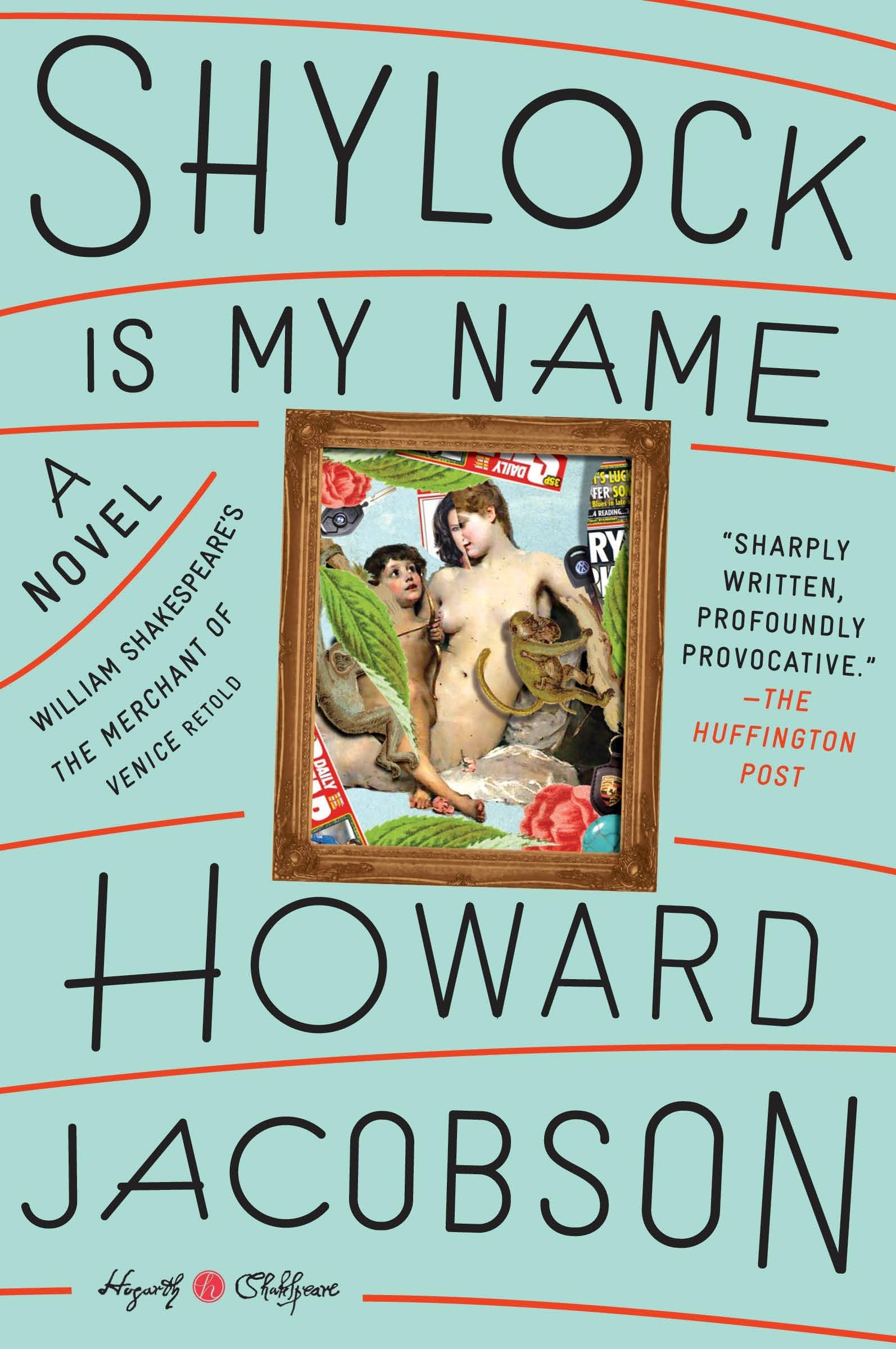
Shylock Is My Name: William Shakespeare's The Merchant of Venice Retold: A Novel (Hogarth Shakespeare) [Jacobson, Howard] on desertcart.com. *FREE* shipping on qualifying offers. Shylock Is My Name: William Shakespeare's The Merchant of Venice Retold: A Novel (Hogarth Shakespeare) Review: Re-making The Merchant into a Real Comedy! - To me, The Merchant is one of Shakespeare’s most interesting and enigmatic works. I am glad that Hogarth Press has provided this modern interpretation of the play. I puzzled over the original for a long time. I have a copy of the it given to me by a friend some years ago. It was printed in 1905 with a bookplate bearing a coat of arms with the inscription “non sans droict” - Shakespeare’s own coat of arms. On opening the book, I am struck with the imprint on the fly leaf listing this as one of Shakespeare’s comedies, although I can’t really tell why. It didn't really have the "happy ending" formula normally applied to Elizabethan literature. But of even more relevance is the preface. It opens with a description by Heinrich Heine (yes, Die Lorelei’s Heine) discussing his first seeing the play in Drury Lane. He too saw the play as a tragedy and he reported seeing “a pale, fair Briton, who, at the end of the fourth act, fell a-weeping passionately, exclaiming ‘The poor man is wronged…’” The preface was by Sir Israel Gollancz, Professor of English Language and Literature at Kings College London, member of the Royal Academy of Art – himself the son of a rabbi. That little gift volume gave me some idea and some hope about how much times have changed since the original Merchant was performed in London in 1605. And now Howard Jacobson’s retelling of what really is a tragedy adds a new spin on this change. The Shylock of yesterday is placed in contact with the Shylock of today: Simon Strulovitch an art collector of some means living in a posh Manchester suburb. As Shylock has Jessica, Strulovitch has Beatrice. Shylock has his Leah and Strulovitch has his Kate. Whether or not Shylock is “real” (as much as a character in a book can be real) is a matter of debate. But this much is sure: Jacobson re-casts the play as a real comedy. It is a comedy about an involved father whose daughter is a sixteen-year-old drama queen (yes, a real drama queen whose major is performance art.) While there are elements of tragedy in their story – Beatrice’s mother Kay is in a near vegetative state resulting from a stroke - the book is largely funny. Strulovitch’s daughter is precocious and beautiful and feels that the conflicts she has with her father are mutual expressions of love. Perhaps he feels the same way. The comedy centers on these conflicts. The new Shylock is an atheist who hates Jewish ritual. He is a “cultural Jew” – one who finds comfort in continuity, in “family values.” He is assaulted in these values by his gentile neighbors, who condone and facilitate a sexual relationship between Beatrice (initially a minor) and a man over twice her age whose previous marriages ended in divorce. The juxtapositions of the various characters with respect to their original roles (and others in modern literature) are also funny. It is the “real” Shylock that delivers Portia’s “quality of mercy” speech. The role of Portia is taken up by Anna Livia Pleurabella, the ALP (wife of HCE) in Joyce’s Finnegan’s Wake. ALP represented the river Liffey as well as all women. What this had to do with the Merchant, I don’t know. But I got a chuckle trying to figure it out. She hosts a TV cooking show she melds with Judge Judy overtones. The role of Antonio was taken by Danton, presumably the French revolutionary beheaded because he was “soft” on the aristocracy. This Danton made his living as a kind of panderer for the ultra-wealthy. So, all in all, you get to peel back the years and understand why Merchant is listed among Shakespeare’s comedies. You get the feeling that this is what Shakespeare meant to do – portray a rebellious daughter and her intrigues with the local “goyim.” Unfortunately, the comic aspects got overshadowed by the racism and cruelty of the era in which it was written. Unfortunately, Jacobson is not as hopeful as the preface to my gift volume. Racism still abounds, but it has its humorous aspects. In both the book and the play, there is a common moral outlook held both by Christians and Jews. It is best expressed in Christianity (Romans 12:19): Seek not to avenge, but find a place for your wrath. Vengeance is mine says the lord – I shall repay. And in this new re-telling, there is a (more-or-less) happy ending. Review: Modern take on The Merchant of Venice mostly succeeds - Interesting book. I liked it substantially better than The Finkler Question, though it too is largely about anti-Semitism. I think the book was more amusing because I am familiar with The Merchant of Venice, and it was fairly easy, but fun, to associate each character with a character in Merchant. If you read carefully, the plot seems to follow that of Merchant more or less, but (possible spoiler) it appears until near the end that the Shylock character, Strulovitch, is going to win this time; the end was a very nice twist. Sometimes, but not often, the book was a little too silly, as with Plurabelle's full name.
| Best Sellers Rank | #1,812,003 in Books ( See Top 100 in Books ) #664 in Jewish Literature & Fiction #3,385 in Humorous Fiction #19,930 in Literary Fiction (Books) |
| Customer Reviews | 3.8 3.8 out of 5 stars (503) |
| Dimensions | 5.23 x 0.77 x 7.93 inches |
| Edition | Reprint |
| ISBN-10 | 0804141347 |
| ISBN-13 | 978-0804141345 |
| Item Weight | 9.3 ounces |
| Language | English |
| Part of series | Hogarth Shakespeare |
| Print length | 288 pages |
| Publication date | October 11, 2016 |
| Publisher | Hogarth |
M**Y
Re-making The Merchant into a Real Comedy!
To me, The Merchant is one of Shakespeare’s most interesting and enigmatic works. I am glad that Hogarth Press has provided this modern interpretation of the play. I puzzled over the original for a long time. I have a copy of the it given to me by a friend some years ago. It was printed in 1905 with a bookplate bearing a coat of arms with the inscription “non sans droict” - Shakespeare’s own coat of arms. On opening the book, I am struck with the imprint on the fly leaf listing this as one of Shakespeare’s comedies, although I can’t really tell why. It didn't really have the "happy ending" formula normally applied to Elizabethan literature. But of even more relevance is the preface. It opens with a description by Heinrich Heine (yes, Die Lorelei’s Heine) discussing his first seeing the play in Drury Lane. He too saw the play as a tragedy and he reported seeing “a pale, fair Briton, who, at the end of the fourth act, fell a-weeping passionately, exclaiming ‘The poor man is wronged…’” The preface was by Sir Israel Gollancz, Professor of English Language and Literature at Kings College London, member of the Royal Academy of Art – himself the son of a rabbi. That little gift volume gave me some idea and some hope about how much times have changed since the original Merchant was performed in London in 1605. And now Howard Jacobson’s retelling of what really is a tragedy adds a new spin on this change. The Shylock of yesterday is placed in contact with the Shylock of today: Simon Strulovitch an art collector of some means living in a posh Manchester suburb. As Shylock has Jessica, Strulovitch has Beatrice. Shylock has his Leah and Strulovitch has his Kate. Whether or not Shylock is “real” (as much as a character in a book can be real) is a matter of debate. But this much is sure: Jacobson re-casts the play as a real comedy. It is a comedy about an involved father whose daughter is a sixteen-year-old drama queen (yes, a real drama queen whose major is performance art.) While there are elements of tragedy in their story – Beatrice’s mother Kay is in a near vegetative state resulting from a stroke - the book is largely funny. Strulovitch’s daughter is precocious and beautiful and feels that the conflicts she has with her father are mutual expressions of love. Perhaps he feels the same way. The comedy centers on these conflicts. The new Shylock is an atheist who hates Jewish ritual. He is a “cultural Jew” – one who finds comfort in continuity, in “family values.” He is assaulted in these values by his gentile neighbors, who condone and facilitate a sexual relationship between Beatrice (initially a minor) and a man over twice her age whose previous marriages ended in divorce. The juxtapositions of the various characters with respect to their original roles (and others in modern literature) are also funny. It is the “real” Shylock that delivers Portia’s “quality of mercy” speech. The role of Portia is taken up by Anna Livia Pleurabella, the ALP (wife of HCE) in Joyce’s Finnegan’s Wake. ALP represented the river Liffey as well as all women. What this had to do with the Merchant, I don’t know. But I got a chuckle trying to figure it out. She hosts a TV cooking show she melds with Judge Judy overtones. The role of Antonio was taken by Danton, presumably the French revolutionary beheaded because he was “soft” on the aristocracy. This Danton made his living as a kind of panderer for the ultra-wealthy. So, all in all, you get to peel back the years and understand why Merchant is listed among Shakespeare’s comedies. You get the feeling that this is what Shakespeare meant to do – portray a rebellious daughter and her intrigues with the local “goyim.” Unfortunately, the comic aspects got overshadowed by the racism and cruelty of the era in which it was written. Unfortunately, Jacobson is not as hopeful as the preface to my gift volume. Racism still abounds, but it has its humorous aspects. In both the book and the play, there is a common moral outlook held both by Christians and Jews. It is best expressed in Christianity (Romans 12:19): Seek not to avenge, but find a place for your wrath. Vengeance is mine says the lord – I shall repay. And in this new re-telling, there is a (more-or-less) happy ending.
M**G
Modern take on The Merchant of Venice mostly succeeds
Interesting book. I liked it substantially better than The Finkler Question, though it too is largely about anti-Semitism. I think the book was more amusing because I am familiar with The Merchant of Venice, and it was fairly easy, but fun, to associate each character with a character in Merchant. If you read carefully, the plot seems to follow that of Merchant more or less, but (possible spoiler) it appears until near the end that the Shylock character, Strulovitch, is going to win this time; the end was a very nice twist. Sometimes, but not often, the book was a little too silly, as with Plurabelle's full name.
P**N
Shylock is My Name by Howard Jacobson: A review
This book is another entry in the Hogarth Shakespeare series, the retelling of Shakespeare's classic tales by modern writers. It is a contemporary reimagining of The Merchant of Venice, with the emphasis, as is obvious from the title, on the character of Shylock. It is a study of his inner life and we get to know him more intimately than we ever did in the original play. I had last encountered Howard Jacobson when I read his Man Booker Prize winner, The Finkler Question, in which he ruminated at length and often with considerable humor upon what it means to be a Jew and on the roots of anti-Semitism. In many ways, this book is a continuation of that contemplation. It seems to me that Jacobson was the perfect writer to tackle the assignment of exploring the character of Shylock in all its complexities. He chooses to do this by materializing Shylock in a cemetery in northwestern England in the 21st century with the personality that Shakespeare gave him fully intact. Shylock appears there, in conversation with his dead wife Leah, as the philanthropist and art collector Simon Strulovitch has come to inspect the newly erected tombstone over his mother's grave. Shylock is in the habit of having daily conversations with Leah in cemeteries or gardens, bringing her up to date on all the news and pouring out the contents of his heart to her. Strulovitch sees Shylock in the cemetery and invites him home with him and the two begin engaging in extended colloquies about the nature of Jewishness and what it is to be an observant or unobservant Jew in the modern world. The conversations crackle with both tartness and humor as they consider the tensions of the father-daughter relationship and and the quandary of being a Jew both in Shylock's time and in the modern era. Gradually, it becomes clear that Strulovitch is a kind of modern doppelganger for Shylock. The challenges of Strulovitch's life mirror those of Shakespeare's creation. The plot, in fact, is reflective in all major aspects of Shakespeare's play, with some subtle differences of emphasis. All of the best-known characters and all of the plot devices of The Merchant of Venice can be found here in one form or another. We even see Strulovitch/Shylock demanding his "pound of flesh" in quite a unique and unexpected fashion. My favorite parts of the book were the philosophical conversations between Strulovitch and his house guest, Shylock. These are sharp-edged verbal fencing matches which give Jacobson a chance to fully display his wit, not to mention his appreciation of the English language - and occasionally of Hebrew. My second favorite parts - a close second - were Shylock's conversations with his dead wife. These are tender and filled with a different, gentler kind of wit and they help us to see the full humanity of Shylock. The original Shakespeare play was a bit of comedy and a bit of tragedy. Jacobson has reimagined it with an emphasis on the comedy. It works very well in those terms.
E**B
Shylock is Alive
It's a literary novel. You don't have to know The Merchant of Venice. The characters are vividly drawn and compelling. The questions about being a parent, a spouse, a friend are intriguing. How comfortable are you with characters who are anti-Semitic and characters who are anti-Christian? The interior monologues and the dialogue are disquieting but thought provoking. They certainly made this reader cringe. To be clear, I am reading the novel a second time.
S**R
Baffling
I found this just baffling and a lot of work to read. I'm still not sure I understood it, or how to describe my feelings about it. I did keep reading, but probably because I want to read all of the books in this series. Two stars because I don't like it which to me means this kind of book is not for me. I urge readers to read what they like though!
V**D
The Hogarth Shakespeare Project has invited eight novelists to retell eight of the Bard's plays. At best, this is a tricky challenge, with no guarantees of success. Our likes and dislikes, both of Shakespeare's plays and of the invited authors, will taint our verdict on each attempt. This book is the second in the series. For any Shakespeare reader, lover, connoisseur, or scholar who also happens to be Jewish, the Merchant of Venice has always been great fodder for discussion and interpretations. Hence, I had to read Jacobson's 'Shylock Is My Name.' I loved it. It is an excellent study of Shylock, which provides answers to many of the questions the character poses, with great analytical depth. However, please don't let this intimidate the non-scholarly reader. This is also a very well written novel, plentiful of the nuanced and balanced darkness and humour of Jacobson at his best. Enjoyable on all accounts, Jacobson succeeds with flying colours.
C**U
Funny and rib tickling. One of Shakespeare’s works put to life in present day settings. He can never go out of style or substance no matter what day or age we speak of. What amused me most was the workings of the mind of Jews. I must admit it was an eye opener and I’m wiser for it.
R**I
I received this book last week, and the package arrived on time and in perfect condition, with no damage at all. Shylock Is My Name: The Merchant of Venice Retold is a very engaging and thoughtful reinterpretation of Shakespeare’s classic play. The author offers a modern perspective while remaining faithful to the original themes, especially those of identity, justice, and prejudice. The story is well written and easy to follow, making it accessible even to readers who are not deeply familiar with Shakespeare. I appreciated the way the characters are developed and how the novel connects past and present in a meaningful way. Overall, it is a compelling and enjoyable read, ideal for literature lovers and for anyone interested in contemporary retellings of classic works. #ShakespeareRetold #TheMerchantOfVenice #Shylock #modernfiction #classicretelling #bookreview #amazonreview
F**R
I'd read "Vinegar Girl", an earlier book in this series, and been disappointed as I felt it reduced The Taming of the Shrew to a romantic comedy - well written, but weightless. But "Shylock is My Name" is a completely different bird. It's not just an excellent, emotionally complex novel. It also adds something important to the reams of literature already written on The Merchant of Venice. This should be required reading for everyone who studies the play.
R**N
Intrigued by the experiment of adapting Shakespeare's plays I had enjoyed Nesbo's Macbeth. This one here is, of course, another story. If you're interested in the manifold aspects of the relationship between mainstream Christian and Jewish cultures, the history of mutual misunderstandings and mutilation, all of it in highbrow English. If....then it's a fine read.
Trustpilot
2 months ago
1 month ago