Desert Online General Trading LLC
Dubai, United Arab Emirates
Desert Online General Trading LLC
Dubai, United Arab Emirates
Full description not available

J**S
Peter Leeson's Invisible Hook
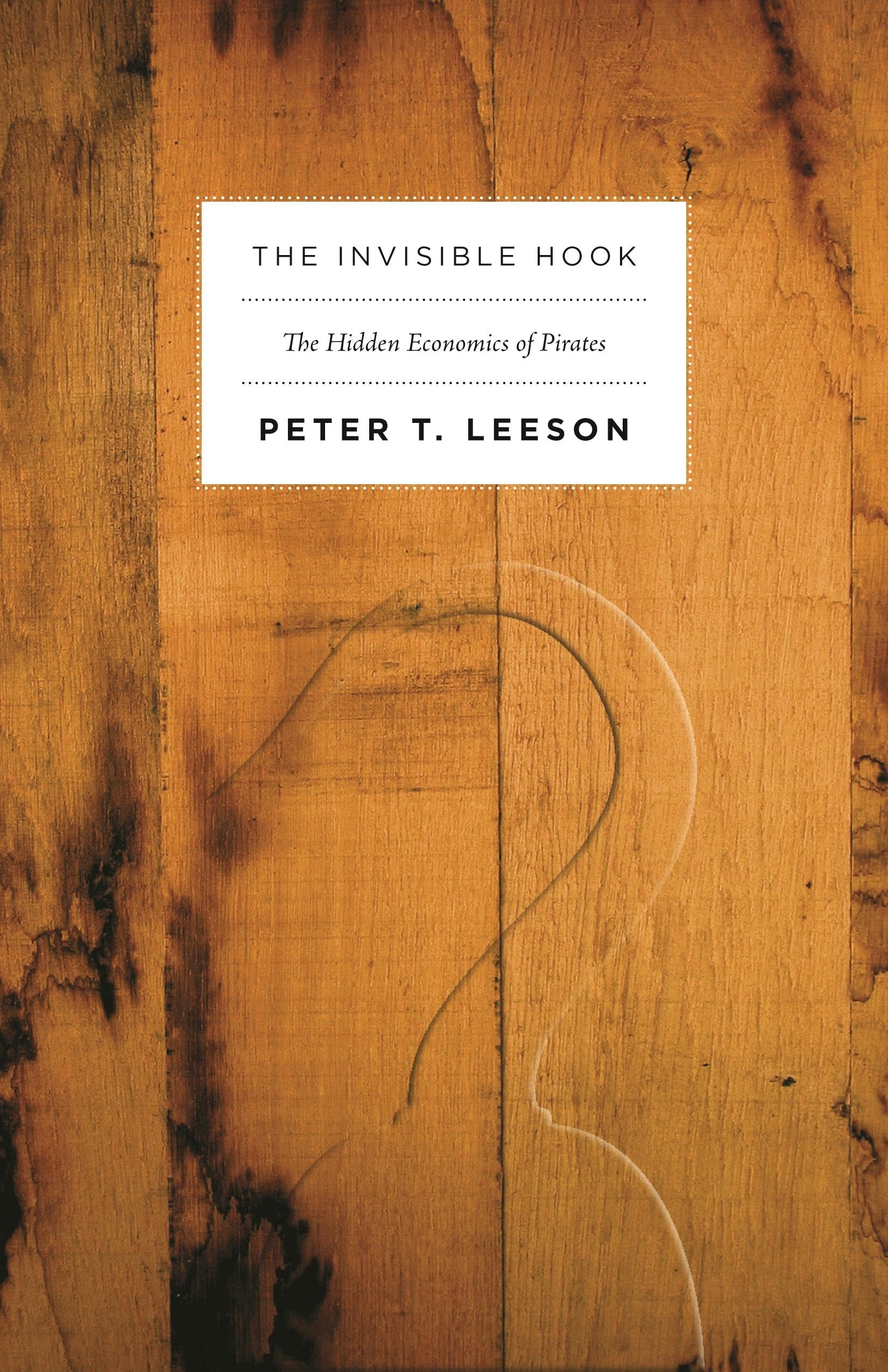
What begins as a simple story of Pirates soon turns into an unique journey through Economics and History. Peter Leeson, who is an Economist, uses methodological individualism to analyze the behavior of Pirates as simple profit seekers. This allows Leeson to give a different view of the Pirates then most of us are used to. He also introduces us to many unknown facts about Pirates, who are a common cultural obsession. The secret to his book is the fact that he teaches us both Economics and History without you even realizing it. Books like More Sex is Safer Sex by Steve Landsburg and Freakonomics by Steven Levitt teach you an unconventional way to look at problems, but often not through a classic historical case. This book will do both without you hardly noticing.The Invisible Hook is not written in a way that is hard for non-Economists to understand. It is written just for that type of audience. This book now ranks top on my list of books to recommend those as an introductory lesson into the economic way of thinking. At the same time, if you do study Economics you will not be bored as the historical mechanism takes over. For example, you may know what signaling is but the economics student likely does not know exactly how the Pirates used the flag, the Jolly Roger, to signal to other ships.One of the most interesting parts of the book is the very last chapter. Leeson sets up a class in Pirate Management with the professor Blackbeard. Without giving to much away, he goes through and restates points in the book with modern literature. He also provides a very good reading list for those who want to read further into Economics in that chapter. This is the most unique way I have ever seen anyone end a book. It allows Leeson to review the points and restate them in a new light without putting the reader to sleep, as I am famous for skimming through conclusions.I would highly recommend this book to anyone who wants to learn anything about Pirates or Economics. It is probably likely that most of Leeson's readers will buy the book for the former, but the reader will soon find himself interested in the latter. Dr. Leeson is a rising star in the field of Economics and this is a good way for him to start.
P**O
Equally Fun and Informative
The author does a splendid job of entertaining and educating the reader. For those without an Austrian or Chicago School of Economics viewpoint, it should be even more valuable and a great way to challenge your viewpoint.
J**M
Pirates and Liberty
As any reader of GURPS: Swashbucklers knows, the buccaneers of the golden age of piracy were a remarkably enlightened bunch, establishing on their ships a system of egalitarian, democratic civil administration.Oh, you haven't read GURPS: Swashbucklers?Well never mind that. What's important to know is that, despite their reputation as blood-thirsty cut-throat savages, life aboard a pirate ship in the Carribean was a damn sight more free and civilized than serving aboard a navy ship or merchantman in the same era.Pirates operated their ships according to "articles of agreement," deliberated by and signed off by each member of the crew. These "constitutions" governed all aspects of shipboard life and how major decisions concerning the enterprise would be conducted. Pirate captains were elected by their crews and could be removed at any time for any reason. What's more, authority was not centered in the position of captain as it was in the navy or merchant service, but rather power was divided between several officials, probably the most important being the quarter-master (who divided the loot!)Why did these pirate crews exhibit such modern tendencies toward democracy, separation of powers and equality - many years before actual governments did?Leeson answers these questions by arguing that there are essentially economic reasons for these behaviours. Pirates were not any more enlightened than anyone else of their time. They were handicapped by all the same human flaws and foibles that everyone else was. What was different was their situation which allowed for different economic calculations.For example, Leeson argues that the decentralized, egalitarian administration of pirate vessels was due to the "agency problem" in economics. Essentially, because merchant vessels were owned by an "absentee landlord" who was not on site, the ship owner had to rely on the services of an agent who could be relied on to be loyal, as opposed to diverse agents (crew) who would rob him blind. This required the loyal agent to be granted dictatorial power to keep the others in line.Pirate crews, on the other hand, owned their own vessels. Thus, one pirate stealing would be stealing from his fellow shipmates. Therefore, Leeson argues, a decentralized administration could be much more effective as, essentially the pirates would police each other. This decentralization then further increased "pirate happiness" by reducing the ability of an authority figure to prey on his crew.The Invisible Hook is a fun an interesting read. Both for its delving into a history not widely known beyond Jack Sparrow films, and for providing an interesting economic explanation for the behaviours of the participants which can be scaled up to provide lessons for society as a whole.
A**X
The Invisible Hook
This book produces what it promised ... an analysis of pirate behaviours and practices from a fairly pure economic perspective. Leeson writes in a fluent and accessible style and injects about the right amount of historical data. Too little would have made me feel like I ought to have read up on the golden age of piracy in the late seventeenth and early eighteenth centuries before I started on this book. Too much may have made the book drag on a bit. He has chosen the events carefully to support his arguments and keep the interest level from flagging. His research appears to have been comprehensive. Although he is an self-confessed pirate tragic, he keeps the voice he uses in the book clinical enough to be convincing rather than romantic. The pirates were rogues, robbers and driven by greed but not usually gratuitously violent or vicious. It's an informative and entertaining book which I enjoyed.
Trustpilot
1 month ago
2 days ago