
DOWNLOAD THE APP


Customer Services
Copyright © 2025 Desertcart Holdings Limited
DOWNLOAD THE APP
Full description not available
D**J
The Best Book Written On Schizophrenia. Here's Why.
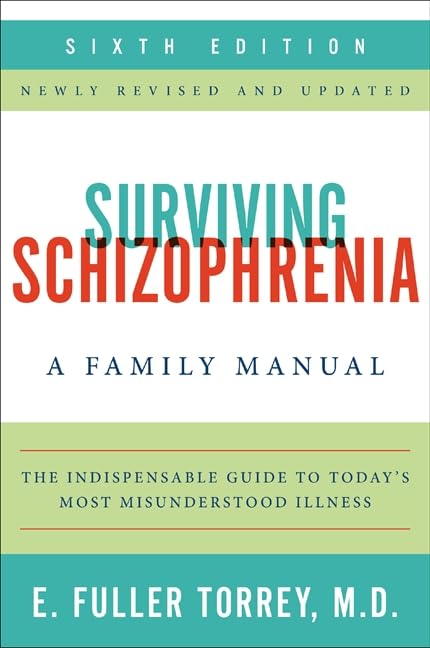
Surviving Schizophrenia is the best, most informative book there is on schizophrenia. Dr. Torrey brilliantly interlaced quotes by people with schizophrenia with the science and his own experience as a researcher, family member, and advocate to create a passionate and fact packed perfectly titled book for families of those with schizophrenia and people with schizophrenia. It should also be read by everyone who works in mental health or claims to be a mental health advocate. It will help them understand what serious mental illness is and why we should stop ignoring it.And to this mix, he adds massive amounts of good common sense advice: "Some people are afraid to ask about suicidal behavior because they fear it will put the idea into the persons head. This is not true and often the person is relieved to be able to talk about suicidal thoughts and plans" "Withdrawal is often used as a means for coping with the internal chaos in the patient's brain and is an appropriate response. Family members should remind themselves not to take such withdrawal as a personal rejection, but should keep themselves available". "It should always be remembered that that the behavior of persons with schizophrenia is internally logical and rational; they do things for reasons that, given their own disordered senses and thinking make sense to them."After noting that relapse is most often associated with not getting enough medication, Dr. Torrey writes, "For this reason I give many patients an extra supply of medications and allow them to increase it on their own if they feel that they need it. Physicians do this all the time with patients with diabetes who may need more insulin on some days and less on other days, and I find the same principle useful in schizophrenia."Surviving Schizophrenia covers everything, with a particular emphasis on information that can help those with schizophrenia and their families:* What it feels like to have schizophrenia, as told by people who have it* Theories on causes including genetics and biology* Likely courses and outcomes of the various types of schizophrenia* How to separate snake oil treatments from real treatments* Latest Research* Accessing Government Benefits* Coping Tips for those with schizophrenia and their families* How to make the mental health system stop failing those with schizophreniaDr. Torrey is the world's leading expert on schizophreniaand focuses on how to reduce violence, homelessness, suicide and other problems faced by people with untreated serious mental illness and he therefore becomes highly visible on TV following headline grabbing tragedies. But in this book, you get a better understanding of his true love: researching causes and treatments of schizophrenia to try alleviate the pain and suffering of those who have it, like his own sister did. It is his intense compassion for people with schizophrenia that comes through in this extraordinary book. "The paucity of sympathy for those with schizophrenia makes it that much more of a disaster." "The simple answer, then, to the question, "How should one react to someone with schizophrenia?" is, Kindly."He devotes two chapters to symptoms. The first chapter does it through the voices of those who have it. He has people with serious mental illness talk for themselves. This should be required reading for those who work in the non-profit mental health industry, government mental health agencies and peer-movement who may not understand what life is like for many of the most seriously ill.A consumer explained, "When most people look at a watch, they see the time. "If I look at my watch I see the watchstrap, face, hands and son on, then I have to put them together in one piece". Another said, "I can't concentrate on television because I can't watch the screen and listen to what is being said at the same time".Quotes like that make it so much easier to understand the difficulties faced by people with schizophrenia, then saying that 'people with schizophrenia have difficulty putting stimuli together'. After that, he goes through much of the same material from a scientific perspective and explains the neuroscience of the phenomenon being described.He definitively answers important questions and is not reluctant to admit that there are many things we simply don't know yet.* Can Marijuana cause schizophrenia?* Could your schizophrenia be another disorder that was not properly diagnosed and how can you find out?* What are the predictors of good and poor outcomes?* If medication is needed, which should you try? At what dose? For how long? And then what?* What to do if someone with schizophrenia needs treatment and refuses it?* What rehabilitative treatments and non medicine supports are important?The chapters on research are as important for what they reveal as to what they debunk. They reveal what is known and not known, about the causes, treatments, and prognosis in fact-packed detail. New research is presented on anosognosia, having a brain so dysfunctional, it doesn't even know it is not working and the role that plays in preventing many with schizophrenia from getting treatment.Dr. Torrey also uses the research chapters to debunk the pseudo-science spread by antipsychiatry, "survivors", Scientologists and even government agencies like SAMHSA and CMHS. For example, there is no evidence that medicines used to treat schizophrenia cause schizophrenia. Nor is there evidence that abandoning a medical model of care to a recovery model results in improved care. In fact, for people with schizophrenia, it often leads to no-care and more suicide, homelessness, arrest, and incarceration.His chapter on treatment, is the best balanced I have seen. Dr. Torrey provides evidence that medications work and suggestions on how to go about finding the right ones, but he is no stoolie for the pharmaceutical industry and is one of their toughest critics. After describing the financial incentives they have to stretch the truth, he writes, "For this reason you cannot believe much of what is written by mental health professionals about these drugs"The book ends with chapters that describe the dimensions of the disaster caused by the federal government, state governments and the non-profit mental health industry focusing their resources on improving the mental health of everyone, rather than providing treatment to the most seriously ill, like those with schizophrenia. He quantifies and describes how this mission-creep led to unconscionable--except to those responsible-rates of suicide, homelessness, arrest, incarceration and preventable violence. This is a subject, Dr. Torrey has written whole books about, including Out of the Shadows,The Insanity Offense, and most recently American Psychosis focusing on the failed Community Mental Health Centers.I read an early edition of Surviving Schizophrenia in the early 1980s, when schizophrenia touched my own family. And while I've used subsequent editions as reference tools, this 6th Edition is the first time I read a version cover-to-cover. It's the best thing I've done. The number of facts and useful information per page is unequaled anywhere.Disclosure: I am an admirer of Dr. Torrey, once served on a non-profit board with him, and in this latest edition, he used something I wrote, "Useful Online Resources" as Appendix B.
A**R
ALL families dealing with a Schizophrenic must read this book
I have Torry's first edition and now I've added the 6th edition to my library. My sister has Schizophrenia and her symptoms began when she was a child. Very often siblings are the first to notice that something is quite right. Had my sister gotten treatment early she might have had a chance at a normal life. Unfortunately she was caught in the mass rush change from institutionalized treatment to community based treatment (which NEVER happened) as well as the dream that a pill could cure the "problem". That hasn't happened either. My sister and my parents were in denial about her mental illness.Dr. Torrey is skilled at making sense of medical and psychiatric jargon and writing in standard English. America is still not making progress in the awareness of this disease and getting treatment to those that need it. There are still those who claim that Schizophrenia does not exist -- tell that to the families who have lived with schizophrenic family members. Many schizophrenics deny that they are ill -- and they refuse to take medication. Modern brain scans of normal brains and brains of schizophrenics show a different reality.This 6th edition adds a lot of new information and lists websites at the back of the book which can be helpful to family members. This disease isn't going away -- and new victims of this disease can't be wished away on the next rainbow.Schizophrenia is an expensive disease -- that would be counting the very rare individuals who become serial killers -- these are the ones who catch the media attention. For each of these media "stars" there are the ones who are shot by police or otherwise harmed and the poor homeless souls who barely survive in big and small cities. This is the 21st century but as far as Schizophrenia we seems to be back in the dark ages.In spite of that -- there are treatment plans and various medication. The first hard part is recognizing the disease and then finding a competent doctor. Torrey tells his readers what to expect and how to find a doctor. Unfortunately there aren't that many doctors who are experts in the treatment of Schizophrenia -- this was a shock for me to learn.Parents will need to learn how to be their child's health advocate -- Torrey's book is the best place to start.
L**E
Poweful tool for developing an understanding, compassionate relationship with the person suffering from schizophrenia
I'm now in my late 40s, but as a child I was ashamed to be the daughter of a schizphrenic mother. My family often spoke of her in derogatory terms such as "she's not as sick as she makes herself out to be" or "she is just trying to manipulate to get her way." I knew my mother loved me more than anything, but I didn't understand when she would suddenly blurt out laughing for no reason or tell me something outlandish that "her voices" would say. It was very confusing to love and be loved by someone who was clearly so rejected by society.In my late 20s, someone recommended an earlier edition of this book, and it literally changed my life. I came to have a better understanding of the world my mother lived in. I developed a stronger compassion for her constant struggle to differentiate her experiences from what the rest of the world experienced. She was in the lonliest hell a person could endure, and nobody in her life ever understood until that moment.More than 20 years have passed and mom has too. However, I've met a couple of children who have a schizophrenic father, and they struggle to understand, so I bought this edition to work with them in developing a better feel for how they can have a loving relationship with their parent. After our first session, the teen immediately felt the urge to pick up her cell phone and tell her dad how much she loved him. There is a lot of work involved in learning how to interact with a person inflicted with this horrible illness, but I am certain that there is no better tool for making that happen than learning, and this book is a fabulous tool for accomplishing just that.
S**H
An Absolute Must for any family with a member or close friend diagnosed with this cruel disease.
A Superb book dealing with every aspect of this cruel disease which medics don't have the time to tell you. An absolute must if any member of your family or friends are diagnosed with schizophrenia. A must have family support manual.
D**N
Very good
Very good read
D**E
Five Stars
interesting
S**N
best book on schizophrenia
This is the most useful book that has been written about schizophrenia. I wish the families of all people who develop this brain disorder could be handed a copy along with the diagnosis. If families could get this book early on, so much suffering and confusion could be avoided and people would understand the next steps they need to take. They would also be less likely to be misled by the increasingly widespread rhetoric that tells us to avoid treating this illness with a medical approach. Powerful groups often persuade vulnerable people that anti-psychotic medications are useless; research demonstrates otherwise.Fuller Torrey's book gave me the strength and information that I needed to offer my daughter the best possible help.Susan Inmanauthor After Her Brain Broke: Helping My Daughter Recover Her SanityAfter Her Brain Broke: Helping My Daughter Recover Her Sanity
M**O
Good
This book was quite practical and very useful information was provided. It is not only good for learnign about the disease and understanding it but also it shows how to deal with it and what ways to interact with someone who sufferes from schizophrenai. A definate important guide! I highly recommend it!
Trustpilot
2 weeks ago
1 day ago