Some deliveries may take a little longer than usual due to regional shipping conditions.

DOWNLOAD THE APP


Customer Services
Copyright © 2025 Desertcart Holdings Limited
DOWNLOAD THE APP
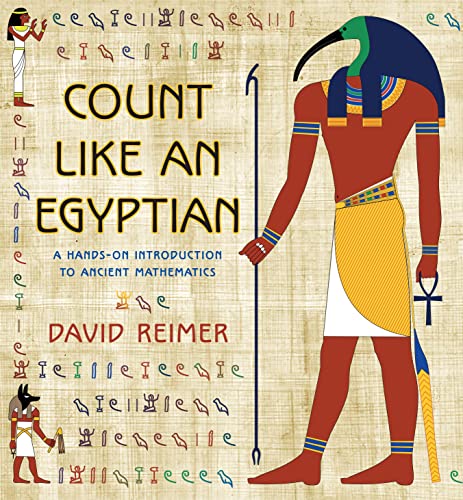
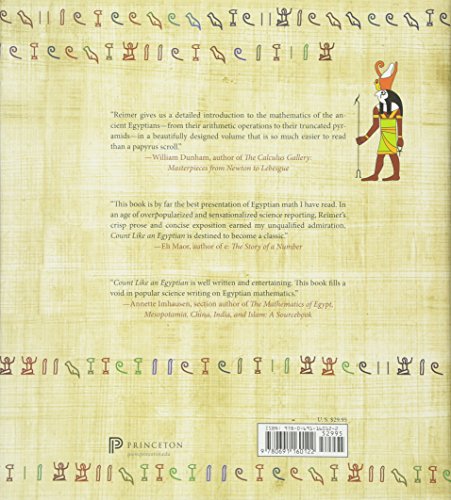
Full description not available
P**N
Disappointing and Frustrating (KINDLE READERS BEWARE)
After the glowing reviews, I found this book, which I bought in the kindle version, disappointing and frustrating because it should have been really enjoyable. (For the hardcover review, skip to the update.)I am sure the course it is taken from would rate at least 5 stars. The book is well-written, the examples are well-chosen and the illustrations are clear and attractive. The author obviously knows his subject and enjoys sharing it with others. He occasionally over-explains, but his college's math entry standards may require that.I can only assume that the glowing reviews were written by readers who didn't try to work the examples and practice problems or that the hardcover edition, which 5 of 6 reviewers read, avoided the typographical problems of the Kindle edition.The problem is mainly the notation and some very poor proof-reading.The author uses the standard English lower case alphabet to represent fractions. I would have expected the Greek alphabet or, at least, a different type face. Instead the reader encounters the apparent word "as" (frequently) and each time has to decide whether that represents the English word or the Egyptian fraction, 1/12. (An example is the calculation example on page 56 "Use inches and feet to simplify ' s h as feet". In this case the answer shows that 1/12 was meant.) Not to mention the expectation of those who still remember their algebra that it will mean the variable "a" times the variable "s". And maybe college students are more restrained than high school students, but I shudder to think how a class of tenth-graders would react to the statement on page 61 "We can think of h as being composed of two ass." (Which might be taken to mean that 1/6 + 1/12 equals 2 x 1/122.)In addition, for no obvious reason, he enlists the semi-colon to represent zero and ' to represent two-thirds. The semi-colon, in particular, is easy to pass over as punctuation rather than content.In his examples, he obviously realizes that his readers will become completely confused if they try to follow an unfamiliar method of calculation using these conventions. Instead he shows us neat little scrolls with two columns of our everyday arabic numerals with lines over the ones that represent fractions. This means, though, that when he poses the problem in words, on page 40 for instance "We just multiply ' by 2 s f.", the scroll labelled "A scribe would calculate it as follows:" uses columns of numbers, with or without bars over them, then states the answer as "1 ' h".And, as an example of proof-reading problems, on page 53 he states "For example, we know that 100 x 32 is 320". Peculiarities in text are one thing. This howler in arithmetic is another.I am really sorry that this book was plagued with notation problems and proof-reading errors because I think it would be excellent if it was easier to interpret. He uses bricks and pizzas to good effect in showing how the Egyptian system might have developed, for instance. He brings to life the bureaucrats, the night-watchmen, the artists and all the others whose lives were ordered by the hand of Thoth, the god of wisdom and scribes. He shows us how the Nile dominated Egypt's very existence, and how mathematics was essential in understanding its day to day effects. I purchased the Kindle edition, but if I had the paper version I think I might have taken the trouble to go through and change all the English-lettered versions of Egyptian fractions to Greek letters for my own ease of reading.As it is, I will have to give it only two-thirds the stars I would have liked to -- or, as the author would have it ' x AAAAA, which equals 1 + d + 2, or 3 d, rounded to 3.UPDATE: The glowing reviews seemed so odd that I finally checked the preview of the hardcover and found that it did _not_ use that confusing notation. Instead it uses arabic numerals surmounted by bars.This makes all clear and I am about to invest $23.07 in the hardcover on top of the $16.07 I already paid for the kindle.
A**E
Very interesting and well done!
I love this book! Everything about it is nicely done - the layout, the quality of the paper, the pictures. I particularly like the style of writing and the bits of Egyptian history and culture that bring a lot to the math explanations. The author's deep thoughtfulness and personal understanding for the subject shines through the whole book.I had originally bought this book to help plan a home school block on Egypt for my 5th grader and mistaking it for a book for children. While just reading through it would be too dense for my son, I am really enjoying working through the different chapters myself. There are so many things to learn here, and even things I can include for the 5th grade block - from math ideas to history, geography and cultural details.The material is well-presented - even I am able to figure it out and learn something (I have never been good at math, and all of my math teachers would have described me as a "poor" math student. I have many gaps in my math education). My only critique is that I wish there were a few more practice problems - perhaps not necessarily included in the book, but available for download.
G**X
Most fun you can have with numbers.
This book as absolutely amazing. But it is ONLY for people who are interested in and enjoy mathematics for recreation or for students that really need to learn something about the subject.This is actually a mathematics textbook, with lessons, examples and exercises. Beware the exercises the author describes as "an especially good exercise".Although it is a textbook, it is not a boring book, it is filled with Egyptian history and examples of Egyptian life and how they applied this mathematics to their every day problems, and how those problems influenced their calculations, and yes, how they used it to build the pyramids.Be prepared for a shock. Except for the fact that they use numbers, their calculation methods are TOTALLY different from anything you have ever experienced.Hint: How do you calculate the area of a circle? What constant "pi" do you use? Their equivalent constant was not 3.14, it was 8/9. Want to see how they did it?
U**N
Great book. Should be on everyone's reading list
Super great fascinating book. Well written, lots of problems to try to solve. Something everyone should read to see how different cultures can see or conceive of the world quite differently and still get things done just as well as other cultures
N**T
I just love this book "Count Like an Egyptian"
I just love this book "Count Like an Egyptian". You will never forget it, an unusual thing to say about a math book, and my highest praise. It is also a beautiful book to go through.It is one of the most interesting and enjoyable volumes I have read in a while but it is also well written ... not to mention ... clear as a bell. discovering a "new" method which has been around for thousands of years was just astonishing. Fascinating subject and fascinating treatment. One thing is that the book has a friendly, approachable tone which draws you easily to the material. This is about the opposite of a 19th century German mathematics text, but it lacks no rigor. The author did a brilliant job.And it is FUN!
V**2
Fun and Challenging for Older Children and Adults
My eighth grade daughter and I (homeschool mom with BS in chemistry) worked through this book over a few months. Very entertaining, well written and informative. The explanations and examples were clear and easily followed. She picked up quite a bit of basic number theory from it and we truly enjoyed it. (We simultaneously completed a DVD course "Decoding the Secrets of Egyptian Hieroglyphs" by Dr. Brier.)
A**R
wow
Arrived quickly and in good condition. Thanks.
A**T
Groundbreaking Book.
I really enjoyed my first read and will continue to enjoy studying it. Unfortunately it is written for an American readership so the use of US coinage for analogies is not great and why express known fractions as letters? I thought that algebra was for expressing unknown numbers! As far as Reimer's conclusions go I think he is 100% correct which means that I think he is the first person to full appreciate Ancient Egyptian math(s) for nearly two thousand years.
L**E
A wonderful book for curious teenagers and adults
Four years ago I read Paul Johnson's "The Civilization of Ancient Egypt" which I totally loved and which made me love Egypt. Ancient Egyptians were impressive in so many ways (art, medicine, writing, organization, ...) but, according to Johnson, their mathematical achievements were disappointing, their mathematical system was poorly designed and awkward to use. This was something I could not fully believe because how could they then build pyramids so precisely? So when I read a positive review of Reimer's book I had big hopes for a rebuttal. And I was not disappointed. Unfortunately, the evidence about Egyptian math is very scarce but what is left does not look awkward if you learn to appreciate the inner beauty of the system. This review is not the right place to re-tell the main points, if you are curious, I encourage you to read the book. It is full of fun exercises, the notation is easy to follow, at least one third of the book is not about Egyptian math but gives an interesting and relevant context. Also, I wish I read this book when I was 14 so it may be a good present for a math-loving child.
W**N
Must read.
Well written and very interesting. Would give it more stars if I could.
J**N
Count Like An Egyptian
Very interesting. Shows how there are many ways to calculate.Concepts like zero were long in development.It shows that we, in our day, are not as clever as we think.
R**T
Five Stars
Very fascinating and instructive book! Thank you.
Trustpilot
3 weeks ago
1 month ago