
DOWNLOAD THE APP


Customer Support

Desert Online General Trading LLC
Warehouse # 7, 4th Street, Umm Ramool, Dubai, 30183, Dubai
DOWNLOAD THE APP
Customer Support
Desert Online General Trading LLC
Warehouse # 7, 4th Street, Umm Ramool, Dubai, 30183, Dubai
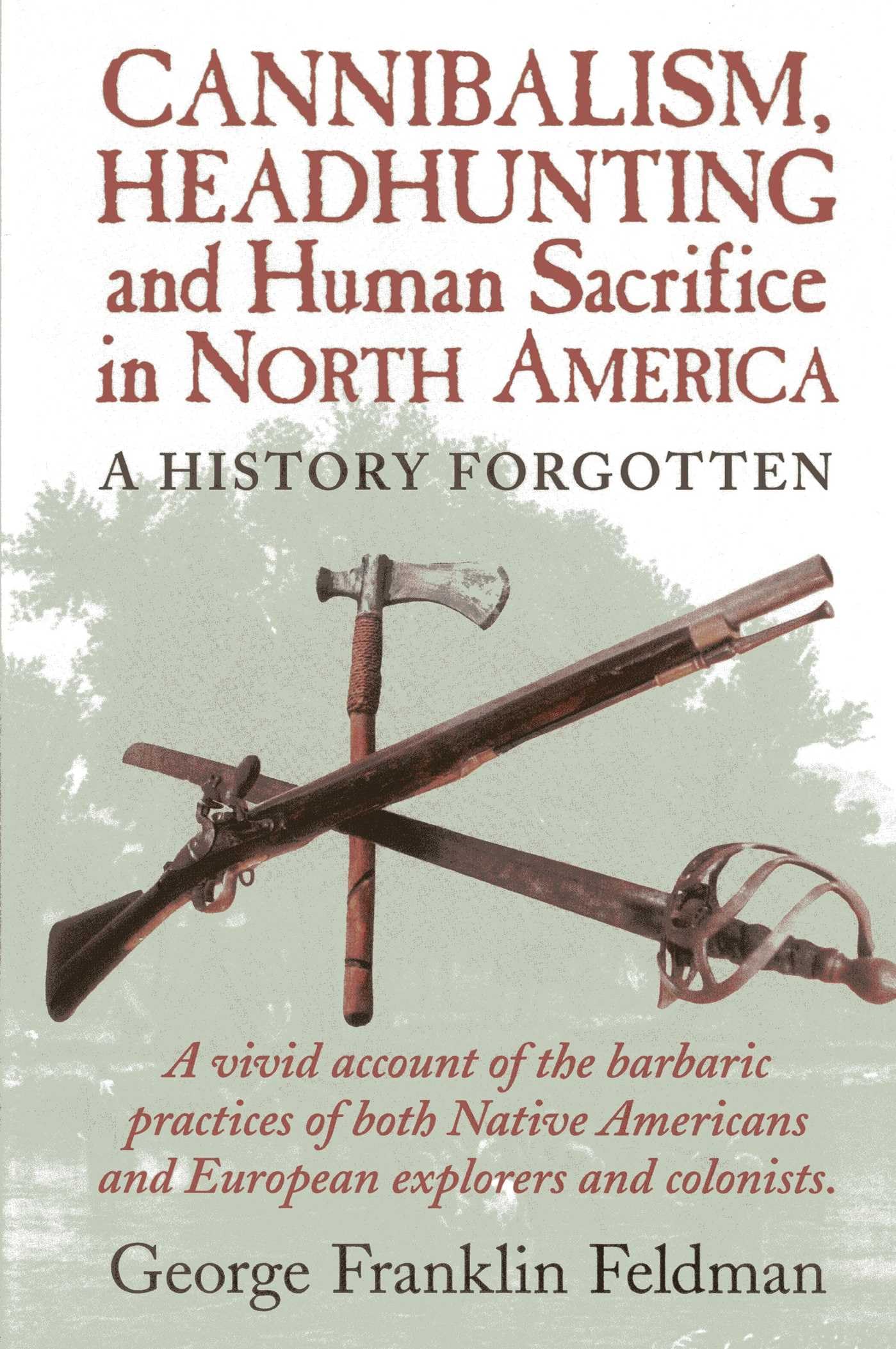
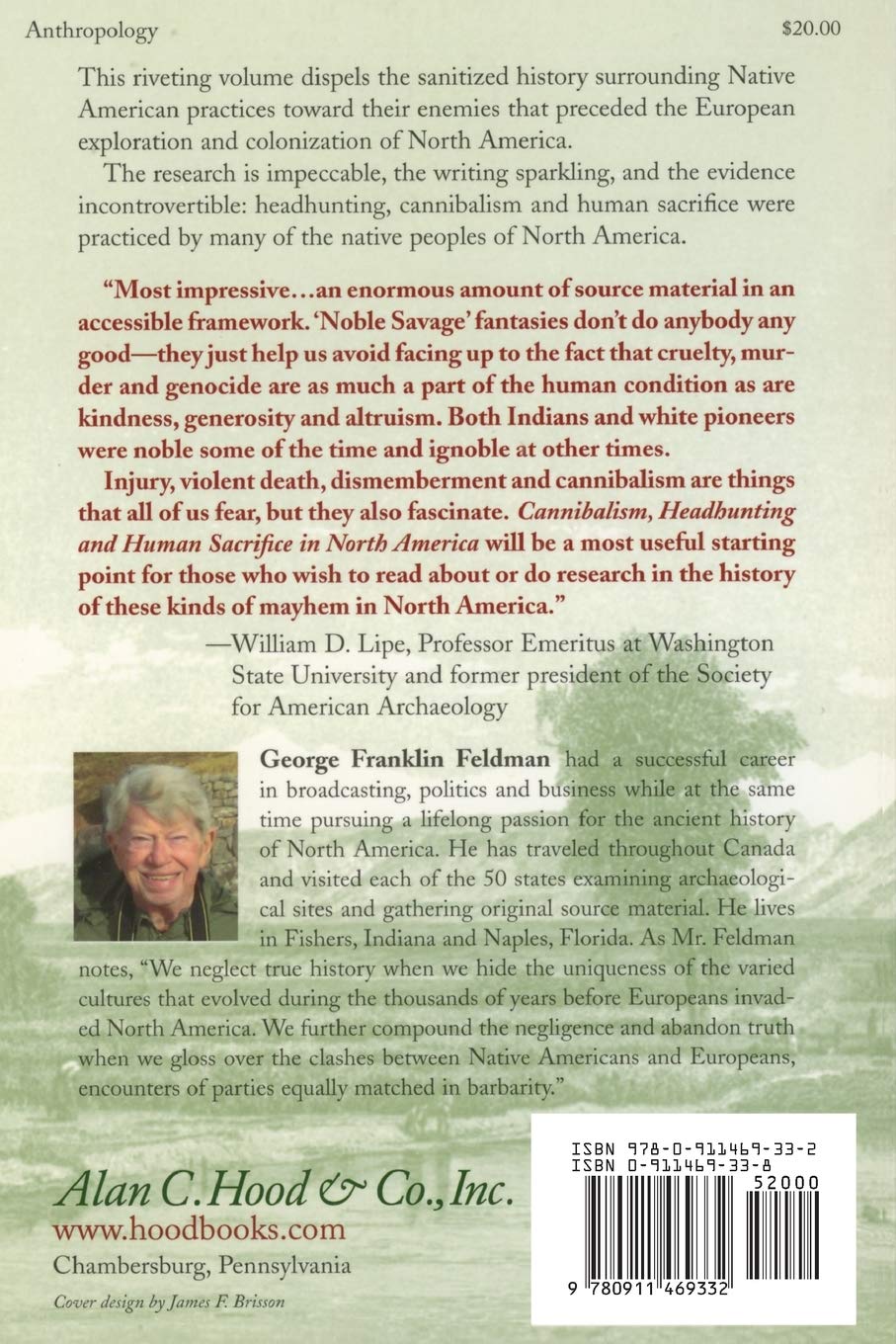
Full description not available
R**N
TBE reality of warfare in North America at at the time of first contact.
The author uncovers the inconvenient evidence behind the Myth of the Nobel Savage. He uses accounts of early explorers and settlers along with findings from archaeology. Cannibalism has been confirmed by physical evidence in the Southwest before Columbus. Head hunting and scalping were established methods of trophy-taking long before the first Europeans arrived. Human sacrifice was a religious practice uncovered at places such as Cahokia. This book is a useful overview that can be used to supplement such works as Mencken by Turner or Keeeley's War Beflre Civilization.
D**H
A true and factual understanding of the history of Native Americans and not the Disney portrayal.
Supported by archaeological and historical evidence, the author destroys the false Disney portrayal of the peace-loving Native American. Throughout North America, the Indians were at war with one another for 2000 years, complete with generational blood-feuds, torture, genocidal massacres, love of violence, and cannibalism. He does occasionally make politically-correct unsubstantiated condemnations against the White colonials ("...half of the [early] American presidents... would have been convicted of war crimes[against the Indians]"), or using defamatory pejoratives ("white invaders") but these opinionated commentaries seem to be included at the insistence of the editor as they are anomalies in the book and are not substantiated.
D**C
amazingly honest and informative book
Best book I've bought in a long time, my mother had a bunch of books on native americans, but those books were all the typical politically correct,the Indians were just innocent peace loving hippies until the evil Europeans showed up BS.One of those old books actally said,"Indians didn't start fighting amongst themselves until the white people taught them how to fight" you gotta be kidding me.I always suspected there was a much darker truth about the native american tribes, I knew there had to be a reason the white settlers were so terrified...now it makes sense.If you want to learn the REAL history of the native americans then you've got to get this book!You will learn that human sacrifice, headhunting and cannibalism were common everyday events, and Indian tribes viewed each other as FOOD items.I'd like to see Hollywood make a movie about that!JUST BUY IT
I**E
Quite comprehensive
well sourced and readable study of a gruesome topic that for some readers may deal a major blow to the notion/image of the "noble savage". Not that the author is judgemental but goes into horrific, stomach-churning details based on pre-Columbian archaelogical finds, eyewitness accounts and post factum reports, while also providing the necessary historico-cultural background and perspective on intertribal raiding and warfare."This book samples the terror of North American history, and has purposely omitted well-reported massacres such as Sand Creek, Wounded Knee, Jamestown and dozens of others easily found in libraries and bookstores. Many of the chapters conclude with population estimates, census, or reservation data, in an effort to examine the growth or lack of growth of the subject tribes. Counting the survivors is a tricky business" (p. 195).You can read about the following: the death-cult groups of the long-extinct Taensa and Natchez Indians in the lower Mississippi region and their (voluntary) human sacrifices to the Sun God as documented by French explorers in the 17-18th centuries (chapter 1); merciless Spanish conquistadors and Jesuits encountering the Calusa and Timucuans of Florida in the 16th century through the mid-1700s (ch. 2); "in contrast to the religious torture-sacrifice ceremonies of other Caddoan tribes, the [Skidi] Pawnees' periodic human sacrifices [usually of young females] to the morning star in the Nebraska plains were structured to be as quick and painless as possible" (p. 40 in ch. 3).Add to that the Jesuit accounts of the Iroquois and Hurons of the Great Lakes (ch. 5) - alternatively, one may watch a pretty good Canadian movie called Black Robe (1991, directed by Bruce Beresford) adapted from one Brian Moore's historical novel of the same title (1985); the Yuki and Kato of California (ch. 9; note that only cursory mention is made on page 129 of the planned and sponsored extermination of Californian Indians between 1848 and 1870); the custom of trophy-heads among the ancient Basketmakers in the southwest, as well as archaelogical remains indicating ancestral Puebloans fell victim to Chacoan "Mexican cultists [who] brought a 'harsh, totalitarian, and fatalistic Mesoamerican worldview' to the San Juan basin" (p. 140 in ch. 10), and tons more...Cruel atrocities committed by Euro-Americans (and Mexicans) are discussed in the context of the English Puritans' clashes with various local Algonquians (i.e. Metacomet/King Philip's War) in 17th c. New England (ch. 4); the excessive buffalo hunting effecting the Comanche and other plains Indians (ch. 11); the wars with the Apaches (Confederate officer John R. Baylor and Union general James Henry Carleton, for instance), the freedom fight and sad fate of Mangas Coloradas et al. (ch. 12); and the ruthless rampages of kill-for-hire scalp hunter gangs led by the likes of the heartless Irish James Kirker and the vicious John Joel Glanton on assignment from the Mexican administration of Chihuahua and Sonora (ch. 13). The reader can familiarize with the escapades of the Glanton gang and the bizarre miscreant known as "Judge Holden" in a novelized form through the brutal beauty of Cormac McCarthy's Blood Meridian: Or the Evening Redness in the West (1985).The native rationale behind deplorable cannibalism was "to do it for nutrition [see examples of intratribal cannibalism among the Chippewas in times of famine on p. 80]; to render deep insult to those they hated; to gain the powers and courage of the victim" (p. 100). The worst of all, institutionalized cannibalism was practiced as "an obligation and as a privilege granted" (ibid.) to the predatory and manipulative Hamatsa dark shamans of the Kwakiutl in the northwest who claimed they were possessed by the cannibal spirit of a tongue-twister name, Baxbakualanuxsiwae (ch. 8).It was also somewhat shocking to learn that "Apache boys, warriors-to-be, were given animals to torture to death and were rewarded for originality" (p. 177).20 b&w pics, endnotes (pp. 199-225), bibliography (227-37), index (239-49)Inconsistencies:"Sixty years before Morris found Battle Cave, Wetherill noted in his records that thirty-three caves were explored in the 1893 to 1894 expeditions..." (p. 134) - the context makes it clear that those "sixty years" should be amended to thirty-forty, since said "Earl Morris [was an] archaelogist working in the 1920s and 1930s" (ibid.).To counter the widely held view, also echoed by Feldman, according to which "[d]uring intertribal wars, total annihilation was never the objective" (p. 54), please consider the following:- "Some tribes like the Fox were almost annihilated" (p. 76). By whom: the British and/or fellow Amerindians?- The Mowachaht ambush attack of a neighbouring tribe in 1804 ended in slaughtering "a village population of around four hundred people" (p. 94) - of course, we don't know if that sole village constituted the entire tribe.- Also, "Maquinna's grandson Ciwuc led the Mowachaht in a war of attrition that lasted for years and had a single objective: to wipe out the Muchalaht" (p. 96 in ch. 7).- "The Comanches and the Tonkaways had been at war for a long time and the Tonkaways had been nearly exterminated" (p. 152, from the account of Herman Lehmann, a captive White boy of German descent grown to be an Apache, then Comanche warrior).Addendum:While there is a cursory mention of Windigo type of cannibalism from a Chippewa/Ojibwa source (p. 80), the earliest European account referencing two cases from 1634/5 and 1661 and interpreting the Windigo as "a veritable werewolf" by the French Jesuit Paul Le Jeune, who is cited in another context (pp. 65-6), is strangely omitted. That it was more than a myth, but a gory reality - especially in the dead of winter - is further demonstrated by the following: "[Morton I. Teicher - see his Windigo Psychosis (Proceedings of the 1960 Annual Spring Meeting of the AES)] was able to reconstruct from written sources and from Indian memories an exact profile of seventy authenticated cases of Windigo madness. Forty-four of these cases involved actual...cannibalism, and in the remaining twenty-six cases cannibalism was a fended-off threat;...the Windigo psychotic was actually killed before he could act out his cravings" (p. 85, Chapter 5 'Windigo: Monster of the North' in David D. Gilmore's Monsters: Evil Beings, Mythical Beasts, and All Manner of Imaginary Terrors 2009/2003 University of Pennsylvania Press).
M**H
A fun read
Currently, in academic literature there seems to be a curious "white washing" of Native American history ironically bolstering fallacious notions of a noble savage. Feldman, offers a clear, unbiased view of a violent pre-Columbian past perpetuated forward into the dawn of the violent new world.
Trustpilot
3 days ago
1 month ago