We remain fully operational. Our teams are working around the clock to ensure your deliveries continue safely.

DOWNLOAD THE APP


Customer Services
Copyright © 2025 Desertcart Holdings Limited
DOWNLOAD THE APP
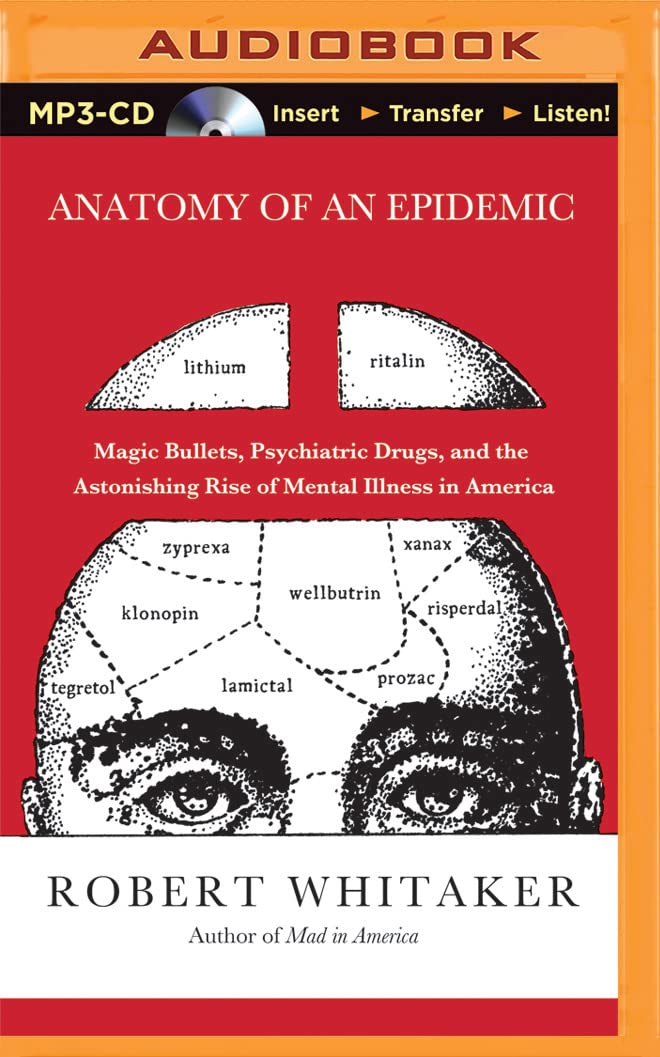
Anatomy of an Epidemic [Robert Whitaker, Ken Kliban] on desertcart.com. *FREE* shipping on qualifying offers. Anatomy of an Epidemic Review: Epic! Explains everything about how we got here - In 'Anatomy of an Epidemic' Robert Whitaker takes us on a journey and demonstrates how industrial compounds and various chemical 'magic bullets' evolved into the psychiatric drugs and 'blockbusters' as we know them today. He reveals the faulty logic, media deceptions, and special interests behind the various artificial epidemic(s) that were created to alert the public of their need for these so-called medicines in order to treat their newly discovered mental illnesses. He points out the amazing coincidental timing of the discovery of the widespread prevalence of these disorders in the public, parallel to the creation of a blockbuster to treat it. An epidemic of illness that is, of course, only just being fully understood, in the inevitable rush to treat it's various manifestations sooner and better. Is a rocket fuel compound called hydrazine the primogenitor of most modern 'anti' psych meds like antidepressants and antipsychotics and anxiolytics? We are told of the industrial origins of these chemicals. Of how hydrazine led to iaprozid, a treatment for tuberculosis, and eventually became an 'energizer' pill. We learn how, depressed patients treated with iaprozid, and who suffered side effects like mania and psychosis for weeks, would eventually find their depression symptoms abated completely. Does that not sound at all similar to drugs like Paxil, Zoloft and Prozac? Takes a few weeks to kick in? May have psychotropic side effects in the meantime? Whitaker explains how through lucky trial and error, phenothiazine, a compound sold by Dupont as a general pesticide became the miracle drug known as Thorazine. Thorazine worked so well as a 'chemical lobotomy' that previously delusional or aggressive patients could be released from institutionalization back into the community. We learn about a happy pill called Miltown which eventually led to benzos like Valium and Lorazapam which trapped people in a feedback loop so that if they should try to discontinue they found themselves battling an agonizing addiction and withdrawal far more powerful than say, heroin, which many addicted prison inmates sweat out after their first week or so behind bars. Some people, we find, can never, ever discontinue psych meds no matter how much they want to, because if they try, their mind and emotions malfunction too much, and only another dose of the drug relieves that distress again. Deeper in we learn of a super-trooper drug called methamphetamine that was issued to German soldiers in WWII during the winter to lessen fatigue, sharpen attention and keep up their morale which later became drugs like Ritalin and Adderall that young American teens, primarily boys, are forced to take to keep their wandering minds riveted on whatever their teacher is saying or doing in class. Whitaker tells us about psychiatry's arduous quest to become recognized as a legitimate science and their early treatments for insanity: from the dubious 'ice bath' to the Mengele-esque removal of organs, glands and teeth, to the biological shock treatments like insulin coma and electricity applied directly to the cranium to 'loosen the pattern' that psychosis had on the brain. Both methods reduced their patients to an infantile-like level of function, cured apparently, of their madness, at least temporarily, until the next episode or relapse. Psychiatrists have long wanted treatments that work for specific conditions like antibiotics do for infections in internal medicine. Whitaker clearly explains how it is really only the mechanical dispensing of prescriptions for a growing pharmacopoeia of 'anti-this' and 'anti-that' drugs for unproven mental 'diseases' (an idea that sprouted from and was nourished by--eventually disproved theories about various chemical imbalances) that actually makes psychiatry a 'real' branch of medicine. In the early to mid 90s Congress deregulated the pharmaceutical industry and ever since then the drug industry as a whole has been allowed to infiltrate nearly every form of media in existence with their advertising. The organizations that we would suppose exist to give us the straight dope on the science of mental illness and the real efficacy of medicinal treatments for it, like the FDA, APA and NIMH are, in fact, often seemingly in cahoots with them. Granted, the FDA has occasioned to put Black Box warnings on drugs, usually, only after public outcry. When enough people have died, maybe a drug will get a warning on it. Although, an independent review board assessing the FDA's decision invariably condemns the warning as 'hasty' and recommends more research first. The APA courts Big Pharma because, as Whitaker tells us, it is Big Pharma that equips psychiatry with their only effective chemical treatments for the mental diseases they write about in their diagnostic bible--the DSM. Drug companies and psychiatrists are likely bedfellows and their marriage has been an unbelievably, obscenely profitable arrangement for participants on both sides--leading to countless conflicts of interests. As in the case of Dr. Charles Nemeroff whose, as one snarky blogger once put it: "near-legendary prostitution of science to Big Pharma may hold some kind of record for the most conflicts of interest." In reference to how much stock he owned in, and how many corporate boards he sat on, of various pharmaceutical companies, as he provided expert testimony on various issues and sucked up millions of dollars in consulting fees. Dr. Nemeroff never found a drug he couldn't be paid to like and although his situation was extreme it is fairly endemic in the APA and was addressed by Loren Mosher years ago, in his now-infamous resignation letter from the APA. While it is true that previous directors of NIMH have gone on record stating (paraphrasing), "There is no conclusive evidence that schizophrenia is related to a dopamine imbalance nor is there any conclusive evidence that antipsychotics correct said imbalance," NIMH continues to toe the Big Pharma Party Line of mental disorders as chemical imbalances that need drug treatments even though they are aware that that relationship has been proven to be unsubstantiated by various studies and trials. I remember very vividly one day around during the summer of '95 or '96, sitting in the waiting room at my chiropractor's clinic and on an end table amongst a stack of adult magazines like 'Cosmo' I espied a children's magazine called 'Highlights' that I had read as a kid. Out of nostalgia, I picked it up and started flipping through it and lo and behold, right smack in the middle of it, was a two-page advertisement for Prozac. The left side was a child's drawing. A representation of a white, grey and black dreary, rainy world complete with a house, dog, and front yard. In the yard was a clearly unhappy, unsmiling stick figure drawing of 'Mommy' and also concerned diminutive stick figures of mom's kids, worry about mommy's sadness evident on their simple, compelling faces. At the bottom of the scene advertisers for Eli Lilly ask, "Is mommy sad?" In case the imagery wasn't obvious enough to any child. The right side featured the exact same kid's Crayola crayon drawing. Only now, the rain clouds were gone, a big round yellow sun was out and had a smiley face. Gone were the grays and blacks. The lawn was green. The house was red. The sky was blue. Mommy, the kids and the dog all seemed happy now. At the bottom of the advertisement, more crayon-style writing advised the child-reader to 'tell Mommy about Prozac'. Eli Lilly used artists and child psychologists to create an advertisement to prime little children into the medication modality and clearly tried to use these ads to communicate with kids what Prozac is and what it does and to get children to mention it to their mothers. The child 'nag' factor and mom's tendency to take notice of that is covered in the book 'Branded' and is obviously part of that strategy. Another obscene little fact is that Eli Lilly along with all the other pharma companies deliberately target women and mothers with antidepressant advertisements to make these otherwise healthy women want to be (even more) medicated. And evidence supports this trend. Right now, women are on twice as many antidepressants than men. It started way back with 'mother's little helper' and continues to this day, with advertisements for Abilifry and Geodont showing thoughtful-looking young women walking down beaches or doing yoga and a sales pitch telling them they could only be more empowered if they added a neuroleptic aka 'nerve clamp' aka mindwipe-in-a-bottle to their antidepressant or antiseizure drug regimen for the 'maintenance' (as in never-ending) treatment of bipolar or depression. Why has Congress not put the brakes on this and re-regulated this psychopathic, out-of-control, deceptive, calculating, money-hungry industry? It's been over ten years since you guys deregulated them and we can not trust a single thing out of their mouths. Always the suppressed truth gets subpoenaed in court a few years later after the newly patented blockbuster rakes in billions of dollars and we find, again and again, no matter the drug, that it was less effective than we were led to believe and causes more problems than they claim to treat. Is there not an obvious, repeating pattern here? Why are those of us without the power to change it the only ones who can see this? Why isn't anyone in charge in our government who actually has power, taking notes and doing something about it? 'Anatomy of an Epidemic' covers another hot-button issue that a lot of people are not even aware of. Social workers for Child and Family Services perform a service to families and communities and one of those services is to take children out of abused homes. All social workers have presumably read about how abused or abandoned children often present a plethora of mood and behavioral disorders. It's part of their training. A social worker then takes the child who has had an intervention, brings them to a psychiatrist, tell the doc the child clearly has depression, bipolar, autism, adhd, ptsd, or whatever they think the child is likely to have (based on whether the child is crying or scowling, talkative or quiet, aggressive or passive) and ask that the psychiatrist treat and prescribe for the newly minted Ward of the State. Then these kids are dropped off at foster homes with three, four, five and in some cases, many more psychotropic drugs the foster parents are told are needed to address the child's illnesses. This will interest the reader. All children and teens who become wards of the State are automatically covered by either Medicaid or Medicare until they are an adult. So the social worker gets these institutional psychiatrists to prescribe all those drugs to the child and the money that was paid to Big Pharma for the cost of those drugs comes right from your pocket because you subsidize Medicare with taxes. Nearly every state in America seems to have a nice, neat, circular loop with Big Pharma. The state provides a continuously growing, constantly renewable source of child patients who 'plainly' are in dire need of polypharmacy. They get these kids on the latest most expensive blockbuster neuroleptics and moodstabilizers and you the citizen pay for it. These kids have no say in their treatment. None at all. Most are never, ever told they they can refuse once they reach a certain age, fourteen, fifteen or sixteen. By the time they are an adult, you can bet their brains have been rewired with extra serotonin and dopamine receptors and they have a major multi-psychiatric drug addiction. They often have secondary iatrogenic diseases, like irreversible motor neuropathy, incredible obesity and diabetes and they become mentally and physically disabled adults, living in adult group homes and go right back on Medicare. You know how I know all this? Because I am a former ward of the state and was a foster kid during the late 80s and early 90s and personally saw this growing epidemic of medicated kids with my own eyes while I was under the auspices of their care, living in group homes and residential placement facilities. I am a former 'bipolar child' and while I can't tell you why social workers seem to have this drugging mandate, I can tell you that what Robert Whitaker is talking about in 'Anatomy' is just the tip of the iceberg. I would say, if the government was actually serious about cutting down on the 800 some-odd new people being added to the disability rolls daily, that an immediate and total ban on forced polypharmacy medication for foster kids and wards of the state would be a good place to save some money and cut down on future disabled citizens. And because that ban did not happen today, a portion of the 800 people that will be added to disability by tonight includes those wards of the state and foster kids. There are some serious, serious problems going on right now in this country that show no signs of changing as long as Big Pharma continues to have undue influence over the Food and Drug Administration, the National Institute of Mental Health and the American Psychiatric Association. 'Anatomy of an Epidemic' shows us, in careful, exquisitely researched detail, how we got here, from there, with today's psychiatric pseudoscience, their fifteen-minute, drive-thru diagnoses and the resulting array of perpetual, addictive, and brain-altering maintenance treatments for them. In the final analysis, 'Anatomy of an Epidemic', like 'Mad in America', shows that psychiatry is the emperor with no clothes. Psychiatrists don't have any special insight into how the brain works. None. Right now, it's all about finding defective genes and their completely disproved chemical imbalance nonsense. If you are not willing to lie down for some electroshock or submit to medication roulette, the truth is, there is nothing psychiatry can do for you. And they don't like to admit it. That they paid for med school and the extra pharmacy education and yet their services are not needed to achieve a real mental recovery and their treatments cause more problems and quality of life issues than they mitigate. The scope of the book asks us to levy skepticism of and carefully reconsider all that we think or know to be true today about the science behind mental illness, the actual efficacy of magic bullet treatments and the sudden occurrences of new epidemics of mental illness, hot on the heels of new drugs to treat them. This treatise asks us to consider the realfact, not the goodfact. Not the facts the government has endorsed, but the facts readily available from studies, statistics, patient outcome surveys and anecdotal stories that are found in abundance in this amazing piece of critical journalism. I can not recommend 'Anatomy of an Epidemic' enthusiastically enough. It's brilliant, engrossing, and at times, very unsettling reading. It should make you upset. I cried more than once and wanted to put my fist through someone before I got halfway through it. This book explains the who, what, why and how, that was the reasoning behind the mind-destroying effects I unwillingly suffered while being coerced inpatient, under repeated threats of restraints and forced injections, to take powerful doses of lithium and a neurolepetic called Trilafon as a teenager. It explains in detail why I was told this great lie: That I could never recover from manic depression and schizophrenia; that I would always be afflicted, that my illnesses were the results of incurable hereditary genetic chemical imbalances. And why I had no choice but to take those drugs for the rest of my life. A prognosis which was clearly in error, because here I am, twenty years after my Dx, completely healed of those conditions, symptom free for over a decade, without the use of any of those so-called 'meds'. But my diagnosing pdoc apparently didn't know about Quaker retreats, Soteria houses or that according to Whitaker, Emile Kraeplin's findings show that schizophrenic and manic depressive incidences were episodic and not chronic and incurable. It was not until the New Era reductionist model of biological psychiatry came and took over everyone's opinions and told us what to expect: a lifetime of disability from those that are mentally ill, that it actually became so, and was written in all the new textbooks like an immutable fact of reality. In fact, 'Anatomy of an Epidemic' shows us how, to this day, you are more likely to heal and recover from manic depression or schizophrenia if you DON'T take the medication-for-life route. Because it is polypharmacy roulette that is actually leading to lifetime disability, not mental illness itself. Consider the stories we are told, that require some heavy-duty mental gymnastics, in order to resolve the cognitive dissonance we acquire, the longer we research these different drugs. For example, you've probably heard that ADHD meds are safe. If they weren't, who would dare put little children on them right? But what are ADD meds? They are stimulants, analogs of methamphetamine. It's revealed in their chemical names like dextroamphetamine--Adderall and methylphenadate--Ritalin. We are told that these drugs are safe if used as directed, that is, for symptoms of ADHD. But it's not safe for those without ADHD? Why is that? Is there something about the biochemistry of those with ADHD symptoms that somehow makes it safe? While we think about that, consider this. I have known a few intravenous speed users and crank heads in my time. I dated one for awhile many years ago. One thing she told me in passing was that tweakers that are hard up for a fix will happily settle for snorting ADHD meds. It's not entirely the same high, but close enough. Interestingly, if we GoAskAlice online and plug in the words 'snort Ritalin' we find a User generated question about the medical effects of inhaling ADHD stimulants. GoAskAlice says: They include rapid heartbeat, aggression, psychosis and many of the other side effects one would get from shooting speed, snorting crank and tweaking. Then AskAlice reminds the User that it's only a safe drug when used properly by ADHD patients. Which again makes us wonder, how is Adderall or Ritalin all that different from tweak? What is it about an ADHD kid that makes them immune to tweaker side effects and dependency? Answers: they aren't, and, nothing. They are taking speed just a like a doper on the street and the street doper will happily settle for grinding up and snorting those meds in a pinch because it quenches the dependency itch and gives them a buzz and the much touted super-concentration effect. Personal story. My own brother was diagnosed with ADD in the 80s and briefly medicated for it with Ritalin. Side effects included loss of appetite and inability to sleep. My brother started wasting away like a tweaker, grinding his teeth, not eating or sleeping and any tweaker will tell you that's part of the ride when you get hooked on meth. People on various drug forums will tell you that Adderall, Ritalin and other stims cause 'some kind of jaw touching, jaw grinding effect' that leaves their mouth tired and sore. Sounds like meth to me. I experienced grinding teeth and jaws when I tried speed a couple times myself. The rise of the ADHD epidemic and their methamphetimine analog treatments has created an entire generation of middle and upper class stim junkies who can't even tell they are junkies. Big Pharma is not complaining though. It reminds me of Sarah Goldfarb on ephedrine from the movie 'Requiem For a Dream'. "Ma, you're grinding your teeth like a doper," Harry tells her after she starts the weight-loss pills. "They are just pills from my dahktah" she says. "He's a nice dahktah." And then my favorite part, Sarah says to her son, "How is it you know more about medicine than a dahktah?" Harry tells her, "Trust me mom, I know." Another great piece of consumer cognitive dissonance revolves around neurolepetics, the so-called 'antipsychotics'. Scientists did some studies a few years ago on the brains of macaques with a control group receiving a placebo and one group receiving Haldol and the other group receiving Zyprexa and not too surprisingly, six months later, the neuroleptic treated monkeys had brain damage. Pockets of interstitial fluid filled up spaces where healthy ganglion formerly existed. Antipsychotics aka neuroleptics aka 'nerve clamps', are pesticides. Most neuroleptics are analogs of phenothiazines. We have known for a long time that phenothiazines were used in textile dyes. And that it was sold as a pesticide by Dupont and is used as an antihelminthic or de-worming agent. If you want to know how a bug or worm feels when it is treated with a phenothiazine or piperazine derivative antipsychotic, go to youtube, look up videos on Tardive Dyskinesia and imagine experiencing that 1000 times worse. What do you think all the drooling, twitching, motor ataxia and shuffling gait is caused by? Are you going to tell me after hearing about people twitching and drooling uncontrollably and seeing TD in action in a video, that those people are not under the effects of or already harmed by, some kind of nervous system damaging agent? Consider this, deep inside the full data sheets on antipsychotics is a warning. "Do not let the liquid version of this drug come into contact with skin or clothing." But the data sheet never says why you shouldn't do that. Could it be that dropping liquid concentrate neurolepetics onto your skin or clothes will stain or tie-dye or otherwise cause color changes in the skin or fabric? Imagine that. A chemical used in dyes, converted into a medicine that can't come into contact with clothes because...? We would put it all together and realize it's not all that different from its textile and dye manufacturing cousin and not 'medicinal'. Certainly not in a healing sense. You ever smell liquid perphenazine? If you have ever worked with industrial chemicals and I have in blue-collar factory jobs--I've handled acids, acetones and I can tell you right now, if you take a deep whiff of a liquid antipsychotic it smells like a solvent. You will never forget it if you smell it like that, it's unique in its odor but totally something you might catch a whiff of in factories that work with metals, epoxies and etching chemicals. Read between the lies. What Big Pharma does, is dilute that industrial toxin and tweak the molecule around a little and sell it as a treatment for mental illness. That's all there is to it. And it's why it hurts you and makes your brain fog up and your mouth dry and your hands to shake and makes you tired. It's a very mild bug killer that you are playing Russian roulette with. If you get the chamber with the bullet, you come down with Tardive Dyskinesia, permanent central nervous system damage, to show for it. For me, perhaps the single most useful piece of ammunition in this book to use against your NAMI and NIMH indoctrinated friends, family and coworkers is this: The 'psych meds for mental illness is like insulin for a diabetic' analogy is the most closely held talking point for the pro-meds crowd and it is a lie. They have a mantra, "Insert X disease (ADHD, bipolar, OCD, schizophrenia) is a chemical imbalance that can be treated with drugs that address the specific imbalance." That mantra is provided by Big Pharma and is so thoroughly programmed into people, from senior citizens to junior high school kids, that you find, literally hundreds and thousands of people on the internet, on blogs, chatrooms, video comments and online news articles, all spreading this same lie every single day, 365 days a year, 'Mental illness is a chemical imbalance. It's like diabetes. You need meds to treat it." If psych meds are to psych patients like insulin is to a diabetic I should be as dead as a door nail now, because I had several 'comorbid' mental illnesses that 'should have been', but were never treated with psych meds during my early adult life. Furthermore, what Whitaker deftly shows us is the exact opposite of this mantra. That according to the research, people with depression, bipolar disorder, schizophrenia and other thought or mood disorders do not have any kind of serotonin or dopamine imbalance whatsoever. That if you measure dopamine and serotonin metabolites in recently deceased people who presented with depression or schizophrenia, they had normal amounts of those neurotransmitters. If you did the same thing to people who had spent months, a few years or decades under the influence of psych meds before they died, their blood metabolites showed they very much had a drug imposed serotonin or dopamine imbalance. What actually happens to a person, when they start on an SSRI like Prozac or Zoloft, is that the drug scrambles normal serotonin function and the brain grows new serotonin receptors to compensate. Ditto for the dopamine D1 and D2 antagonists that comprise the neurolepetic drugs. When treated with so-called antipsychotics, a patient's brain begins to grow more dopamine receptors to compensate for all the dopamine antagonizing going on. This penchant the brain has, of actively trying to subvert the effects of psych meds by growing more receptors to achieve its normal balance has been documented. Whitaker makes mention of it as the brain's 'resistance to permanent adjustment' and how this was first observed by pharma scientists. It's partly why for some people, meds simply stop working after awhile and they feel compelled to try another drug formula that their brain has yet to adapt to. But not everyone's brain can subvert any psych med it encounters through this adaptation process. In fact, we hear about one guy who can never, ever come off of Klonopin because he suffers too much from the withdrawal. I personally know someone who took six years to come off an insane drug cocktail that was added or subtracted to for over twenty years. She is finally better and drug free, but is not yet physically well. Her body and mind has to completely adapt to the absence of a half dozen brain-changing chemicals that hurt her for far too long. The process is painful, but she is hopeful and so are those who support her. 'Anatomy of an Epidemic' has many facts to learn and spread to others. * Fact: It is the drugs themselves that cause serotonin or dopamine imbalances. * Fact: You are more likely to really heal if you keep your use of these drugs to a minimum or not at all. * Fact: The longer you are on these drugs the more changes they make to your brain chemistry and neuronal firing. * Fact: As you add one drug after another after another, your likelihood of experiencing some pretty shocking, disabling and disastrous unpredictable drug interaction events becomes perilously certain. Bottom line: There is no chemical imbalance that causes depression and schizophrenia and by extension, their relatives like bipolar disorder. These ailments are not, repeat not caused by serotonin or dopamine imbalances and this book shows you why that is so. It is most certainly not true that you can never recover from schizophrenia. Or that once diagnosed, never undiagnosed, never healed, and that bipolar disorder or depression is doomed to haunt you forever. Meds are not like insulin for diabetics and mental illnesses are not chemical imbalances. Those ideas are marketing pitches that clever ad people wearing office professional clothing came up with, not in a lab, but in a cubicle of a glass-walled corporate building. When your teacher or parent or friend or psychiatrist tells you its a chemical imbalance, ask them, which chemicals? Insist that they tell you. If they won't or don't know, mention serotonin and dopamine, that should get them talking again. And then demand they explain how those two neurotransmitters are imbalanced. Then drop the bomb on them. Science has unequivocally proven that the drugs used to treat the conditions cause the very imbalance they claim to remedy. If they refuse to believe, show them, in chapter and page, this book and make them see and acknowledge it. Highlight the relevant sections with a fluorescent marker. Point at them with your finger. You may have to do that for everyone you meet until people finally get it into their heads that they are being programmed by advertising and government special interests groups. Tell them how it's not just serotonin or dopamine either. Every one of the 'anti' psych meds: antidepressants, antipsychotics, antianxiety, antiseizure, from Depakote and Neurontin to Prozac and Wellbutrin to Lorazapam or Seroquel, is exciting or inhibiting circuits in your body that maintain and govern its function that have been hardwired into it through the process of evolution. The body has some ability to self-correct from this, but if it's overwhelmed, overdosed, overmedicated, it stops doing that and becomes medically damaged in a process called 'iatrogenesis.' that can be permanent. Seriously, ask your doctor if Tardive Dyskinesia is right for your depression. If you think I spoiled the book with my review, consider this, I barely scratched the surface of its contents and the issues it exposes and could go on at length, easily for another ten thousands words. I didn't even go into the bipolar child thing. And how between Dmitri and Janice Papolos and Joe Biederman's Harvard Mafia they have pretty much created pediatric bipolar disorder out of thin air. Nor did I mention until now, that in 'Anatomy' we learn about sick Joe Biederman. A full professor who is 'next to God' who sits ensconced in the safety of the Harvard elite, performing mad experiments where he uses meth to induce tweaker episodes in kids, and if they get psychotic, it's a positive litmus test for childhood bipolar. Once that dx is made, the child is put on neurolepetics and moodstabilizers, as a matter of course, 'preventatively'. Biederman's whole mission seems to be to get young kids brains rewired on stims or bug killers or anti-seizure meds as soon as possible, for life. Don't even get me started on Biederman's 'A child can be bipolar from the moment it opens its eyes as a baby,' ideology. Why this modern-day Mengele has a medical license and is not behind bars I do not understand. Tl, dr version. Amazing book. Should be required reading before any social worker, psychologist or psychiatrist or psychiatric nurse gets their wings to start practicing. Buy this book. Read it. Get angry. Tell others. Then tell more. Reread it. Rinse and repeat. Even then you'll still get people who stubbornly insist on denial. You can put this book in front of someone's face but if they close their eyes, put their hands over their ears and shake their head and say "I'm not listening to you!" like Smeagol from 'Lord of the Rings' there's not a lot you can do. Review: I strongly urge all the psychiatry must read this book and carefully prescribe medicine to all patients just like they would do to their loved ones - As a former general physician and a current mental health professional, I strongly urge all the psychiatrists must read this book and carefully prescribe medicine to all patients just like they would do to their loved ones. This book is a collection of very disturbing cases and extremely convincing data, and thorough, honest, research-based on scientific documents as well. It proved what I have been suspecting: How my college child got the diagnosis of bipolar disorder from her college psychiatric clinic in the first place and was prescribed Risperdal by a nurse practitioner. It happened five years ago in a cold North East winter season when she felt bad mood after experiencing difficult personal issues. She went to the clinic and immediately got prescription of a combination of two antidepressant. One week later she felt the symptom was getting worse and became different, a suicidal thought, then she ended up getting Risperdal to treat the "mania." We asked her to stop the med and she did it with the doubt that she probably had a mental illness. Five years later, she became insomnia, probably due to work and stress. She thought her mental illness relapse due to the "fact" that she discontinued the med and it resulted now as an episode of "mania". She went to another university psychiatry clinic in the North West and was diagnosed bipolar again in the first visit and was told that she needs a lifetime medicine to control mental illness. It began with a young, inexperienced, some how panic, nowhere to get support, college student's one-time episode of a mood swing, and then ended up a chronic mental illness needing life time -long medicine. I felt my heart-wrenching and I am a failure of being a mother. I am a nice person and a professional woman with ethical standard and I never hated any one in my life until my child recently was diagnosed "bipolar disorder." Nowadays many college students are taking antidepressants due to little tolerance of mental stress and physical discomfort. Pharmaceutical companies and some psychiatrists should be responsible for these young lives. The thought of believing herself is a patient of mental illness and needing life time treatment is a heavier burden than the drug side-effect itself. The long-term effect of the medicine is a future consequence but the immediate consequence is the constant anxiety of "mental illness" lingering in her mind, which would cause/create/induce, so to speak, more "mania episode" happening again and again. Once the patient decides to stop the med, he or she would soon be immersed again into a strong anxiety of the coming relapses of the original symptom. That is why depression label is so difficult to get rid off by patients and by doctors. The human mind can be conditioned. What you think can make how you feel about your body and in turns, how you feel emotionally can lead to your physical response/symptoms --- insomnia, chronic muscle and joint pain, heart racing and palpitation, thoughts speeding, irregular bowel , blurred vision, lapse of memory, concentration deficits, lost interests and sexual drive, lost appetite, suicidal thoughts, etc. you named. A vicious cycle !!! A beautiful mind will eventually be destroyed. A young person with a promising degree and high achievement shouldn't be imprisoned by this kind of cruel life time sentence. Thank to Robert Whitaker. You lead the movement of "Mad in America." Every patient and every doctor should read this book.The medical field of mental health should be reformed. All psychiatrists need to take continuing education to learn about the other trends of treatment of symptoms, but not rush to verdict the patients who come to you for help. Scientific studies have proven that there is no such thing as "chemical imbalance." It is scary that many psychiatrists prescribe drugs based on what patients said about their feelings, not based on blood tests, high-tech imaging, biopsy, lab tests and long-term close observations and anecdotal of patient's daily functionings. Although a great majority of psychiatrists have a good heart to help patients, they need continuing education. In the entire medical field, there is no such highly controversial treatment of long term use of drugs as in the case of mental illness. Look at the treatment of diabetes, hypertension, thyroid problems, heart diseases, kidney diseases, autoimmune diseases, etc. , how many controversial debates can you hear? The diagnosis of these conditions is based on blood tests, high-tech imaging, biopsies and many lab tests. Yet, diagnosis of depression and bipolar disorder are based on none of the diagnostics tools. Be, aware! DSM itself is more art than science. Depression is a spectrum of symptoms, not a disease. There are other ways to manage these symptoms. Social, emotional, environmental aspects should be considered. The lifetime drug is not an answer, which does more harm than help. Please also read more comment below. Thanks.
| Best Sellers Rank | #8,198,468 in Books ( See Top 100 in Books ) #14 in Popular Psychology Psychopharmacology #199 in Popular Psychology Pathologies #1,501 in Medical Psychology Pathologies |
| Customer Reviews | 4.7 out of 5 stars 1,466 Reviews |
J**E
Epic! Explains everything about how we got here
In 'Anatomy of an Epidemic' Robert Whitaker takes us on a journey and demonstrates how industrial compounds and various chemical 'magic bullets' evolved into the psychiatric drugs and 'blockbusters' as we know them today. He reveals the faulty logic, media deceptions, and special interests behind the various artificial epidemic(s) that were created to alert the public of their need for these so-called medicines in order to treat their newly discovered mental illnesses. He points out the amazing coincidental timing of the discovery of the widespread prevalence of these disorders in the public, parallel to the creation of a blockbuster to treat it. An epidemic of illness that is, of course, only just being fully understood, in the inevitable rush to treat it's various manifestations sooner and better. Is a rocket fuel compound called hydrazine the primogenitor of most modern 'anti' psych meds like antidepressants and antipsychotics and anxiolytics? We are told of the industrial origins of these chemicals. Of how hydrazine led to iaprozid, a treatment for tuberculosis, and eventually became an 'energizer' pill. We learn how, depressed patients treated with iaprozid, and who suffered side effects like mania and psychosis for weeks, would eventually find their depression symptoms abated completely. Does that not sound at all similar to drugs like Paxil, Zoloft and Prozac? Takes a few weeks to kick in? May have psychotropic side effects in the meantime? Whitaker explains how through lucky trial and error, phenothiazine, a compound sold by Dupont as a general pesticide became the miracle drug known as Thorazine. Thorazine worked so well as a 'chemical lobotomy' that previously delusional or aggressive patients could be released from institutionalization back into the community. We learn about a happy pill called Miltown which eventually led to benzos like Valium and Lorazapam which trapped people in a feedback loop so that if they should try to discontinue they found themselves battling an agonizing addiction and withdrawal far more powerful than say, heroin, which many addicted prison inmates sweat out after their first week or so behind bars. Some people, we find, can never, ever discontinue psych meds no matter how much they want to, because if they try, their mind and emotions malfunction too much, and only another dose of the drug relieves that distress again. Deeper in we learn of a super-trooper drug called methamphetamine that was issued to German soldiers in WWII during the winter to lessen fatigue, sharpen attention and keep up their morale which later became drugs like Ritalin and Adderall that young American teens, primarily boys, are forced to take to keep their wandering minds riveted on whatever their teacher is saying or doing in class. Whitaker tells us about psychiatry's arduous quest to become recognized as a legitimate science and their early treatments for insanity: from the dubious 'ice bath' to the Mengele-esque removal of organs, glands and teeth, to the biological shock treatments like insulin coma and electricity applied directly to the cranium to 'loosen the pattern' that psychosis had on the brain. Both methods reduced their patients to an infantile-like level of function, cured apparently, of their madness, at least temporarily, until the next episode or relapse. Psychiatrists have long wanted treatments that work for specific conditions like antibiotics do for infections in internal medicine. Whitaker clearly explains how it is really only the mechanical dispensing of prescriptions for a growing pharmacopoeia of 'anti-this' and 'anti-that' drugs for unproven mental 'diseases' (an idea that sprouted from and was nourished by--eventually disproved theories about various chemical imbalances) that actually makes psychiatry a 'real' branch of medicine. In the early to mid 90s Congress deregulated the pharmaceutical industry and ever since then the drug industry as a whole has been allowed to infiltrate nearly every form of media in existence with their advertising. The organizations that we would suppose exist to give us the straight dope on the science of mental illness and the real efficacy of medicinal treatments for it, like the FDA, APA and NIMH are, in fact, often seemingly in cahoots with them. Granted, the FDA has occasioned to put Black Box warnings on drugs, usually, only after public outcry. When enough people have died, maybe a drug will get a warning on it. Although, an independent review board assessing the FDA's decision invariably condemns the warning as 'hasty' and recommends more research first. The APA courts Big Pharma because, as Whitaker tells us, it is Big Pharma that equips psychiatry with their only effective chemical treatments for the mental diseases they write about in their diagnostic bible--the DSM. Drug companies and psychiatrists are likely bedfellows and their marriage has been an unbelievably, obscenely profitable arrangement for participants on both sides--leading to countless conflicts of interests. As in the case of Dr. Charles Nemeroff whose, as one snarky blogger once put it: "near-legendary prostitution of science to Big Pharma may hold some kind of record for the most conflicts of interest." In reference to how much stock he owned in, and how many corporate boards he sat on, of various pharmaceutical companies, as he provided expert testimony on various issues and sucked up millions of dollars in consulting fees. Dr. Nemeroff never found a drug he couldn't be paid to like and although his situation was extreme it is fairly endemic in the APA and was addressed by Loren Mosher years ago, in his now-infamous resignation letter from the APA. While it is true that previous directors of NIMH have gone on record stating (paraphrasing), "There is no conclusive evidence that schizophrenia is related to a dopamine imbalance nor is there any conclusive evidence that antipsychotics correct said imbalance," NIMH continues to toe the Big Pharma Party Line of mental disorders as chemical imbalances that need drug treatments even though they are aware that that relationship has been proven to be unsubstantiated by various studies and trials. I remember very vividly one day around during the summer of '95 or '96, sitting in the waiting room at my chiropractor's clinic and on an end table amongst a stack of adult magazines like 'Cosmo' I espied a children's magazine called 'Highlights' that I had read as a kid. Out of nostalgia, I picked it up and started flipping through it and lo and behold, right smack in the middle of it, was a two-page advertisement for Prozac. The left side was a child's drawing. A representation of a white, grey and black dreary, rainy world complete with a house, dog, and front yard. In the yard was a clearly unhappy, unsmiling stick figure drawing of 'Mommy' and also concerned diminutive stick figures of mom's kids, worry about mommy's sadness evident on their simple, compelling faces. At the bottom of the scene advertisers for Eli Lilly ask, "Is mommy sad?" In case the imagery wasn't obvious enough to any child. The right side featured the exact same kid's Crayola crayon drawing. Only now, the rain clouds were gone, a big round yellow sun was out and had a smiley face. Gone were the grays and blacks. The lawn was green. The house was red. The sky was blue. Mommy, the kids and the dog all seemed happy now. At the bottom of the advertisement, more crayon-style writing advised the child-reader to 'tell Mommy about Prozac'. Eli Lilly used artists and child psychologists to create an advertisement to prime little children into the medication modality and clearly tried to use these ads to communicate with kids what Prozac is and what it does and to get children to mention it to their mothers. The child 'nag' factor and mom's tendency to take notice of that is covered in the book 'Branded' and is obviously part of that strategy. Another obscene little fact is that Eli Lilly along with all the other pharma companies deliberately target women and mothers with antidepressant advertisements to make these otherwise healthy women want to be (even more) medicated. And evidence supports this trend. Right now, women are on twice as many antidepressants than men. It started way back with 'mother's little helper' and continues to this day, with advertisements for Abilifry and Geodont showing thoughtful-looking young women walking down beaches or doing yoga and a sales pitch telling them they could only be more empowered if they added a neuroleptic aka 'nerve clamp' aka mindwipe-in-a-bottle to their antidepressant or antiseizure drug regimen for the 'maintenance' (as in never-ending) treatment of bipolar or depression. Why has Congress not put the brakes on this and re-regulated this psychopathic, out-of-control, deceptive, calculating, money-hungry industry? It's been over ten years since you guys deregulated them and we can not trust a single thing out of their mouths. Always the suppressed truth gets subpoenaed in court a few years later after the newly patented blockbuster rakes in billions of dollars and we find, again and again, no matter the drug, that it was less effective than we were led to believe and causes more problems than they claim to treat. Is there not an obvious, repeating pattern here? Why are those of us without the power to change it the only ones who can see this? Why isn't anyone in charge in our government who actually has power, taking notes and doing something about it? 'Anatomy of an Epidemic' covers another hot-button issue that a lot of people are not even aware of. Social workers for Child and Family Services perform a service to families and communities and one of those services is to take children out of abused homes. All social workers have presumably read about how abused or abandoned children often present a plethora of mood and behavioral disorders. It's part of their training. A social worker then takes the child who has had an intervention, brings them to a psychiatrist, tell the doc the child clearly has depression, bipolar, autism, adhd, ptsd, or whatever they think the child is likely to have (based on whether the child is crying or scowling, talkative or quiet, aggressive or passive) and ask that the psychiatrist treat and prescribe for the newly minted Ward of the State. Then these kids are dropped off at foster homes with three, four, five and in some cases, many more psychotropic drugs the foster parents are told are needed to address the child's illnesses. This will interest the reader. All children and teens who become wards of the State are automatically covered by either Medicaid or Medicare until they are an adult. So the social worker gets these institutional psychiatrists to prescribe all those drugs to the child and the money that was paid to Big Pharma for the cost of those drugs comes right from your pocket because you subsidize Medicare with taxes. Nearly every state in America seems to have a nice, neat, circular loop with Big Pharma. The state provides a continuously growing, constantly renewable source of child patients who 'plainly' are in dire need of polypharmacy. They get these kids on the latest most expensive blockbuster neuroleptics and moodstabilizers and you the citizen pay for it. These kids have no say in their treatment. None at all. Most are never, ever told they they can refuse once they reach a certain age, fourteen, fifteen or sixteen. By the time they are an adult, you can bet their brains have been rewired with extra serotonin and dopamine receptors and they have a major multi-psychiatric drug addiction. They often have secondary iatrogenic diseases, like irreversible motor neuropathy, incredible obesity and diabetes and they become mentally and physically disabled adults, living in adult group homes and go right back on Medicare. You know how I know all this? Because I am a former ward of the state and was a foster kid during the late 80s and early 90s and personally saw this growing epidemic of medicated kids with my own eyes while I was under the auspices of their care, living in group homes and residential placement facilities. I am a former 'bipolar child' and while I can't tell you why social workers seem to have this drugging mandate, I can tell you that what Robert Whitaker is talking about in 'Anatomy' is just the tip of the iceberg. I would say, if the government was actually serious about cutting down on the 800 some-odd new people being added to the disability rolls daily, that an immediate and total ban on forced polypharmacy medication for foster kids and wards of the state would be a good place to save some money and cut down on future disabled citizens. And because that ban did not happen today, a portion of the 800 people that will be added to disability by tonight includes those wards of the state and foster kids. There are some serious, serious problems going on right now in this country that show no signs of changing as long as Big Pharma continues to have undue influence over the Food and Drug Administration, the National Institute of Mental Health and the American Psychiatric Association. 'Anatomy of an Epidemic' shows us, in careful, exquisitely researched detail, how we got here, from there, with today's psychiatric pseudoscience, their fifteen-minute, drive-thru diagnoses and the resulting array of perpetual, addictive, and brain-altering maintenance treatments for them. In the final analysis, 'Anatomy of an Epidemic', like 'Mad in America', shows that psychiatry is the emperor with no clothes. Psychiatrists don't have any special insight into how the brain works. None. Right now, it's all about finding defective genes and their completely disproved chemical imbalance nonsense. If you are not willing to lie down for some electroshock or submit to medication roulette, the truth is, there is nothing psychiatry can do for you. And they don't like to admit it. That they paid for med school and the extra pharmacy education and yet their services are not needed to achieve a real mental recovery and their treatments cause more problems and quality of life issues than they mitigate. The scope of the book asks us to levy skepticism of and carefully reconsider all that we think or know to be true today about the science behind mental illness, the actual efficacy of magic bullet treatments and the sudden occurrences of new epidemics of mental illness, hot on the heels of new drugs to treat them. This treatise asks us to consider the realfact, not the goodfact. Not the facts the government has endorsed, but the facts readily available from studies, statistics, patient outcome surveys and anecdotal stories that are found in abundance in this amazing piece of critical journalism. I can not recommend 'Anatomy of an Epidemic' enthusiastically enough. It's brilliant, engrossing, and at times, very unsettling reading. It should make you upset. I cried more than once and wanted to put my fist through someone before I got halfway through it. This book explains the who, what, why and how, that was the reasoning behind the mind-destroying effects I unwillingly suffered while being coerced inpatient, under repeated threats of restraints and forced injections, to take powerful doses of lithium and a neurolepetic called Trilafon as a teenager. It explains in detail why I was told this great lie: That I could never recover from manic depression and schizophrenia; that I would always be afflicted, that my illnesses were the results of incurable hereditary genetic chemical imbalances. And why I had no choice but to take those drugs for the rest of my life. A prognosis which was clearly in error, because here I am, twenty years after my Dx, completely healed of those conditions, symptom free for over a decade, without the use of any of those so-called 'meds'. But my diagnosing pdoc apparently didn't know about Quaker retreats, Soteria houses or that according to Whitaker, Emile Kraeplin's findings show that schizophrenic and manic depressive incidences were episodic and not chronic and incurable. It was not until the New Era reductionist model of biological psychiatry came and took over everyone's opinions and told us what to expect: a lifetime of disability from those that are mentally ill, that it actually became so, and was written in all the new textbooks like an immutable fact of reality. In fact, 'Anatomy of an Epidemic' shows us how, to this day, you are more likely to heal and recover from manic depression or schizophrenia if you DON'T take the medication-for-life route. Because it is polypharmacy roulette that is actually leading to lifetime disability, not mental illness itself. Consider the stories we are told, that require some heavy-duty mental gymnastics, in order to resolve the cognitive dissonance we acquire, the longer we research these different drugs. For example, you've probably heard that ADHD meds are safe. If they weren't, who would dare put little children on them right? But what are ADD meds? They are stimulants, analogs of methamphetamine. It's revealed in their chemical names like dextroamphetamine--Adderall and methylphenadate--Ritalin. We are told that these drugs are safe if used as directed, that is, for symptoms of ADHD. But it's not safe for those without ADHD? Why is that? Is there something about the biochemistry of those with ADHD symptoms that somehow makes it safe? While we think about that, consider this. I have known a few intravenous speed users and crank heads in my time. I dated one for awhile many years ago. One thing she told me in passing was that tweakers that are hard up for a fix will happily settle for snorting ADHD meds. It's not entirely the same high, but close enough. Interestingly, if we GoAskAlice online and plug in the words 'snort Ritalin' we find a User generated question about the medical effects of inhaling ADHD stimulants. GoAskAlice says: They include rapid heartbeat, aggression, psychosis and many of the other side effects one would get from shooting speed, snorting crank and tweaking. Then AskAlice reminds the User that it's only a safe drug when used properly by ADHD patients. Which again makes us wonder, how is Adderall or Ritalin all that different from tweak? What is it about an ADHD kid that makes them immune to tweaker side effects and dependency? Answers: they aren't, and, nothing. They are taking speed just a like a doper on the street and the street doper will happily settle for grinding up and snorting those meds in a pinch because it quenches the dependency itch and gives them a buzz and the much touted super-concentration effect. Personal story. My own brother was diagnosed with ADD in the 80s and briefly medicated for it with Ritalin. Side effects included loss of appetite and inability to sleep. My brother started wasting away like a tweaker, grinding his teeth, not eating or sleeping and any tweaker will tell you that's part of the ride when you get hooked on meth. People on various drug forums will tell you that Adderall, Ritalin and other stims cause 'some kind of jaw touching, jaw grinding effect' that leaves their mouth tired and sore. Sounds like meth to me. I experienced grinding teeth and jaws when I tried speed a couple times myself. The rise of the ADHD epidemic and their methamphetimine analog treatments has created an entire generation of middle and upper class stim junkies who can't even tell they are junkies. Big Pharma is not complaining though. It reminds me of Sarah Goldfarb on ephedrine from the movie 'Requiem For a Dream'. "Ma, you're grinding your teeth like a doper," Harry tells her after she starts the weight-loss pills. "They are just pills from my dahktah" she says. "He's a nice dahktah." And then my favorite part, Sarah says to her son, "How is it you know more about medicine than a dahktah?" Harry tells her, "Trust me mom, I know." Another great piece of consumer cognitive dissonance revolves around neurolepetics, the so-called 'antipsychotics'. Scientists did some studies a few years ago on the brains of macaques with a control group receiving a placebo and one group receiving Haldol and the other group receiving Zyprexa and not too surprisingly, six months later, the neuroleptic treated monkeys had brain damage. Pockets of interstitial fluid filled up spaces where healthy ganglion formerly existed. Antipsychotics aka neuroleptics aka 'nerve clamps', are pesticides. Most neuroleptics are analogs of phenothiazines. We have known for a long time that phenothiazines were used in textile dyes. And that it was sold as a pesticide by Dupont and is used as an antihelminthic or de-worming agent. If you want to know how a bug or worm feels when it is treated with a phenothiazine or piperazine derivative antipsychotic, go to youtube, look up videos on Tardive Dyskinesia and imagine experiencing that 1000 times worse. What do you think all the drooling, twitching, motor ataxia and shuffling gait is caused by? Are you going to tell me after hearing about people twitching and drooling uncontrollably and seeing TD in action in a video, that those people are not under the effects of or already harmed by, some kind of nervous system damaging agent? Consider this, deep inside the full data sheets on antipsychotics is a warning. "Do not let the liquid version of this drug come into contact with skin or clothing." But the data sheet never says why you shouldn't do that. Could it be that dropping liquid concentrate neurolepetics onto your skin or clothes will stain or tie-dye or otherwise cause color changes in the skin or fabric? Imagine that. A chemical used in dyes, converted into a medicine that can't come into contact with clothes because...? We would put it all together and realize it's not all that different from its textile and dye manufacturing cousin and not 'medicinal'. Certainly not in a healing sense. You ever smell liquid perphenazine? If you have ever worked with industrial chemicals and I have in blue-collar factory jobs--I've handled acids, acetones and I can tell you right now, if you take a deep whiff of a liquid antipsychotic it smells like a solvent. You will never forget it if you smell it like that, it's unique in its odor but totally something you might catch a whiff of in factories that work with metals, epoxies and etching chemicals. Read between the lies. What Big Pharma does, is dilute that industrial toxin and tweak the molecule around a little and sell it as a treatment for mental illness. That's all there is to it. And it's why it hurts you and makes your brain fog up and your mouth dry and your hands to shake and makes you tired. It's a very mild bug killer that you are playing Russian roulette with. If you get the chamber with the bullet, you come down with Tardive Dyskinesia, permanent central nervous system damage, to show for it. For me, perhaps the single most useful piece of ammunition in this book to use against your NAMI and NIMH indoctrinated friends, family and coworkers is this: The 'psych meds for mental illness is like insulin for a diabetic' analogy is the most closely held talking point for the pro-meds crowd and it is a lie. They have a mantra, "Insert X disease (ADHD, bipolar, OCD, schizophrenia) is a chemical imbalance that can be treated with drugs that address the specific imbalance." That mantra is provided by Big Pharma and is so thoroughly programmed into people, from senior citizens to junior high school kids, that you find, literally hundreds and thousands of people on the internet, on blogs, chatrooms, video comments and online news articles, all spreading this same lie every single day, 365 days a year, 'Mental illness is a chemical imbalance. It's like diabetes. You need meds to treat it." If psych meds are to psych patients like insulin is to a diabetic I should be as dead as a door nail now, because I had several 'comorbid' mental illnesses that 'should have been', but were never treated with psych meds during my early adult life. Furthermore, what Whitaker deftly shows us is the exact opposite of this mantra. That according to the research, people with depression, bipolar disorder, schizophrenia and other thought or mood disorders do not have any kind of serotonin or dopamine imbalance whatsoever. That if you measure dopamine and serotonin metabolites in recently deceased people who presented with depression or schizophrenia, they had normal amounts of those neurotransmitters. If you did the same thing to people who had spent months, a few years or decades under the influence of psych meds before they died, their blood metabolites showed they very much had a drug imposed serotonin or dopamine imbalance. What actually happens to a person, when they start on an SSRI like Prozac or Zoloft, is that the drug scrambles normal serotonin function and the brain grows new serotonin receptors to compensate. Ditto for the dopamine D1 and D2 antagonists that comprise the neurolepetic drugs. When treated with so-called antipsychotics, a patient's brain begins to grow more dopamine receptors to compensate for all the dopamine antagonizing going on. This penchant the brain has, of actively trying to subvert the effects of psych meds by growing more receptors to achieve its normal balance has been documented. Whitaker makes mention of it as the brain's 'resistance to permanent adjustment' and how this was first observed by pharma scientists. It's partly why for some people, meds simply stop working after awhile and they feel compelled to try another drug formula that their brain has yet to adapt to. But not everyone's brain can subvert any psych med it encounters through this adaptation process. In fact, we hear about one guy who can never, ever come off of Klonopin because he suffers too much from the withdrawal. I personally know someone who took six years to come off an insane drug cocktail that was added or subtracted to for over twenty years. She is finally better and drug free, but is not yet physically well. Her body and mind has to completely adapt to the absence of a half dozen brain-changing chemicals that hurt her for far too long. The process is painful, but she is hopeful and so are those who support her. 'Anatomy of an Epidemic' has many facts to learn and spread to others. * Fact: It is the drugs themselves that cause serotonin or dopamine imbalances. * Fact: You are more likely to really heal if you keep your use of these drugs to a minimum or not at all. * Fact: The longer you are on these drugs the more changes they make to your brain chemistry and neuronal firing. * Fact: As you add one drug after another after another, your likelihood of experiencing some pretty shocking, disabling and disastrous unpredictable drug interaction events becomes perilously certain. Bottom line: There is no chemical imbalance that causes depression and schizophrenia and by extension, their relatives like bipolar disorder. These ailments are not, repeat not caused by serotonin or dopamine imbalances and this book shows you why that is so. It is most certainly not true that you can never recover from schizophrenia. Or that once diagnosed, never undiagnosed, never healed, and that bipolar disorder or depression is doomed to haunt you forever. Meds are not like insulin for diabetics and mental illnesses are not chemical imbalances. Those ideas are marketing pitches that clever ad people wearing office professional clothing came up with, not in a lab, but in a cubicle of a glass-walled corporate building. When your teacher or parent or friend or psychiatrist tells you its a chemical imbalance, ask them, which chemicals? Insist that they tell you. If they won't or don't know, mention serotonin and dopamine, that should get them talking again. And then demand they explain how those two neurotransmitters are imbalanced. Then drop the bomb on them. Science has unequivocally proven that the drugs used to treat the conditions cause the very imbalance they claim to remedy. If they refuse to believe, show them, in chapter and page, this book and make them see and acknowledge it. Highlight the relevant sections with a fluorescent marker. Point at them with your finger. You may have to do that for everyone you meet until people finally get it into their heads that they are being programmed by advertising and government special interests groups. Tell them how it's not just serotonin or dopamine either. Every one of the 'anti' psych meds: antidepressants, antipsychotics, antianxiety, antiseizure, from Depakote and Neurontin to Prozac and Wellbutrin to Lorazapam or Seroquel, is exciting or inhibiting circuits in your body that maintain and govern its function that have been hardwired into it through the process of evolution. The body has some ability to self-correct from this, but if it's overwhelmed, overdosed, overmedicated, it stops doing that and becomes medically damaged in a process called 'iatrogenesis.' that can be permanent. Seriously, ask your doctor if Tardive Dyskinesia is right for your depression. If you think I spoiled the book with my review, consider this, I barely scratched the surface of its contents and the issues it exposes and could go on at length, easily for another ten thousands words. I didn't even go into the bipolar child thing. And how between Dmitri and Janice Papolos and Joe Biederman's Harvard Mafia they have pretty much created pediatric bipolar disorder out of thin air. Nor did I mention until now, that in 'Anatomy' we learn about sick Joe Biederman. A full professor who is 'next to God' who sits ensconced in the safety of the Harvard elite, performing mad experiments where he uses meth to induce tweaker episodes in kids, and if they get psychotic, it's a positive litmus test for childhood bipolar. Once that dx is made, the child is put on neurolepetics and moodstabilizers, as a matter of course, 'preventatively'. Biederman's whole mission seems to be to get young kids brains rewired on stims or bug killers or anti-seizure meds as soon as possible, for life. Don't even get me started on Biederman's 'A child can be bipolar from the moment it opens its eyes as a baby,' ideology. Why this modern-day Mengele has a medical license and is not behind bars I do not understand. Tl, dr version. Amazing book. Should be required reading before any social worker, psychologist or psychiatrist or psychiatric nurse gets their wings to start practicing. Buy this book. Read it. Get angry. Tell others. Then tell more. Reread it. Rinse and repeat. Even then you'll still get people who stubbornly insist on denial. You can put this book in front of someone's face but if they close their eyes, put their hands over their ears and shake their head and say "I'm not listening to you!" like Smeagol from 'Lord of the Rings' there's not a lot you can do.
D**M
I strongly urge all the psychiatry must read this book and carefully prescribe medicine to all patients just like they would do to their loved ones
As a former general physician and a current mental health professional, I strongly urge all the psychiatrists must read this book and carefully prescribe medicine to all patients just like they would do to their loved ones. This book is a collection of very disturbing cases and extremely convincing data, and thorough, honest, research-based on scientific documents as well. It proved what I have been suspecting: How my college child got the diagnosis of bipolar disorder from her college psychiatric clinic in the first place and was prescribed Risperdal by a nurse practitioner. It happened five years ago in a cold North East winter season when she felt bad mood after experiencing difficult personal issues. She went to the clinic and immediately got prescription of a combination of two antidepressant. One week later she felt the symptom was getting worse and became different, a suicidal thought, then she ended up getting Risperdal to treat the "mania." We asked her to stop the med and she did it with the doubt that she probably had a mental illness. Five years later, she became insomnia, probably due to work and stress. She thought her mental illness relapse due to the "fact" that she discontinued the med and it resulted now as an episode of "mania". She went to another university psychiatry clinic in the North West and was diagnosed bipolar again in the first visit and was told that she needs a lifetime medicine to control mental illness. It began with a young, inexperienced, some how panic, nowhere to get support, college student's one-time episode of a mood swing, and then ended up a chronic mental illness needing life time -long medicine. I felt my heart-wrenching and I am a failure of being a mother. I am a nice person and a professional woman with ethical standard and I never hated any one in my life until my child recently was diagnosed "bipolar disorder." Nowadays many college students are taking antidepressants due to little tolerance of mental stress and physical discomfort. Pharmaceutical companies and some psychiatrists should be responsible for these young lives. The thought of believing herself is a patient of mental illness and needing life time treatment is a heavier burden than the drug side-effect itself. The long-term effect of the medicine is a future consequence but the immediate consequence is the constant anxiety of "mental illness" lingering in her mind, which would cause/create/induce, so to speak, more "mania episode" happening again and again. Once the patient decides to stop the med, he or she would soon be immersed again into a strong anxiety of the coming relapses of the original symptom. That is why depression label is so difficult to get rid off by patients and by doctors. The human mind can be conditioned. What you think can make how you feel about your body and in turns, how you feel emotionally can lead to your physical response/symptoms --- insomnia, chronic muscle and joint pain, heart racing and palpitation, thoughts speeding, irregular bowel , blurred vision, lapse of memory, concentration deficits, lost interests and sexual drive, lost appetite, suicidal thoughts, etc. you named. A vicious cycle !!! A beautiful mind will eventually be destroyed. A young person with a promising degree and high achievement shouldn't be imprisoned by this kind of cruel life time sentence. Thank to Robert Whitaker. You lead the movement of "Mad in America." Every patient and every doctor should read this book.The medical field of mental health should be reformed. All psychiatrists need to take continuing education to learn about the other trends of treatment of symptoms, but not rush to verdict the patients who come to you for help. Scientific studies have proven that there is no such thing as "chemical imbalance." It is scary that many psychiatrists prescribe drugs based on what patients said about their feelings, not based on blood tests, high-tech imaging, biopsy, lab tests and long-term close observations and anecdotal of patient's daily functionings. Although a great majority of psychiatrists have a good heart to help patients, they need continuing education. In the entire medical field, there is no such highly controversial treatment of long term use of drugs as in the case of mental illness. Look at the treatment of diabetes, hypertension, thyroid problems, heart diseases, kidney diseases, autoimmune diseases, etc. , how many controversial debates can you hear? The diagnosis of these conditions is based on blood tests, high-tech imaging, biopsies and many lab tests. Yet, diagnosis of depression and bipolar disorder are based on none of the diagnostics tools. Be, aware! DSM itself is more art than science. Depression is a spectrum of symptoms, not a disease. There are other ways to manage these symptoms. Social, emotional, environmental aspects should be considered. The lifetime drug is not an answer, which does more harm than help. Please also read more comment below. Thanks.
M**N
An "insider's" point of view
Many of the harshest reviews of this book seem to be coming from those who currently depend on psychiatric medications, and find the author's conclusions heartless, given their own distress. As a person diagnosed with MDD (major depressive disorder) 22 years ago, and medicated with a substantial cocktail of psych drugs for 20 years after that diagnosis, I want to add my perspective to this discussion. My life is better without the medications. I can't say that will be true for everyone, but it is true for me. I read Robert Whitaker's book almost two years ago, and his conclusions alarmed me. I also had to honestly wonder, do I really feel better on all these medications than I would without them? I had been told by well-respected psychiatrists at two major research universities that the only way to prevent recurring depressive episodes was to be on medication for life. I had believed them, and taken the medications. I felt reasonably okay a lot of the time, though somewhat dulled and flattened by the meds. But I still had debilitating depressive episodes, sometimes lasting for months, in spite of the medications. As I looked around at my many, many friends and family members on psychiatric medications, it seemed to me that most of them were still pretty substantially depressed a lot of the time. For years I had found the notion of "chemical imbalance" reassuring. The solution to my mental distress–medication–was no different than if I had diabetes and needed insulin, apparently! Taking psych meds with this perspective makes you feel that you are doing your best to take care of yourself, which is reassuring when you're still feeling awful. You're doing what you can do. "Better living through chemistry!" I used to wryly joke, as I'd down my cocktail of three or more medications every night. I regularly saw my psychiatrist, who would tweak the meds here and there to give me better relief. How sad that the "chemical imbalance" theory just doesn't hold up to actual research! I understand how doctors came to use that analogy to reassure patients who were alarmed at the prospect of being on mind-altering drugs for long periods of time. But there are no chemicals being balanced here. The drug effects are powerful, but they are not restoring what is missing and replicating a healthy brain. That truth, well researched in this book, needs to be told. After reading "Anatomy of an Epidemic" two years ago, I was convinced that I at least needed to try life without medications. My husband is a physician, and he found the research in the book compelling as well. I did a very slow, careful taper off of my psych drugs, over a period of months (this part is absolutely crucial). The side effects of withdrawing were physically painful at times, but I got through them. I've been off psychiatric medication for over a year and a half, and I feel really good. Do I still get depressed? Yes, sometimes I do. But certainly not more depressed than I did on the medications. I really appreciate having the full range of my emotional reactions restored to me. It's dreary having the ecstatic side of life chopped off, along with the abject misery. Drugs do that. And psychiatric medications have frightening long-term consequences, some of which are only coming to light now that people have been on them for decades. If medications are truly needed, in most cases they should be temporary, not long-term. Life is hard, stress is real, and problems need to be dealt with. There is no magic bullet. I have found daily aerobic exercise to be a far more reliable way of mitigating depression than my former medications, and research in this book shows this to be true for a majority of people as well. Mindfulness meditation has also helped, and kind people who listen to me. I don't blame my doctors for my years of overmedication. They were doing the best they knew how for me, given the way that training is passed down doctor-to-doctor through medical education. The "medical model" of psychiatry saved that branch of medicine from dying out, given our insurance-based healthcare system, and Robert Whitaker does a great job of exposing the collusion between the pharmaceutical companies and the American Psychiatric Association, with its frightening consequences. I found the section of the book describing the way research evidence was "rewritten" for medical school textbooks truly alarming. There's a lot at stake here for the psychiatric profession; it's not surprising that so many psychiatrists turn from this research with alarm and denial. I admire Robert Whitaker for bringing this problem to light, and for doggedly pursuing it both in the US and internationally. I recommend his website "Mad in America" for recent news and discussion.
L**A
A deal with the devil - a short term "fix" gone bad ...
Short review: Two thumbs up. Longer review: Impeccably researched. Thorough. Compelling. Deeply disturbing. The argument is that powerful psychotropics can be an inviting short term "fix" when an individual is deeply upset or misbehaving for emotional and psychological reasons. But it is a deal with the devil. The "short term" fix unleashes a sequence of unanticipated consequences along a spectrum from rapid cycling to dependency and addiction. Maybe one's neurons do need changing - but do it by means of a conversation and new learning, not a chemical intervention that is the equivalent of a rubber mallet to the head [my metaphor, not Whitaker's]. Above all, rapid cycling is a consequence that occurs (according to the author and his meticulously documented footnotes) not only in the biploar world but also in the schizophrenic continuum too. That was surprising to me - but the author marshals numerous studies from scientific journals. This book is also: A narrative how the road to hell is paved with good intentions as well as a legitimate attempts to make a difference. A cautionary story about the limits of clinical trials and "double blind" everything. It is the long-term results of chemically altering neurons that is [literally] making our lives into emotional hell and killing us. No winners here. Just suffering humanity. A sample (p. 242 of the paperback edition): "All of this tells of an epidemic that is mostly iatrogenic in kind. Fifty years ago, physicians virtually never saw manic-depressive illness is in preteens, and they rarely diagnosed it in adolescents. Then pediatricians and psychiatrists began prescribing Ritalin to hyperactive children, and the medical journals began running case reports of manic children. This problem grew as the prescribing of Ritalin increased, and then it exploded with the introduction of the SSRIs ... " {Page 246:] "Twenty years ago, our society began regularly prescribing psychiatric drugs to children and adolescents, and now one out of every fifteen Americans enters adulthood with a "serious mental illness."" Almost no space is devoted to the role of Big Pharma, which has been well-documented elsewhere (e.g., Chris Lane) though a strong push back is implied against the activities of Big Pharma in the areas of prescribing psychotropic drugs. Those three words you don't want to hear: "Service to capital!"
G**S
Written With Attitude
IRobert Whitaker's 2010 book Anatomy of an Epidemic is written with attitude. Even if only half of the hypothesis developed in Whitaker's examination of the effects psychiatric drugs on adults and children is accurate, this book is an essential and illuminating read. imgres-1 Whitaker leaves no doubt that the prescribing of an antidepressant drugs for both adults and children is of epidemic proportions in America. He makes the case that there is no scientific evidence that mental disorders are caused by a chemical imbalance in the brain. The pharmaceutical industry continues to promote "magic bullets" designed to alter the brain's chemical balance, treating mental illness as a disease. Research compiled by Whitaker documents that the long-term effects of the use of antidepressants cause permanent brain damage rather than provide any definable cure. He questions the entire efficacy of the use of drug therapy in the treatment of mental illness. He advances a conspiracy theory between the drug manufacturers and the marketing of the "magic bullets" to patients desperate for answers for themselves and their children. The most frightening conclusion proffered by Anatomy of an Epidemic is that long-term recovery rates for persons with mental disorders are better for those who have not been subjected to any form drug therapy. Just like the book, " In a Different Key, The Story of Autism ( See Gordonsgood Reads February posting), Anatomy of an Epidemic is an essential read for anyone concerned with examining a different narrative about the treatment of mental illness. Robert Whitaker also authored Mad in America. He is a journalist and investigative reporter who has specialized in the area of mental health. His numerous articles and books have been the recipients of several awards including a Pulitzer finalist for investigative reporting. Robert Whitaker's 2010 book Anatomy of an Epidemic is written with attitude. Even if only half of the hypothesis developed in Whitaker's examination of the effects psychiatric drugs on adults and children is accurate, this book is an essential and illuminating read. imgres-1 Whitaker leaves no doubt that the prescribing of an antidepressant drugs for both adults and children is of epidemic proportions in America. He makes the case that there is no scientific evidence that mental disorders are caused by a chemical imbalance in the brain. The pharmaceutical industry continues to promote "magic bullets" designed to alter the brain's chemical balance, treating mental illness as a disease. Research compiled by Whitaker documents that the long-term effects of the use of antidepressants cause permanent brain damage rather than provide any definable cure. He questions the entire efficacy of the use of drug therapy in the treatment of mental illness. He advances a conspiracy theory between the drug manufacturers and the marketing of the "magic bullets" to patients desperate for answers for themselves and their children. The most frightening conclusion proffered by Anatomy of an Epidemic is that long-term recovery rates for persons with mental disorders are better for those who have not been subjected to any form drug therapy. Just like the book, " In a Different Key, The Story of Autism ( See Gordonsgood Reads February posting), Anatomy of an Epidemic is an essenti essential read for anyone concerned with examining a different narrative about the treatment of mental illness. Robert Whitaker also authored Mad in America. He is a journalist and investigative reporter who has specialized in the area of mental health. His numerous articles and books have been the recipients of several awards including a Pulitzer finalist for investigative reporting. For more reviews see gordonsgoodreads.com
P**.
Essential reading for psychoanalysts and students
I have just finished reading Robert Whitaker's new book, "Anatomy of an epidemic: Magic bullets, psychiatric drugs, and the astonishing rise of mental illness in America," and I urge every member of the American Psychoanalytic Association (APsaA) to read it as well. I especially urge my physician colleagues to read it twice . . . if their cardiovascular health will permit. Whitaker's book is a carefully crafted indictment of a biological psychiatry that has no empirically-validated model of psychiatric disease, that shoots from the hip using powerful medications that have a huge impact across a broad range of human biological functioning, and that has allied itself with a pharmaceutical industry that has systematically "cooked the books" in order to create a market for its products. I've taken the time to go to some of Whitaker's hundreds of references . . . and thus far they all check out. He brings together, in a clear and compelling way, observations that I can confirm from my 42 years in the field (most spent in departments of psychiatry). Prozac is as effective today as leeches were a hundred years ago . . . but it does far more damage than leeches did (unless they were carrying parasites). Leeches could be removed. Prozac-damaged neurons cannot be removed or repaired. I realize that I'm treading close to the edge of hyperbole and that many of my psychiatric colleagues (and a few of my non-medical colleagues) will react with disdain. In response I would say: Read the book. Check out the references. Look at the data. Fortunately we psychoanalysts have some alternatives to offer. Meanwhile, we shouldn't confuse our patients - or ourselves - by gazing, entranced, at the fabulous images produced by fMRIs. The brain, with its 100 billion neurons and its 150 trillion synaptic connections (give or take a few) is pretty complicated. Manipulating one or two or three or four neurotransmitters, with no clear idea of why they do what they do, and with no clear sense of what damage we might be causing in the long run, is only the latest version of phrenology or humors or any number of prior "breakthroughs" in our field. Psychoanalysis is a general psychology and offers a much more nuanced and flexible way of approaching psychic conflict and pain than can be found in serotonin levels. Notice: I did not say more effective - in the past psychoanalysts sometimes have sabotaged what we actually have to offer by overselling it. We, too, must hold ourselves to the maxim, "Primum non nocere" (First, do no harm). I will be recommending this book to every person I know, but especially to the psychiatry residents and clinical psychology graduate students I supervise.
M**N
Packed with real, peer reviewed research from top med schools , the WHO, NIMH, and APA!
As someone with serious mental illness, I was always skeptical about the ability of mental health "medications" to help; after all, my problem was with my thoughts and my thought process. I didn't understand how a pill could fix that. But I had always assumed that while the claims were hyped up a bit, and the side-effects downplayed, that overall medication was a viable option for treatment that could help people. A lot of people are totally unaware of how absolutely dehumanizing the entire mental health system is; When you have a mental health crisis, the police come, often very many police. You are given the option to go voluntarily, but if you don't want to, you can be put in cuffs and leg shackles and forcibly taken, and if you "act up" in the crisis center, you can be tied down to a bed, beaten, and tranquilized, something I have personally witnessed twice. You have no legal recourse. You can't record this as evidence because all of your personal property- except for a piece of paper with a phone number or two- are taken. This book explodes the inhumanity of the current system of mental health. Thanks to the government-backed cartel, the psychiatric care industry is a monopoly, with its own press, its own "scientists", its own policing mechanism, and its own production process. These drugs, for most people , are totally ineffective, completely unsafe, and lead to worse long-term outcomes that then create dependency than can be irreversible. I was very, very skeptical of this at first; I assumed books like this were akin to the anti-vaxxers and the association of local soccer moms who claimed they cured autism by avoiding red dye. But this book is FULL of published, peer reviewed studies from top journals, conducted by trained and licensed psychologists and psychiatrists, and run by organisations like the National Institute for Mental Health, the World Health Organization, Harvard Medical School, etc. There is a clear scientific consensus that these drugs are ineffective for most ,dangerous for many, and clearly not a first line of defense in terms of mental health. While perhaps the exact numbers of people who have essentially had "induced" mental illness are off, something the author admits, the direct scientific evidence is appalling. This book should be required reading for anyone diagnosed with mental illness, anyone tasked with helping the mentally ill, and anyone who cares about human rights. I'll end with this quote: “the majority of mental illnesses , especially the most severe, are largely self-limiting in nature if the patient is not subjected to a demeaning experience or loss of rights and liberties.” - Dr. Brockhoven and Dr. Solomon, Boston Psychiatric Hospital. Our current system is nothing less than an immediate quest to demean the mentally ill as broken people ,take their rights, and confine their Liberties.
J**L
A must read for anyone who has a loved one taking neuroleptics
As a physician with 30 years experience I have found modern psychiatry to be a throwback to mediaeval obeisance — its practitioners are white-robed ‘priests’ who practice a religion whose bible is scripted by pharmaceutical firms and whose raison d’être is profit. The strength of this analysis comes from his contrasting the treatment of mental illness (schizophrenia, depression, mania) in the pre-mediation era (1920-1950) by examining the metrics of severity, relapse, chronicity etc with that of the post-medication era (1965-today). Comparing the two databases is telling. In summary, pharmaceutical treatment has clearly worsened all these illnesses. I, as a physician who treated mental illness, was rocked back on my heels upon examination of this information. How hoodwinked I have been by both the medical profession and the pharmaceutical firms ... as are most other M.D.'s. We have met the enemy and they are us. According to this religion every child is mentally imbalanced and must be medicated by drugs whose long term consequences cause untold harm and an epidemic of future psychiatric diseases, expense and even death. Great-&-wonderful — a growing congregation for the religion! Even the FDA and NIMH have become fellow travelers and promoters of this cult. Contrary to the “one-star” reviews this book is solidly referenced, explores its material in both depth and breath and pursues all angles of numerous topics. If you have a loved one taking a neuroleptic (Ritalin, SSRI, tricyclics etc) you must read this book to find out the longterm consequences of these drugs for I assure you the federal government, pharmaceutical firms and the practitioners of this theology will withhold and deny all contrarian data — instead they will attack your sanity and integrity for even questioning them. Additionally, if an informed loved one confronts any member of this theology with hard data and requests that these questionable drugs be discontinued — they will be accused of child endangerment, criminal neglect and even report you to Children’s Services as being reckless. Why the hardball? Look — this is a religion and heretics threaten their priesthood and this is intolerable. This book is a must read for any parent whose child is placed on the conveyor belt of endless medications. Stop sitting on your hands, educate yourself & stop being passive. Congratulations to author Robert Whitaker for confronting a wall of corruption (MD’s, FDA, NIMH, AMA, pharmaceutical firms etc) knowing full well that he would, in turn, get a tsunami of vitriol … and do it anyway. This book is a winner!
Trustpilot
1 day ago
1 month ago