
DOWNLOAD THE APP


Customer Services
Copyright © 2025 Desertcart Holdings Limited
DOWNLOAD THE APP
Full description not available
E**G
Getting glimpses of the nature of one's own mind is like catching rain falling from the sky
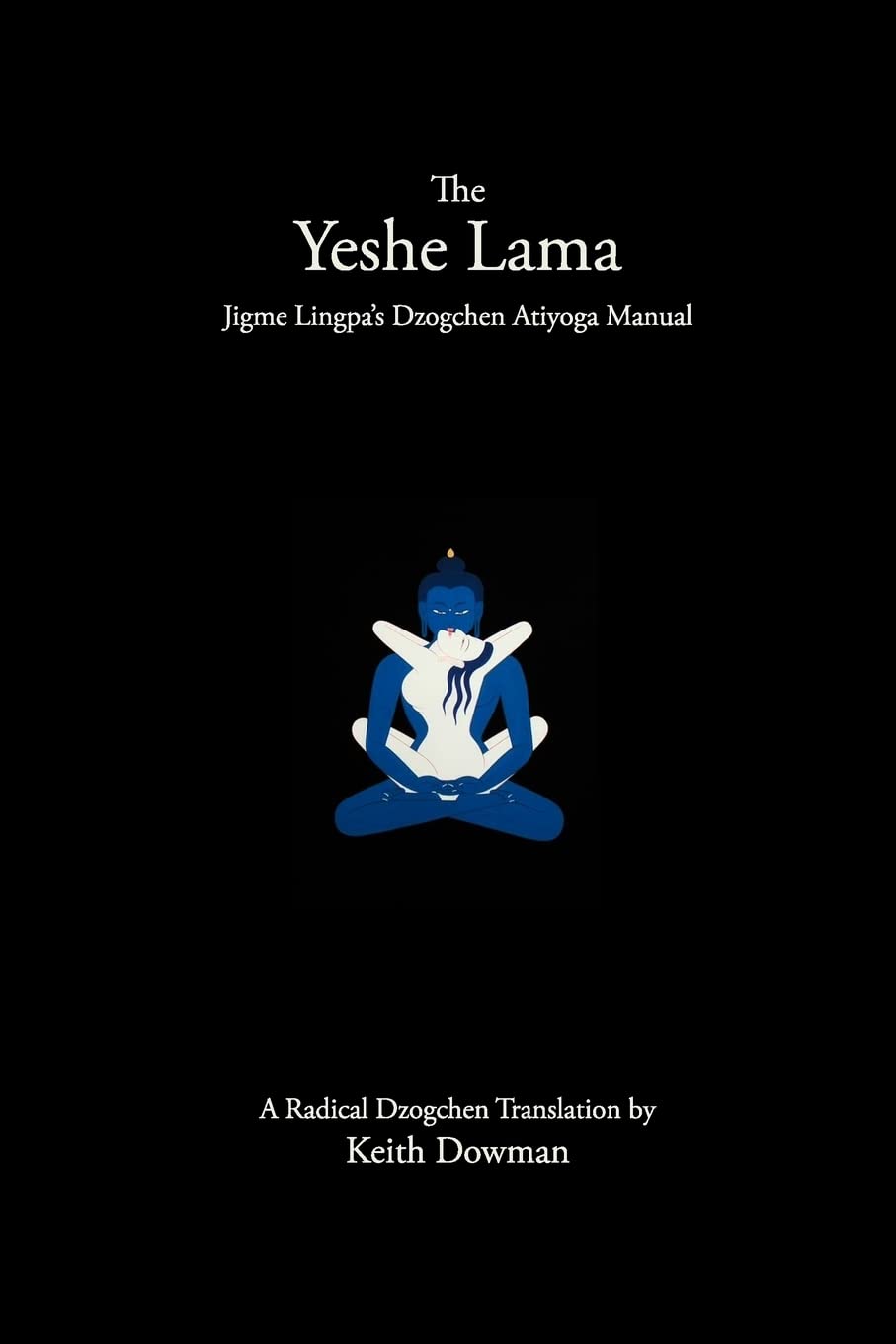
The ultimate objective of all Buddhist practice is the direct experiencing of the nature of one's own mind; that is, enlightenment. There are many different levels of practice designed to match the different capacities and levels of preparedness of practitioners. While many practices have objectives which are considered to be only steps towards enlightenment, Dzogchen has enlightenment as its immediate goal. The Yeshe Lama is considered to be one the most efficacious instruction manuals within Dzogchen for experiencing of the nature of one's own mind through the practices of Trekcho (Breakthrough) and Togal (Leapover). This book by Keith Dowman is the latest translation into English of this time honored work.There are a number of different factors that could be used to distinguish this translation from the others. Some are the accuracy, understandability and poetic nature of the translation as well as quality and usefulness of the translator's commentary. I feel Mr. Dowman does very well indeed with all these. However, in this instance there is one single factor that dwarfs all the others: Availability. The other translations will be unavailable to you if you can not produce evidence of having received empowerment and authorization to read the text by an authentic lama. As Tibetan Buddhism penetrates more and more deeply into the west (providing enlightening new techniques to ameliorate suffering), it is inevitable that a clash of the two cultures will happen.The feudal nature of Tibetan Buddhism might possibly be conducive to the continuation of that religion or even Tibetan culture itself, I do not know. However, it can present a distinct obstruction to people who wish to recognize their own buddha natures (the nature of their minds). Neither knowledge of the nature of mind nor its direct experience can or should be owned or controlled by any individual or group of individuals. Anyone who has tasted the clear light is saturated with the desire that every being become aware of his/her own existence as buddha. By Keith Dowman's open publishing of the Yeshe Lama an important step has been made towards bringing to the general population the wisdom of enlightenment that Tibet has to offer humanity. I feel intense satisfaction because this has been done; perhaps I have longed to see such a thing for many many years. And so, I publicly wish to express my appreciation and deep respect to Mr. Dowman for what he has given the west – it is precious beyond words, and for his courage to stand exactly where the waves are breaking in the meeting of these two cultures.I must finish with a disclaimer for those who are unfamiliar with the teachings in Dzogchen on the attainment of enlightenment. Getting glimpses of the nature of one's own mind is like catching rain falling from the sky. Putting out empty buckets to catch the falling of uncertain rain can not be effective with certitude. There can be no direct cause of the experiencing of the nature of mind. Nonetheless, in the same way that empty buckets are useful in gathering rainwater, I feel that the general availability of the Yeshe Lama will do much to help people discover their own mind.
B**N
The Keys to the Palace
Is this the book that most deserves the title bible for the practice of Dzogchen? It’s difficult to imagine a more likely candidate. After a month of savoring this very readable translation of Jingme Lingpa’s Dzogchen Atiyoga Manual, returning to it remains as refreshing an experience as reading it for the first time. This is a “radical” Dzogchen, but the translator explains his reasons for making it available (see page vi.). Although it bears the translator’s warning that it’s one of the so called secret teachings, for those who accept the concept of self-secret and who have experience in the practice of Buddhist meditation, it will likely prove supremely rewarding. If not, it should be put aside for a later reading done under the guidance of mentor or guru. This probably isn’t where you want to start if it’s your first foray into Buddhism.In a fine introduction the translator poetically sings the praises of Yeshe Lama and places it in historical perspective: It’s relatively new, written only three hundred years ago. That’s not far back in a 2500 plus year Buddhist tradition. It’s a manual, it’s “lamrim”, and must be practiced, drilled with until its second nature, like a soldier’s skills. But now if it is to survive, it must survive outside the Tibetan traditions, and after all it is a direct path of breakthrough and crossing over to our natural state in an act of spontaneous liberation. All these labels are themselves contrived and the reader/practitioner must go beyond them, “leap” to the result. The translator warns; don’t mistake the finger that points towards the moon as the moon itself (page xii.). That’s why it’s now being made directly available without the filter of lama. It’s universal. You are being given the keys to the palace. Nothing omitted, nothing for future revelation. Read and wonder. Good luck.
Trustpilot
4 days ago
2 months ago