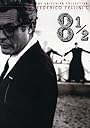
8 1/2 (The Criterion Collection) [DVD]
Product ID: 4769136
Details
- GenreDrama
- FormatAnamorphic &
- ContributorAnouk Aimée
- LanguageEnglish
- Runtime2 hours and 18
Desertcart purchases this item on your behalf and handles shipping, customs, and support to Ireland.
An early working title for 8 1/2 was "La Bella Confusione" (The Beautiful Confusion), and Federico Fellini's masterpiece is exactly that: A grand epic of one man's artistic crisis, a shimmering dream, a circus, and a magic act. The Criterion Collection is proud to present the 1963 Academy Award winner for Best Foreign-Language Film. Starring Marcelo Mastroianni. Includes: 2-disc Set; Audio Commentary by critic/Fellini friend Gideon Bachmann and film professor Antonio Monda, plus excerpts from Fellini's interviews and letters and Deena Boyler's on-set diary; Trailer; Production Stills; Introduction by director Terry Gilliam, Essays by Fellini, Monda, and Fellini collaborator and critic Tullio Kezich; "Fellini: A Director's Notebook" (1969, 52 min.) and much more! Review: “The fragments of a life”… - A formidable movie, in the stricter sense of the word. In a looser sense, it has helped shape the way that I’ve seen the world, ‘lo these past six decades. I saw this movie when it first came out, in 1963, at one of my favorite art theaters in Pittsburgh. Like most of us at the time, we’d only viewed rather straightforward movies of “good and evil,” Westerners, and the like. Predictable endings. The director of “8 ½,” Federico Fellini, offered something radically different, a foreshadowing of the stream-of-consciousness technique in literature, how the fragments of one’s life get all jumbled up in the brain. And he provided some takeaways that have long been with me. I was 16 at the time and took a date who was 15. In re-watching it now, if I thought it somewhat baffling at 16, I wonder what my date thought about the portrayal of the women in the movie, who are “fragments” in the life of the movie director, Guido Anselmi, excellently played by Marcello Mastroianni. There is his wife, Luisa, wonderfully played by Anouk Aimée, who was the motive force behind the re-watching of it now. There is the “virginal” Claudia Cardinale, usually in white (I had not realized that she was originally Tunisian). Sandra Milo plays Guido’s flighty bimbo of a mistress. And so many others: The airline stewardess; the caring mom who wraps the infant Guido in a blanket; the first stripper; the insightful and nagging friend of his wife… “Upstairs when you are 40.” That was one of the big takeaways. Anselmi is having this male fantasy about his “harem,” all those fragmented women who are there to serve him and do so in complete harmony when he realizes that the “stripper” is now 40 and must go upstairs, the metaphor for being placed on the “discard pile” for being too old. He gets out his bull whip even, to drive her up the stairs. Even at 16, when 40 is more than twice your life away, it did seem a bit harsh, particularly when the same rule does not apply to the guy with the bull whip. It was also my first viewing of the prototype of those pompous pedantic critics of movies or literature who toss around expressions like “impoverished poetic imagination,” “overabundant symbols,” and, of course, “self-indulgent.” I was in parochial high school at the time, so the scenes in which the priests were chasing down the young student Guido in order to shame and humiliate him because he found sexual imagery to be of interest, imagine that, strongly resonated. It was also the era that the Catholic Church published “The Index of Forbidden Books,” (which now seems to have been taken over by the woke crowd of today), and thus the scene in which Anselmi has to pay homage to the Cardinal also resonated. Anouk Aimée is absolutely mesmerizing. She has been a “fragment” of my own life, ever since I viewed “A Man and a Woman” in the ’60’s. Again, she played opposite the equally formidable Jean-Louis Trintignant, of “Z,” “Three Colors, Red,” and so much else, fame. Far more relevantly, the two of them recently played in “The Best Years of Our Lives,” again directed by Claude Lelouch. Aimée is now a young 90. In her role as Anselmi’s wife, Luisa, she wore those glasses that connotated a greater thoughtfulness than him. I searched that ever-so-youthful face watching for the subtle expressions of later movies. It struck to the core. Luisa is utterly fed up with Guido’s philandering and constant lies. And Guido is suffering from “director’s block” in trying to finish his movie, with what sort of message? Luisa fires off THE classic line that I have long remembered: “But what can you say to strangers when you can’t tell the truth to the one closest to you…”. The only problem is that I’ve felt that line was said in Ingmar Bergman’s “Scenes from a Marriage.” And maybe that line was ALSO said in Bergman’s movie, which means one more movie I need to watch to find out. As I said earlier, things can tend to get jumbled up in the brain, even more so as one ages. Fellini would understand, maybe Aimée would also. 5-stars, plus for Fellini’s classic, formidable film. Review: A Tangled (But Necessary) Mess - My rating is more of a 4.5 Thanks for reading! 𝑰'𝒎 𝒏𝒐𝒕 𝒂𝒇𝒓𝒂𝒊𝒅 𝒂𝒏𝒚𝒎𝒐𝒓𝒆 𝒐𝒇 𝒕𝒆𝒍𝒍𝒊𝒏𝒈 𝒕𝒉𝒆 𝒕𝒓𝒖𝒕𝒉, 𝒐𝒇 𝒕𝒉𝒆 𝒕𝒉𝒊𝒏𝒈𝒔 𝑰 𝒅𝒐𝒏'𝒕 𝒌𝒏𝒐𝒘, 𝒘𝒉𝒂𝒕 𝑰'𝒎 𝒍𝒐𝒐𝒌𝒊𝒏𝒈 𝒇𝒐𝒓 𝒂𝒏𝒅 𝒉𝒂𝒗𝒆𝒏'𝒕 𝒇𝒐𝒖𝒏𝒅. 𝑻𝒉𝒊𝒔 𝒊𝒔 𝒕𝒉𝒆 𝒐𝒏𝒍𝒚 𝒘𝒂𝒚 𝑰 𝒄𝒂𝒏 𝒇𝒆𝒆𝒍 𝒂𝒍𝒊𝒗𝒆 𝒂𝒏𝒅 𝑰 𝒄𝒂𝒏 𝒍𝒐𝒐𝒌 𝒊𝒏𝒕𝒐 𝒚𝒐𝒖𝒓 𝒇𝒂𝒊𝒕𝒉𝒇𝒖𝒍 𝒆𝒚𝒆𝒔 𝒘𝒊𝒕𝒉𝒐𝒖𝒕 𝒔𝒉𝒂𝒎𝒆. 𝑳𝒊𝒇𝒆 𝒊𝒔 𝒂 𝒄𝒆𝒍𝒆𝒃𝒓𝒂𝒕𝒊𝒐𝒏. 𝑳𝒆𝒕'𝒔 𝒍𝒊𝒗𝒆 𝒊𝒕 𝒕𝒐𝒈𝒆𝒕𝒉𝒆𝒓! 8 & ½ s a 1963 Italian surrealist psychological comedy-drama film directed and co-written by Federico Fellini. Troubled Italian filmmaker Guido Anselmi struggles with creative stasis as he attempts to get a new movie off the ground. Overwhelmed by his work and personal life, the director retreats into his thoughts, which often focus on his loves, both past and present, and frequently wander into fantastical territory. As he tries to sort out his many entanglements, romantic and otherwise, Anselmi finds his production becoming more and more autobiographical. In the time it takes to complete a single project a director will don countless hats and faces, 8 & ½ centered around the demands of this position and the chaos that transpires on a given film set. Born January, 20th, 1920, Fellini started working on movies in the capacity of a screenwriter, his earliest works including varying radio sketches and recipiency of his first screen credit for 𝑻𝒉𝒆 𝑷𝒊𝒓𝒂𝒕𝒆'𝒔 𝑫𝒓𝒆𝒂𝒎 in 1940. Shortly thereafter Fellini found himself continuously having more responsibility put on his plate, with some assignments requiring him to provide labor he hadn’t expected before: example of which being when he had to some acting of his own while 𝑳'𝑨𝒎𝒐𝒓𝒆 (1948) was in production. These roles run amok in 8 & ½, eventually culminating in Guido’s hesitancy to hand full reign of a given task to a given (But seemingly qualified) colleague, his worry somewhat rooted in the anticipated receptiveness of his anticipated audience to his final product; likewise, this disposition is further informed by what Fellini’s perceived as overt failures prior to the 8 & ½, as 𝑽𝒂𝒓𝒊𝒆𝒕𝒚 𝑳𝒊𝒈𝒉𝒕𝒔 (1950) left him with debts that took a decade to resolve on the account of it being poorly received. So begs the question at the root of Guido’s tangential laments and ruminations: Should movies be made primarily for an audience as a remote victory or reflective of its crew as a personal disaster? 8 & ½ opens on Guido Anselmi: Marcello Mastroianni bringing just the right amount of cool and cosmopolitan with an almost hitman disposition; as the production he is in charge of unfolds his appearance cracks under the pressure of this creation, in due time revealing someone that isn’t as confident as he appears and further upon at great risk of sinking in to an otherwise listless existence. Anselmi’s woes are interspersed with what can only be described as hazy dreams, the latter more overtly inspired by the subjects of religion and a pair of parental figures whom remain unimpressed by their sons’ abilities after having already passed away. Further investigation reveals to what extent these may be manifestations of insecurity on Fellini’s behalf; prior to working on films Fellini enrolled in a law school for the sake of pleasing his parents (though no record exists of him ever attending a class), and in spite of considering himself to be Catholic he avoided former activity in a corresponding church. No-one can speak with confidence as to what drove this refusal, except to say on the topic of faithfulness in the context of his marriage he was a known transgressor: so much so that in spite of marrying Giulietta Masina in 1943 he attended the funeral of his father with an identified mistress in 1956. Whether out of embarrassment, shame, or whatever else may be attributable, Guido’s stream of consciousness (And disloyalty to his partner Luise), as it play out in 8 & ½ is a muddle of personal experiences, and then some as evidenced by Fellini’s own comments aside: 𝑰𝒕 𝒊𝒔 𝒏𝒐𝒕 𝒎𝒆𝒎𝒐𝒓𝒚 𝒕𝒉𝒂𝒕 𝒅𝒐𝒎𝒊𝒏𝒂𝒕𝒆𝒔 𝒎𝒚 𝒇𝒊𝒍𝒎𝒔. 𝑻𝒐 𝒔𝒂𝒚 𝒕𝒉𝒂𝒕 𝒎𝒚 𝒇𝒊𝒍𝒎𝒔 𝒂𝒓𝒆 𝒂𝒖𝒕𝒐𝒃𝒊𝒐𝒈𝒓𝒂𝒑𝒉𝒊𝒄𝒂𝒍 𝒊𝒔 𝒂𝒏 𝒐𝒗𝒆𝒓𝒍𝒚 𝒇𝒂𝒄𝒊𝒍𝒆 𝒍𝒊𝒒𝒖𝒊𝒅𝒂𝒕𝒊𝒐𝒏, 𝒂 𝒉𝒂𝒔𝒕𝒚 𝒄𝒍𝒂𝒔𝒔𝒊𝒇𝒊𝒄𝒂𝒕𝒊𝒐𝒏. 𝑰𝒕 𝒔𝒆𝒆𝒎𝒔 𝒕𝒐 𝒎𝒆 𝒕𝒉𝒂𝒕 𝑰 𝒉𝒂𝒗𝒆 𝒊𝒏𝒗𝒆𝒏𝒕𝒆𝒅 𝒂𝒍𝒎𝒐𝒔𝒕 𝒆𝒗𝒆𝒓𝒚𝒕𝒉𝒊𝒏𝒈: 𝒄𝒉𝒊𝒍𝒅𝒉𝒐𝒐𝒅, 𝒄𝒉𝒂𝒓𝒂𝒄𝒕𝒆𝒓, 𝒏𝒐𝒔𝒕𝒂𝒍𝒈𝒊𝒂𝒔, 𝒅𝒓𝒆𝒂𝒎𝒔, 𝒎𝒆𝒎𝒐𝒓𝒊𝒆𝒔, 𝒇𝒐𝒓 𝒕𝒉𝒆 𝒑𝒍𝒆𝒂𝒔𝒖𝒓𝒆 𝒐𝒇 𝒃𝒆𝒊𝒏𝒈 𝒂𝒃𝒍𝒆 𝒕𝒐 𝒓𝒆𝒄𝒐𝒖𝒏𝒕 𝒕𝒉𝒆𝒎. 8 & ½ in its infancy came to Fellini in 1960, at that time described as being about a man with an unidentified profession suffering from creative block on the account of his life being disrupted by a “not-too-serious disease”. Given the go ahead to start production in 1962, Fellini would eventually draft a letter confessing that he had “lost his film” with the intent of abandoning the production, this action interrupted by a request to launch the celebration of it; it was only then that Fellini decided to tell a story about a director who know longer knew what kind of film he wanted to make. Both a sign of the times and personal preference, 8 & ½’s dialogue was edited and finalized in its post-production phase: a practice that allowed for the use of less experienced actors at the cost of them needing more direction on set in addition to the dubbing of related noises after the fact. In light of this, and perhaps needless to say, what 8 & ½ reflects in regards to stifled expressiveness feeds into its otherwise harebrained pacing, not to mention the drab of its monotone landscape. During the earlier part of Fellini's career his film related assignments took on an ulterior motive: they allowed for him to avoid the draft associated with a declaration of war made against France and Britain on Benito Mussolini’s behalf, and was something that would inform the nature of his work until approximately 1945. The extent to which this habit of coming on board any given film-related opportunity affected the entirety of his filmography was never addressed - much less inquired about - though it would be appropriate to underscore what this had to have demanded in light of reception that was unpredictable. The good news is that by the time 8 & ½ was released Fellini had made well-enough of a name for himself given the broad applicability of the themes he entertained, though this established competency made him no more immune to the demands made by the Production Studios he’d end up collaborating with: this is most reflected in 8 & ½’s conclusion, as it was originally intended to implicate suicide more explicitly as a ‘viable option’ for Guido. Fairly describable as a tangled mess of hope, fantasy, and some extent delusion, 8 ½ walks that fine line between pleasing the masses and rubbing its own ego, and perhaps that’s why it was robbed of its working title, ‘𝑻𝒉𝒆 𝑩𝒆𝒂𝒖𝒕𝒊𝒇𝒖𝒍 𝑪𝒐𝒏𝒇𝒖𝒔𝒊𝒐𝒏’; but, then again, maybe that’s what happens when art imitates life and vice versa.
| Contributor | Anouk Aime, Bruno Agostini, Caterina Boratto, Cesarino Miceli Picardi, Claudia Cardinale, Eddra Gale, Federico Fellini, Guido Alberti, Ian Dallas (II), Jean Rougeul, Madeleine LeBeau, Marcello Mastroianni, Mario Conocchia, Mario Pisu, Mino Doro, Rossella Falk, Sanders, Nadine, Sandra Milo, Steele, Barbara, Yvonne Casadei Contributor Anouk Aime, Bruno Agostini, Caterina Boratto, Cesarino Miceli Picardi, Claudia Cardinale, Eddra Gale, Federico Fellini, Guido Alberti, Ian Dallas (II), Jean Rougeul, Madeleine LeBeau, Marcello Mastroianni, Mario Conocchia, Mario Pisu, Mino Doro, Rossella Falk, Sanders, Nadine, Sandra Milo, Steele, Barbara, Yvonne Casadei See more |
| Customer Reviews | 4.7 out of 5 stars 545 Reviews |
| Format | Anamorphic, Black & White, DVD, Multiple Formats, NTSC, Subtitled, Widescreen |
| Genre | Drama |
| Language | English |
| Runtime | 2 hours and 18 minutes |
J**I
“The fragments of a life”…
A formidable movie, in the stricter sense of the word. In a looser sense, it has helped shape the way that I’ve seen the world, ‘lo these past six decades. I saw this movie when it first came out, in 1963, at one of my favorite art theaters in Pittsburgh. Like most of us at the time, we’d only viewed rather straightforward movies of “good and evil,” Westerners, and the like. Predictable endings. The director of “8 ½,” Federico Fellini, offered something radically different, a foreshadowing of the stream-of-consciousness technique in literature, how the fragments of one’s life get all jumbled up in the brain. And he provided some takeaways that have long been with me. I was 16 at the time and took a date who was 15. In re-watching it now, if I thought it somewhat baffling at 16, I wonder what my date thought about the portrayal of the women in the movie, who are “fragments” in the life of the movie director, Guido Anselmi, excellently played by Marcello Mastroianni. There is his wife, Luisa, wonderfully played by Anouk Aimée, who was the motive force behind the re-watching of it now. There is the “virginal” Claudia Cardinale, usually in white (I had not realized that she was originally Tunisian). Sandra Milo plays Guido’s flighty bimbo of a mistress. And so many others: The airline stewardess; the caring mom who wraps the infant Guido in a blanket; the first stripper; the insightful and nagging friend of his wife… “Upstairs when you are 40.” That was one of the big takeaways. Anselmi is having this male fantasy about his “harem,” all those fragmented women who are there to serve him and do so in complete harmony when he realizes that the “stripper” is now 40 and must go upstairs, the metaphor for being placed on the “discard pile” for being too old. He gets out his bull whip even, to drive her up the stairs. Even at 16, when 40 is more than twice your life away, it did seem a bit harsh, particularly when the same rule does not apply to the guy with the bull whip. It was also my first viewing of the prototype of those pompous pedantic critics of movies or literature who toss around expressions like “impoverished poetic imagination,” “overabundant symbols,” and, of course, “self-indulgent.” I was in parochial high school at the time, so the scenes in which the priests were chasing down the young student Guido in order to shame and humiliate him because he found sexual imagery to be of interest, imagine that, strongly resonated. It was also the era that the Catholic Church published “The Index of Forbidden Books,” (which now seems to have been taken over by the woke crowd of today), and thus the scene in which Anselmi has to pay homage to the Cardinal also resonated. Anouk Aimée is absolutely mesmerizing. She has been a “fragment” of my own life, ever since I viewed “A Man and a Woman” in the ’60’s. Again, she played opposite the equally formidable Jean-Louis Trintignant, of “Z,” “Three Colors, Red,” and so much else, fame. Far more relevantly, the two of them recently played in “The Best Years of Our Lives,” again directed by Claude Lelouch. Aimée is now a young 90. In her role as Anselmi’s wife, Luisa, she wore those glasses that connotated a greater thoughtfulness than him. I searched that ever-so-youthful face watching for the subtle expressions of later movies. It struck to the core. Luisa is utterly fed up with Guido’s philandering and constant lies. And Guido is suffering from “director’s block” in trying to finish his movie, with what sort of message? Luisa fires off THE classic line that I have long remembered: “But what can you say to strangers when you can’t tell the truth to the one closest to you…”. The only problem is that I’ve felt that line was said in Ingmar Bergman’s “Scenes from a Marriage.” And maybe that line was ALSO said in Bergman’s movie, which means one more movie I need to watch to find out. As I said earlier, things can tend to get jumbled up in the brain, even more so as one ages. Fellini would understand, maybe Aimée would also. 5-stars, plus for Fellini’s classic, formidable film.
C**S
A Tangled (But Necessary) Mess
My rating is more of a 4.5 Thanks for reading! 𝑰'𝒎 𝒏𝒐𝒕 𝒂𝒇𝒓𝒂𝒊𝒅 𝒂𝒏𝒚𝒎𝒐𝒓𝒆 𝒐𝒇 𝒕𝒆𝒍𝒍𝒊𝒏𝒈 𝒕𝒉𝒆 𝒕𝒓𝒖𝒕𝒉, 𝒐𝒇 𝒕𝒉𝒆 𝒕𝒉𝒊𝒏𝒈𝒔 𝑰 𝒅𝒐𝒏'𝒕 𝒌𝒏𝒐𝒘, 𝒘𝒉𝒂𝒕 𝑰'𝒎 𝒍𝒐𝒐𝒌𝒊𝒏𝒈 𝒇𝒐𝒓 𝒂𝒏𝒅 𝒉𝒂𝒗𝒆𝒏'𝒕 𝒇𝒐𝒖𝒏𝒅. 𝑻𝒉𝒊𝒔 𝒊𝒔 𝒕𝒉𝒆 𝒐𝒏𝒍𝒚 𝒘𝒂𝒚 𝑰 𝒄𝒂𝒏 𝒇𝒆𝒆𝒍 𝒂𝒍𝒊𝒗𝒆 𝒂𝒏𝒅 𝑰 𝒄𝒂𝒏 𝒍𝒐𝒐𝒌 𝒊𝒏𝒕𝒐 𝒚𝒐𝒖𝒓 𝒇𝒂𝒊𝒕𝒉𝒇𝒖𝒍 𝒆𝒚𝒆𝒔 𝒘𝒊𝒕𝒉𝒐𝒖𝒕 𝒔𝒉𝒂𝒎𝒆. 𝑳𝒊𝒇𝒆 𝒊𝒔 𝒂 𝒄𝒆𝒍𝒆𝒃𝒓𝒂𝒕𝒊𝒐𝒏. 𝑳𝒆𝒕'𝒔 𝒍𝒊𝒗𝒆 𝒊𝒕 𝒕𝒐𝒈𝒆𝒕𝒉𝒆𝒓! 8 & ½ s a 1963 Italian surrealist psychological comedy-drama film directed and co-written by Federico Fellini. Troubled Italian filmmaker Guido Anselmi struggles with creative stasis as he attempts to get a new movie off the ground. Overwhelmed by his work and personal life, the director retreats into his thoughts, which often focus on his loves, both past and present, and frequently wander into fantastical territory. As he tries to sort out his many entanglements, romantic and otherwise, Anselmi finds his production becoming more and more autobiographical. In the time it takes to complete a single project a director will don countless hats and faces, 8 & ½ centered around the demands of this position and the chaos that transpires on a given film set. Born January, 20th, 1920, Fellini started working on movies in the capacity of a screenwriter, his earliest works including varying radio sketches and recipiency of his first screen credit for 𝑻𝒉𝒆 𝑷𝒊𝒓𝒂𝒕𝒆'𝒔 𝑫𝒓𝒆𝒂𝒎 in 1940. Shortly thereafter Fellini found himself continuously having more responsibility put on his plate, with some assignments requiring him to provide labor he hadn’t expected before: example of which being when he had to some acting of his own while 𝑳'𝑨𝒎𝒐𝒓𝒆 (1948) was in production. These roles run amok in 8 & ½, eventually culminating in Guido’s hesitancy to hand full reign of a given task to a given (But seemingly qualified) colleague, his worry somewhat rooted in the anticipated receptiveness of his anticipated audience to his final product; likewise, this disposition is further informed by what Fellini’s perceived as overt failures prior to the 8 & ½, as 𝑽𝒂𝒓𝒊𝒆𝒕𝒚 𝑳𝒊𝒈𝒉𝒕𝒔 (1950) left him with debts that took a decade to resolve on the account of it being poorly received. So begs the question at the root of Guido’s tangential laments and ruminations: Should movies be made primarily for an audience as a remote victory or reflective of its crew as a personal disaster? 8 & ½ opens on Guido Anselmi: Marcello Mastroianni bringing just the right amount of cool and cosmopolitan with an almost hitman disposition; as the production he is in charge of unfolds his appearance cracks under the pressure of this creation, in due time revealing someone that isn’t as confident as he appears and further upon at great risk of sinking in to an otherwise listless existence. Anselmi’s woes are interspersed with what can only be described as hazy dreams, the latter more overtly inspired by the subjects of religion and a pair of parental figures whom remain unimpressed by their sons’ abilities after having already passed away. Further investigation reveals to what extent these may be manifestations of insecurity on Fellini’s behalf; prior to working on films Fellini enrolled in a law school for the sake of pleasing his parents (though no record exists of him ever attending a class), and in spite of considering himself to be Catholic he avoided former activity in a corresponding church. No-one can speak with confidence as to what drove this refusal, except to say on the topic of faithfulness in the context of his marriage he was a known transgressor: so much so that in spite of marrying Giulietta Masina in 1943 he attended the funeral of his father with an identified mistress in 1956. Whether out of embarrassment, shame, or whatever else may be attributable, Guido’s stream of consciousness (And disloyalty to his partner Luise), as it play out in 8 & ½ is a muddle of personal experiences, and then some as evidenced by Fellini’s own comments aside: 𝑰𝒕 𝒊𝒔 𝒏𝒐𝒕 𝒎𝒆𝒎𝒐𝒓𝒚 𝒕𝒉𝒂𝒕 𝒅𝒐𝒎𝒊𝒏𝒂𝒕𝒆𝒔 𝒎𝒚 𝒇𝒊𝒍𝒎𝒔. 𝑻𝒐 𝒔𝒂𝒚 𝒕𝒉𝒂𝒕 𝒎𝒚 𝒇𝒊𝒍𝒎𝒔 𝒂𝒓𝒆 𝒂𝒖𝒕𝒐𝒃𝒊𝒐𝒈𝒓𝒂𝒑𝒉𝒊𝒄𝒂𝒍 𝒊𝒔 𝒂𝒏 𝒐𝒗𝒆𝒓𝒍𝒚 𝒇𝒂𝒄𝒊𝒍𝒆 𝒍𝒊𝒒𝒖𝒊𝒅𝒂𝒕𝒊𝒐𝒏, 𝒂 𝒉𝒂𝒔𝒕𝒚 𝒄𝒍𝒂𝒔𝒔𝒊𝒇𝒊𝒄𝒂𝒕𝒊𝒐𝒏. 𝑰𝒕 𝒔𝒆𝒆𝒎𝒔 𝒕𝒐 𝒎𝒆 𝒕𝒉𝒂𝒕 𝑰 𝒉𝒂𝒗𝒆 𝒊𝒏𝒗𝒆𝒏𝒕𝒆𝒅 𝒂𝒍𝒎𝒐𝒔𝒕 𝒆𝒗𝒆𝒓𝒚𝒕𝒉𝒊𝒏𝒈: 𝒄𝒉𝒊𝒍𝒅𝒉𝒐𝒐𝒅, 𝒄𝒉𝒂𝒓𝒂𝒄𝒕𝒆𝒓, 𝒏𝒐𝒔𝒕𝒂𝒍𝒈𝒊𝒂𝒔, 𝒅𝒓𝒆𝒂𝒎𝒔, 𝒎𝒆𝒎𝒐𝒓𝒊𝒆𝒔, 𝒇𝒐𝒓 𝒕𝒉𝒆 𝒑𝒍𝒆𝒂𝒔𝒖𝒓𝒆 𝒐𝒇 𝒃𝒆𝒊𝒏𝒈 𝒂𝒃𝒍𝒆 𝒕𝒐 𝒓𝒆𝒄𝒐𝒖𝒏𝒕 𝒕𝒉𝒆𝒎. 8 & ½ in its infancy came to Fellini in 1960, at that time described as being about a man with an unidentified profession suffering from creative block on the account of his life being disrupted by a “not-too-serious disease”. Given the go ahead to start production in 1962, Fellini would eventually draft a letter confessing that he had “lost his film” with the intent of abandoning the production, this action interrupted by a request to launch the celebration of it; it was only then that Fellini decided to tell a story about a director who know longer knew what kind of film he wanted to make. Both a sign of the times and personal preference, 8 & ½’s dialogue was edited and finalized in its post-production phase: a practice that allowed for the use of less experienced actors at the cost of them needing more direction on set in addition to the dubbing of related noises after the fact. In light of this, and perhaps needless to say, what 8 & ½ reflects in regards to stifled expressiveness feeds into its otherwise harebrained pacing, not to mention the drab of its monotone landscape. During the earlier part of Fellini's career his film related assignments took on an ulterior motive: they allowed for him to avoid the draft associated with a declaration of war made against France and Britain on Benito Mussolini’s behalf, and was something that would inform the nature of his work until approximately 1945. The extent to which this habit of coming on board any given film-related opportunity affected the entirety of his filmography was never addressed - much less inquired about - though it would be appropriate to underscore what this had to have demanded in light of reception that was unpredictable. The good news is that by the time 8 & ½ was released Fellini had made well-enough of a name for himself given the broad applicability of the themes he entertained, though this established competency made him no more immune to the demands made by the Production Studios he’d end up collaborating with: this is most reflected in 8 & ½’s conclusion, as it was originally intended to implicate suicide more explicitly as a ‘viable option’ for Guido. Fairly describable as a tangled mess of hope, fantasy, and some extent delusion, 8 ½ walks that fine line between pleasing the masses and rubbing its own ego, and perhaps that’s why it was robbed of its working title, ‘𝑻𝒉𝒆 𝑩𝒆𝒂𝒖𝒕𝒊𝒇𝒖𝒍 𝑪𝒐𝒏𝒇𝒖𝒔𝒊𝒐𝒏’; but, then again, maybe that’s what happens when art imitates life and vice versa.
O**E
"Happiness consists of being able to tell the truth without hurting anyone."
From the stunning, groundbreaking opening sequence of escaping asphyxiation to the fantastical harem scene to the final realization to become PART of life instead of just trying to control or run from it, Fellini's masterpiece gives us one of cinema's great rollercoaster rides of guilt, artistic creativity and self-acceptance. Certainly, one of the most influential films of all time it breaks completely free of convention and introduces us to the inner workings of director Fellini's world. And we are much richer for the journey. Sometimes painful, sometimes supremely funny we can't wait to find out about another hidden treasure or nightmare locked away in the mind of Guido Anselmi. You'll never think about directors and film making quite the same way again. Criterion does a fine job with this Blu-ray release. The restored image here has deep blacks, solid greyscale and brilliant whites. Grain is very tight with nice detail. Details in the characters' faces are easily seen. The cleaned up restored mono soundtrack is clear and the musical elements are without distortion. As usual for Criterion, the supplements are extremely generous with several fine documentaries, interviews, and a nice booklet with writings by Fellini and critics. Truly a must own for any physical media collection.
S**D
One of the greatest in SPECTACULAR DVD package
This new Criterion Collection edition of *8 1/2* is one of the best DVD "special edition" sets I've come across. The Movie: Fellini's breakthrough film is a movie about itself. It is archetypal in the Fellini canon because it both settles old scores and announces a new cinema. The film's hero is an Italian filmaker (Mastroianni as "Guido" a quasi-alter ego for the director) who has just had his first major hit (=La Dolce Vita). He is not resting on his laurels, however. He is confronted with the necessity of the next movie. This necessity is both personal to the director and apparently contractual: the producer is forever hovering... To Guido, it is an inner necessity, an unrest, a creative suffocation, objectified in the opening sequence of the movie where Guido is seen/not seen by the camera, trapped inside a tiny car that is itself trapped in a traffic jam that stretches endlessly beyond available light as the car fills with toxic gas. We see the as yet unidentified hero in silhouette from behind. We see his hands and feet from outside the car, through the window as he desparately tries to escape. Then, he mysteriously escapes through the car's roof like a new bird escaping its shell and is carried off into the clouds, etc. The trouble is, this is a wish fulfillment dream. In "real" life, Guido is about to make a movie, and he has no idea what it's going to be about, or what to do with all the actors and extras, and the giant launching pad for some kind of space-ship that is the only thing even close to a concrete idea for the projected picture. The film is not, however, a perfect autobiographical fit. For one thing, Fellini gets to finish his movie and Guido, evidently, does not. But, that said, the movie is a virtual mirror of itself, which was a very hard thing to pull off in 1962, before the concept of "virtual" was annexed by the codifiers of computer jargon, and *8 1/2* is nothing if not a virtuoso performance. Fellini's breakthrough is the film we watch. But in the film, the hero finds the resolution to his anguish, not in finding the project - that is, in making what would have been the film-about-itself within the film-about-itself within the film-about-itself that we are, finally, watching - but in letting go of the project, in surrendering to the impossibility of finding it or making it. Precisely *on the other side of his own fantasy-suicide*, at the moment when he apparently gives in to despair, he discovers the circle of life and becomes able to join into the procession of lives into which his own life is finally intertwined. So, this is an essential film. And it is a film so rich in texture that a person could watch the movie a hundred times and find new things to wonder at, and discover new connections between the One and the Many - Fellini's personal/existential problem. The DVD: First disc contains a sparkling transfer of the movie that restores a luster to the angular lights and shadows in Fellini's final black & white movie. Audio commentary by a couple of scholars and Fellini's former close accomplice Gideon Bachman. Second disc contains Fellini's famous "Director's Notebook" of 1968(-9), an hour-long movie that was originally made for television, as well as another documentary about composer Nino Rota, and various interviews, including one with the ever-fiesty Lina Wertmueller who was Fellini's Asst. Director on *8 1/2*. The package also comes with a really interesting little booklet with lots of information and a thoughtful mini-essay. Overall a great package that I'll not regret buying.
Y**O
BD Version.
One of my top five films of all time. I won't speak much about the film itself, under the assumption most readers have already seen it. You can be guaranteed a fantastic film if you haven't seen this yet. As far as the BD itself, the transfer is absolutely fantastic! The DVD version itself already had a pretty pristine transfer, but of course with the BD upgrade the resolution and detail is so much better, and of course comes loaded with extras and an accompanying booklet that is actually quite thorough and should be considered an item in itself, and not just a supplement to the disc. I haven't watched them all, but the extras that are bundled with the film are plentiful and quite informative. Often times with extras you feel as though it is just filler and fodder (let's be honest, it usually is) but at least Criterion makes a conscious effort to make it interesting. I'd say the extras are worthwhile, and also an upgrade from the DVD version. The biggest difference I noticed from my first viewing is that the subtitles are slightly changed from the DVD version, and also theatrically. There are probably lots of different translations, but it IS different from the DVD but not drastically. The same point is made, but just using a different delivery. Not sure how I feel about some of the changes, but I probably just got used to the previous translation. I'm not sure where some of these discrepancies or complaints are coming from that have surfaced recently, but my copy was packaged in the special made Criterion jewel cases, NOT the cardboard ones, and of course not the actual blue ones. For a while, with some of the earlier releases, Criterion was releasing its BDs in cardboard slip case and digi-pack format which angered a lot of customers who spoke their voice and got them to upgrade to the now standard jewel cases. A good move in my opinion, but now I'm stuck with Third Man and 400 Blows in cardboard. Reportedly, you can send in the old cases to get upgraded to new ones, but it'll cost you 5 bucks each, so... I think I can live with it.
D**D
Excellent !
Fellini's masterpiece. An absolute must see !
D**S
Fellini's fragmented masterpiece of an internal crisis...
The prominent film director Guido (Marcello Mastroianni) finds himself overworked, harassed, and fatigued in all aspect of being. Guido is sent to a health spa where he is supposed to recover from his stressful life, but instead is continuously pursued by people around him, by his past, and by his conscious. The people around Guido are either dependent on him, desire his company, or merely try to advertise themselves in his presence. In order to cope with a large number of people Guido has developed a social dance where he is able to circumvent or approach the individuals of his choosing. This dance is also Guido's way of dealing with life and its complications, which affects him physically, psychologically, and socially. 8½ fragmentally displays Guido's life as he dances between reality, dreams, and memories in the developmental stage of a film production. This cerebral dance helps him to avoid what is deemed as uncomfortable as he escapes into his memories where he can find some joy and peace. However, Guido often reminds himself of how his past sometimes plagues him as he can recollect deep memories of discomfort and guilt. These negative emotions lead Guido into an internal crisis where he struggles with his decisions in the light of moral judgment that is heavily weighted by his Catholic upbringing. Despite the internal crisis, the dance continuous as Guido is compelled to flee his painful memories by seeking company outside of his marriage as he seeks self-affirmation when he is alone. The cheating provokes further guilt which urges Guido to remain dancing as he escapes into a dream world where he attempts to unify memories with the present where his consciousness sets the rules. But to Guido's dismay he finds the dreams forcing him back into reality as his dreams rebel against himself. This is due to his conflicting ideas that are simultaneously rejected and approved of in order to find temporary happiness and please those around him. In essence, it is Guido's denial of his own lies that is the root to his guilt and unhappiness. Fellini's 8½ is a cinematic masterpiece, which encourages analytical and artistic thinking as it dives into a dense fabric of inventive imagery. Vividly Fellini paints Guido's moral crisis onto the silver screen, which offers a surreal cinematic experience as it drifts between reality and dreams. In addition, 8½ shows Fellini's profound understanding of human psychology, which possibly could have been based on himself. The fragmented story line enhances the visual feeling of the stress that Mastroianni's character experiences as well as developing a deep understanding for his mind. The opening shot where Guido dreams of being enclosed in a smoldering car stuck in traffic displays Fellini's true cinematic genius as he develops an image of panic, anxiety, and fear. This visualization is something that can be discovered in every film that Fellini has directed as well as his trademark of having a circus-like atmosphere. 8½ has everything of what makes it a Fellini film, which offers a unique experience that could only have been accomplished by a true cinematic artist.
A**Y
Sublime Masterpiece Is One Of Criterion Collection's Finest
This is one the Criterion Collection's best and most impressive Blu rays and one of my favourites. A defining work of cinematic genius, and crowning achievement of Italian master director Federico Fellini. The first truly "Felliniesque" of his films, a complex semi-autobiographical carnival mirror of artist as film maker, an unsurpassed portrait of the creative process, with a film within a film and dream and fantasy structure, it's difficult to understate the seminal impact on cinema. An astoundingly choreographed, highly stylized, fully realized, deeply personal work of artistic subconscious and expression. Extraordinary in all regards, filled with memorable and iconic scenes. One of the perfect films that is magical and magnetic, as compelling and entertaining each and every time. I must confess that La dolce vita is my favourite film (it's a bit more accessible) , but acknowledge 8 1/2 as the greater artistic work. This Criterion Collection Blu ray is truly outstanding. the film looks excellent, and contains great extra content, including a scholarly audio commentary that is highly recommended, three interesting documentaries, interviews, photo gallery and a fine essay booklet. An essential. All of Fellini's films are also recommended. This disc is also part of Criterion Collection's Essential Fellini box set, superb for those looking to collect a large portion of the director's works.
E**O
En perfectas condiciones
R**O
One of my top five movies
The first I saw it I was sure that it is a classic. The story, the flashbacks, the dreams, explain the personal life of Fellini. It is a masterpiece, it must to watch it.
A**Z
Buen film
Muy la Buena película
A**R
What number is more perfect than perfect? 8 1/2
One of the great films of all time and that is not diminished by time - maybe it grows as the time of the masters grows distant. Fellini at his best.
K**T
Five Stars
Masterpiece!!
Trustpilot
2 weeks ago
1 day ago