Buy anything from 5,000+ international stores. One checkout price. No surprise fees. Join 2M+ shoppers on Desertcart.
Desertcart purchases this item on your behalf and handles shipping, customs, and support to Ireland.
๐ฅ Capture the unseen. Own the night. Sony a7S II ๐ธ
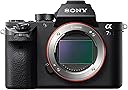
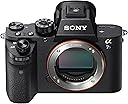
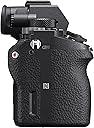
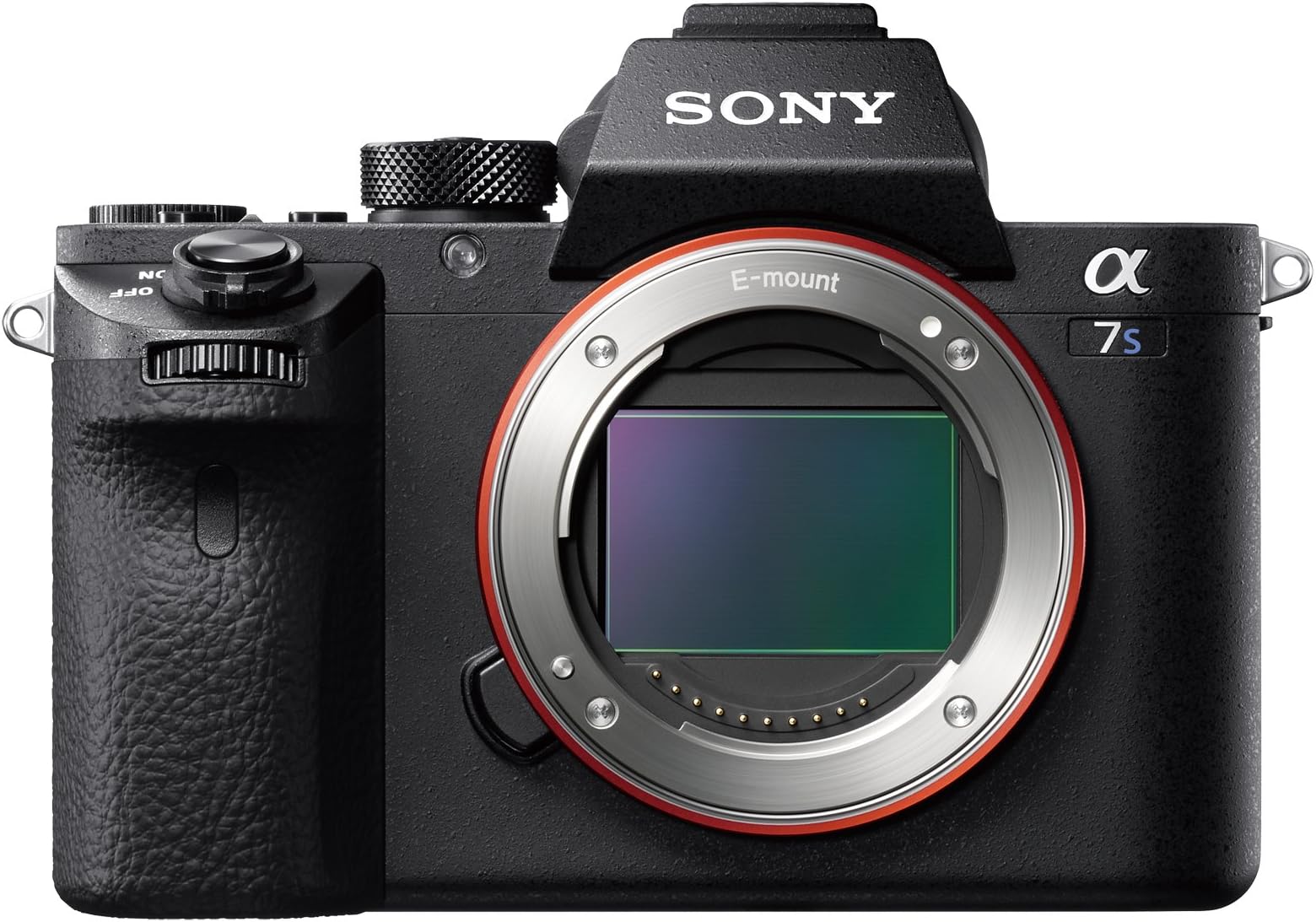
The Sony a7S II is a professional full-frame mirrorless camera designed for ultra-high sensitivity and video excellence. Featuring a 12.2MP Exmor CMOS sensor, internal 4K recording, and advanced 5-axis image stabilization, it excels in low-light environments and handheld shooting. Its robust magnesium body and fast hybrid autofocus make it ideal for videographers and photographers who demand mobility, precision, and superior image quality in challenging conditions.


| ASIN | B0158SRJVQ |
| Age Range Description | Adult |
| Aperture modes | 3.5 |
| Are Batteries Included | Yes |
| Aspect Ratio | 16:9, 1:1, 3:2, 4:3 |
| Auto Focus Technology | Contrast Detection |
| Autofocus | Yes |
| Autofocus Points | 25 |
| Best Sellers Rank | #280,451 in Electronics ( See Top 100 in Electronics ) #847 in Mirrorless Cameras |
| Bit Depth | 14 Bit |
| Brand | Sony |
| Built-In Media | AC Adapter AC-UUD1, Accessory shoe cap, Battery Charger BC-VW1, Body cap, Cable Protector, Camera, Eyepiece cup, Micro USB cable, Rechargeable Battery NP-FW50, Shoulder strap |
| Camera Flash | Hotshoe |
| Camera Lens | Fisheye Lens |
| Color | Black |
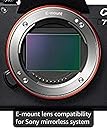
| Compatible Devices | Sony Mirrorless |
| Compatible Flash Memory Type | SDXC |
| Compatible Mountings | Sony Mirrorless |
| Connectivity Technology | HDMI, NFC, USB |
| Continuous Shooting | 5 |
| Crop Mode | APS-C |
| Customer Reviews | 4.2 out of 5 stars 136 Reviews |
| Digital Scene Transition | zoom |
| Digital Zoom | 4 x |
| Digital-Still | Yes |
| Display Fixture Type | Articulating |
| Display Maximum Resolution | 1,228,800 dots resolution |
| Display Resolution Maximum | 1,228,800 dots resolution |
| Display Type | LCD |
| Effective Still Resolution | 12.2 MP |
| Expanded ISO Minimum | 80 |
| Exposure Control | Aperture Priority, Auto, Manual, Program, Shutter Priority |
| File Format | JPEG, Raw |
| Flash Memory Bus Interface Type | UHS-I |
| Flash Memory Speed Class | UHS Speed Class 3 (U3) |
| Flash Memory Type | SDXC |
| Flash Modes | Auto, Fill Flash, Hi-Speed Sync, Off, Rear Sync, Red-Eye Reduction, Slow Sync, Wireless |
| Flash Sync Speed | 1/250 Second |
| Focal Length Description | 35 millimeters |
| Focus Features | Hybrid |
| Focus Mode | Continuous-Servo AF (AF-C), Direct Manual Focus (DMF), Manual Focus (MF), Single-Servo AF (AF-S) |
| Focus Type | automatic_only |
| Form Factor | Mirrorless |
| Generation | II |
| Global Trade Identification Number | 00027242894273 |
| HDMI Type | Type D Micro HDMI |
| Hardware Interface | AV Port |
| Has Color Screen | Yes |
| Image Capture Type | Stills |
| Image Stabilization | Optical |
| Image stabilization | Optical |
| Item Weight | 16 ounces |
| JPEG Quality Level | Basic, Fine, Normal |
| Lens Construction | 9 elements in 8 groups (or similar) |
| Lens Type | Fisheye |
| Manufacturer | Sony |
| Manufacturer Part Number | ILCE-7SM2/BQ |
| Maximum Aperture | 3.5 Millimeters |
| Maximum Focal Length | 35 Millimeters |
| Maximum Image Size | 3840 Pixels |
| Maximum Shutter Speed | 1/250 Seconds |
| Metering Methods | Center-Weighted Average, Multiple, Spot |
| Minimum Focal Length | 35 Millimeters |
| Minimum Shutter Speed | 1/8000 Seconds |
| Model Name | Sony a7S II |
| Model Number | ILCE-7SM2/BQ |
| Model Series | Alpha 7 |
| Movie Mode | Yes |
| Night vision | No |
| Optical Zoom | 1 x |
| Photo Sensor Resolution | 12.2 MP |
| Photo Sensor Size | Full Frame (35mm) |
| Photo Sensor Technology | CMOS |
| Real Angle Of View | 63.4 Degrees |
| Remote Included | No |
| Screen Size | 3 Inches |
| Self Timer | 10 Seconds, 2 Seconds, 5 Seconds |
| Sensor Type | CMOS |
| Series Number | 7 |
| Shooting Modes | Portrait, sports action, macro, landscape and more |
| Skill Level | Professional |
| Special Feature | Brightness Control |
| Specific Uses For Product | Videography, Photography |
| Supported File Format | JPEG, Raw |
| Supported Image Format | JPEG, RAW |
| Total Still Resolution | 12.2 MP |
| Total USB 2.0 Ports | 1 |
| Total USB 3.0 Ports | 1 |
| Total USB Ports | 1 |
| UPC | 027242894273 |
| Unit Count | 1.0 Count |
| Video Output | HDMI |
| Video Resolution | FHD 1080p |
| Viewfinder | Electronic |
| Viewfinder Magnification | 0.78x |
| Warranty Description | 1 year coverage for labor, 1 year coverage for parts |
| White Balance Settings | Auto, Cloudy, Custom, Daylight, Flash torch, Fluorescent, Incandescent, Shade, Underwater |
| Wireless Technology | nfcWi-Fi |
| Write Speed | up to 90-95 MB/s |
| Zoom | optical |
Y**G
The most light sensitive camera in the world!
I've owned the original A7s before upgrading to the A7sii. The A7s was already one of the most amazing cameras to shoot in low light and the A7sii makes it an even more competent camera with better processing and IBIS. I shot the A7s for photography stills. I understand it's mainly made for a video shooter however I needed something for natural light photos (no flash) in low light. Flash can be amazing if used right, however there is a certain loveliness to natural light photos without artificial light - natural shadows and purposeful darkness can help enhance the moody look of photos that feels genuine. Plus it's not always convenient to walk around several pounds of lighting equipment - off camera flash, flash stand, diffusers, reflectors, etc. For this purpose there's no better camera than the Sony A7s series. I loved my A7s as it could capture photos that other cameras simply weren't capable of capturing. A7s photos had a unique look because they were taken in a situation that no other camera could produce. The A7sii upgrade was an immensely helpful refinement of the original A7s: 1. THE SENSOR - the sensor has remained the same. There's no new silicon for image quality capture, but additional image processing sorcery by Sony has made it slightly more competent at low light. Most online reviews and tests agree that noise improved about one stop over the predecessor. So ISO 12800 shots look like ISO 6400 shots which is a great improvement! 2. AUTOFOCUS - the autofocus of the A7sii feels slightly snappier and better and finding focus in the dark. The A7s and A7sii are contrast detection focus cameras. While this might seem like a hindrance, my experience with the AF of these cameras is that they do surprisingly well because the camera's low light performance is so good. It would acquire focus in areas to dark for any other camera to acquire focus. The A7sii improves on this with slightly more consistent AF. Again, I think this is due to better processing of the camera rather than a sensor redesign. (AF points are on the sensor itself). Despite the improvements in AF, contrast detection AF does have its limitations. CD AF simply can't do tracking and continuous AF as well as PDAF. While my A7riii and A7iii can do continuous eye AF tracking, the A7sii simply can't continuously track subjects if they move. Using continuous AF gives you a constant jittery AF shake. This has to do with how CDAF works, it needs to move the focus above and past the target AF and measure the best contrast creating "AF shake" and it simply won't work with continuous AF. The A7sii is strictly an AF-S lock -and-recompose camera. 3. Speaking of Eye AF, contrary to what many may believe, Eye-AF IS POSSIBLE with this camera. However it does not function like, or is as well refined as the eye AF in the A7r/A7/A9 series. You can do eye AF in AF-S where the camera simply finds the eye and locks focus on it. If the subject moves or if your hands move then the focus is thrown off as you're already locked. You would have to recompose and find the eye again. The behavior is more akin to DSLRs where you press the shutter down at the location of your desired focus, lock, and recompose for proper framing. To combat hand shake or subject movement, you will have to use your body to rock back and forth while burst shooting to ensure you will get a shot with the best focus. It's not as efficient as the newer A7 series but most DSLR shooters will be familiar with this method. 4. SHUTTER - the A7sii has a redesigned shutter that feels softer and less violent than the previous gen 1 shutter. The original A7s shutter was never bad but the A7sii is more dampened with less sliding shock which may contribute to camera shake during hand-held shoots. In addition I've read at many review sites that the new shutter mechanism should also prolong the life of the shutter so less shutter replacements in the future. 5. BODY AND ERGNOMICS. The body is significantly better than the original A7s body. The gen 1 cameras were very small and slim but were generally barebones. The grip of the gen 1 bodies were often to small and uncomfortable and many complained about comfort. The gen 2 bodies have a wider girth in the grip and is more comfortable to hold. Furthermore there are extra programmable buttons that you can assign to your needs. The body is slightly larger, however it makes the camera seem more like a serious professional camera than a hobby camera. The new magnesium body and matte paint finish is also less prone to chipping like the older gen 1 A7 series and less resistant to the ugly finger oils smudges. 6. IBIS. IBIS is by far the best improvement for the A7sii and all of the gen 2 bodies. IBIS was added to the A7ii, A7rii, and A7sii and it is an amazing killer feature. The secret of the A7s's low light shooting is clean ISO noise even at ridiculously high ISOs. However no matter how high your ISO is, shutter speed makes the difference between a grainy high ISO shot and a highly detail rich high ISO shot. The addition of IBIS makes hand held shooting at speeds of 1/30 (usually my limit for handheld) clean and sharp. I can even get handheld shots of 1/15 or slower. The IBIS also have the added benefit for smoother video shooting. Normally video shooters need a gimbal which are normally huge, heavy, and the electronic ones can be quite expensive. While no replacement for a real gimbal, the IBIS makes smooth handheld video shooting a possibility. Used alongside a gimbal or weighted stabilizer, the two systems work together for smooth beautifully stabilized video. 7. BATTERY LIFE. Battery life in all of the the A7 series are not great. Compared to DSLRs, the batteries drain many times quicker. The A7sii doesn't seem to change much either. However this can be easily alleviated by getting extra batteries. The W series batteries for the A7 series are quiet cheap these days and there's lots of third party brands from Wasabi that are much cheaper and operate well enough for the price. Bringing an extra 2-3 batteries doesn't add too much space or weight. Additionally you can charge these cameras while shooting with a simple battery bank and a micro USB cable. 8. Image quality. Overall the sensor is super sensitive. The only downside to the camera is the low resolution. Again, I realize this is mainly geared towards video and not made for photography and the resolution is good enough for 1080p and 4k recording. However for photography 12mp is not enough to pick up fine details, textures, and cropping. While shooting you can crop maybe 10% but any more and you get a super low resolution photo which for professional shoots may not be suitable. If you don't nail the composition in your shot, you don't have much leeway in post processing to make it better. It really requires an experienced photographer as the resolution is not forgiving for mistakes. Overall this camera is the real deal. Even though it's an older camera, in 2019 there's still no challenger for a low light king. The only thing that may come close would be an A7siii which is supposed to be releasing soon. This camera allowed me to take shots simply not possible with other setups. When went to Iceland, I brought an A7sii and A7rii. When trying to capture the northern lights with the A7rii I had to do a lot of post processing trickery in order to make the green northern lights visible. With the A7sii, every shot of the northern lights had bright green lights! No editing was needed to make the lights visible. The camera can see the northern lights even when my eyes could not. It was there that I realized just how sensitive the A7sii sensor was, it could see spectrum that were not visible to human eyes. That's the best compliment I can make. ***If this was helpful for you, please give me a helpful vote! Thanks!***
S**G
Great camera for an indie filmmaker/cat blogger!
This is my first interchangeable lens camera, after a year and a half of heavy experience with an RX100M3. I was pleasantly surprised to feel like a fish in water when swimming through the familiar menus and features, also found in its smaller cousin. I'm getting used to the new features, such as uncompressed RAW, more video settings, and the instructions actually couldn't tell me what "AEL" meant. This camera is still barely out of preorder, so I'll start seeing support from Sony, but right now, Sony's website gives a collective shrug when you check for available firmware upgrades/software. It's just not set up. One thing that I'm still getting used to with this camera... the controls change based on the lens you attach. I went for Sony E-mount Full Frame lenses. I figured out that's what "FE" means. E-mount is the type of lenses that this camera can natively support, but if you want to use the full sensor, rather than just a part of it, you need "full frame" ones. There are not many options. I wanted a fast 35mm prime and an 85mm prime. The 35mm prime...NO PROBLEM. There's a $1600 f/1.4 beast that is available. I robbed a jewelry store to pay for that one. But the 85mm options aren't so obvious. The closest FE lens currently available is a 90mm Macro f/2.8 lens. Not as fast as I wanted, but still pretty good, and... it's got rave reviews about it's sharpness. That plus opening up a pathway into macro photography while still giving me the bokeh I'm looking for... I piped down and bought it (for $1000... only had to rob a small jewelry store for that one). I saw a few rumors of more lenses coming out, but you should figure out what lenses you want BEFORE buying this camera. If you're not sure, well, I took the option of renting a camera from a rental website (I used lensrentals.com) with lenses I wanted, and, if you like em, you can apply the rental price toward the price of "keeping it". Or just return it and..now you know what the lens is like. One motivation for buying this camera... the main motivation... is my filmmaking. I like low-light cinematography, and I want it available to me. I had the confidence that this would open up that avenue for me, with 4K footage. I've used RED cameras for short films before, and although I don't think this is going to approach that quality, it lets me still compete in film festivals keeping to the same genre. I decided to go ahead and use the very fast 35mm f/1.4 lens to test the low light video, recorded at the highest quality 24p 100Mbps, with panning over my cat on a bed, with varying levels of light. (testing in a 10x10 room with a small lighting kit, 200/500/750, plus a lamp with a small CFL bulb... I think 40-60W) I left the aperture open all the way at f/1.4. The results? The small bulb was certainly not going to sufficiently light anything. You can still see everything once you start to crank the ISO into the thousands, but there's banding/noise galore. However, the 200W light was actually plenty enough to see everything at 100 ISO (min for video). I attached a screenshot from that test. It's still a bit dark, but it's clean. I didn't see any noise on my 27 inch computer monitor as I panned over the cat. Increasing ISO levels only got brighter, with no hint of noise. At about 1000 ISO, Luna started getting overexposed. So this certainly gives me the creative freedom to work wonders, film festival-wise. You see the sleepy cat there? My other motivation for upgrading my camera, you'll be disappointed to know, is cat pictures. I run my blog at littlechomper.com, and I want more action pics. If you haven't tried, taking fast-shutter pics of a cat jumping around while indoors... it's a tall order. I've had to be very creative with my RX100M3, hanging out near windows during the hours with the strongest light. Well, I'm sad to report that the A7s2 is no magic cure for my woes. While I definitely don't have to stay so close to windows, an interchangeable lens camera is a lot heavier, and I'm finding it's a pain in the ass to try to aim the camera and throw the cat treat. I take the precaution of always wearing my neck strap, and... I insured the camera too. But still, I'll have to get more creative with strategies to overcome this. I'm going to try to leverage the 4K slow motion video. With 4K resolution, the stills should be high quality enough, and I shouldn't have to worry so much about keeping my figure near the shutter. Focus will be the main concern. But I'm sure the camera is capable of getting the shots I want once I figure out the right strategy. On a relevant note, I think the 5-axis stabilization is working for me. The 90mm lens I have has built-in stabilization, and the 35mm doesn't, but I don't think it matters. The a7s2 has it built in, and supposedly leverages the stabilization in the lens, if available, to improve even more. I certainly can't do macro photography very well without the camera being mounted or resting on a surface, but I certainly feel more at ease exhaling slowly with arms in and trusting my own steadiness at 1/60 shutter speed. Speaking of macro, is it relevant to this review to say I added my 58mm Canon 250D close-up lens to my 90mm macro and got a pretty nice close-up of a penny? I'll add that picture. When you zoom in, you see some strange colors in there... reds and greens... I figure this is related to taking pictures of scratched up metal, or maybe it's just not enough light yet... I'm relying on exposure time instead. I'll include the penny picture. What other things can I comment on? I definitely like the shooting mode being locked into place, unlike on cheaper cameras (like the RX100M3 and most point n' shoots). Although sometimes you wish you can change it with one hand. There's lots of configurability. I see a "C1, C2, C3, and C4"... all user-customizable. I'll deal with that when I have time. And lastly, I use Capture One, rather than Lightroom for my images. Capture One provides custom profiles for each camera based on hands-on testing of each camera through the different ISO levels, so I think that helps improve its handling of RAW images. There's a super-cheap version for Sony only, so it let me stick with that. Originally, the RAW images coming out of the A7S2 wasn't supported by Capture One, but they've already released an upgrade... version 8.3.4 I believe, which supports the RAW images seamlessly. I'm back to my old workflow, only a couple days after receiving my camera from pre-order.
C**R
Great camera needs some tweaks
I'm updating my review for this camera. Not only does this camera feels cheap it isn't worthy of a full frame sensor. The Apps lag, buttons aren't where they should be . To call this camera professional is an insult . I bought 2 of these .I work in Television news and thought these cameras would be great in low light .Don't get me wrong they have an amazing ability to see better in low light than most cameras . The picture is sharp the quality of photos and video is amazing. BUT! After just under 2 months the electronic view finder is having issues sometimes it wont turn on at one point the viewfinder and the LCD screen were both black . Called Sony they told me they cant replace it only fix it . Yeah Because I paid 3000 grand for a camera that cant last 60 days....I will only say this ONCE I WILL NEVER BUY SONY ANYTHING AGAIN THAT INCLUDES CANDY FOR THEIR MACHINE IN THEIR OFFICE. SONY I'M DONE WITH YOU .........
B**Z
Probably the Best Camera Real Estate Photography/Videography Available Today
I own a small real estate photography company and I purchased this camera just a few weeks ago for two reasons: 1) To add video to what I offer my customers as I see video as a huge and growing trend in my field and 2) Because I wanted smaller files sizes and better dynamic range for my stills work as compared to my a6000. I have only had this for about a month now, but I feel that it clearly was the right choice. It was ordered along with the Sony 16-35mm lens which has done well too. I am not a specs-geek myself and I don't think I ever will be. We all see all those people who hash out specs and capabilities of different camera systems online and debate how many stops of dynamic range a camera has and all that. I often wonder how much money they are earning with their camera or if they just get some kind of "good feels" for waging war in various forums. If you are thinking of buying this camera and think that it is going to make you some kind of wizard at photography or a wizard with video...you likely should put those assumptions in a box and then put that box on a high shelf. I am going to post a series of images below. Half of them were created with images captured with this A7s2 camera. Half of them were taken with created with images captured with the a6000. Tell me if you think any of them are seriously better than the others. I don't think there's any significant difference at all myself. I suggest everyone select the right tool for the job. Where stills work is concerned, this a7s2 has a BIG advantage in the small file size as compared to my 24mp a6000. I can shoot a house, pull the card, and upload the files to the cloud nice and easy when they are 12mp. Then text my editor to pull them down and pre-edit them for me and have them waiting for final review and touch up when I get home. If I shot all my frames on 24mp (or God forbid the 48mp of the a7r2) I think that uploading the files on-site would be a major paint if not completely undoable in the trenches of a 5-house workday. This would apply DOUBLE to someone in my field who doesn't use off-camera flash but instead choose a run-and-gun HDR approach to the business where they are just peeling off hundreds of frames for each and every shoot. Furthermore, the low-light capabilities of this camera make certain shooting situations a breeze. I find that most basements in small, inexpensive homes are not good candidates for using flash. So I switch gears and DO shoot 3-shot all-ambient-light HDR in basements. Often DIMLY LIT basements. With my a6000...there was really an upper limit of about ISO 800 for low-value basement shots. More than that and you start worrying about noise. This means that sometimes...that final 3 stop overexposed frame would take a LONG time to shoot. We're talking 8 seconds. Then you gotta wait another 8 seconds for it to "process". This is NOT the case with this a7s2. I can easily push ISO to 3200 with zero worries. I've even done 6400 and been pleased with the results. So this eliminates this little problem for me. Where video is concerned, it does what everyone says it does. Shoot in Picture Profile 8 to get slog3 to maximize your dynamic range in post. Obviously, everyone is shooting different things, but if you're shooting real estate walk-through videos, I suggest shooting in shutter priority mode, Auto ISO, in 30 frames per second recording (30p) and 1/60th shutter speed. Also, use a fly-by-wire lens like the Sony 16-35, not a manual aperture prime lens or anything like that. You want the camera to be able to stop down the aperture all the way to f22 if need be when you are doing something like approaching a window. The slog3 profile shoots at 1600 ISO or higher and I found out the hard way that it's easy to overexpose. Using shutter priority mode and allowing the camera to adjust aperture on the fly goes a long way in overcoming that problem without having to resort to ND filters. I shoot video from a DJI Ronim M stabilizer...so that helps keep footage nice and smooth. The multi-axis IBS stabilization built-in to this s2 helps on that front too I'm guessing. I'm pleased with it. What about downsides? Well, there are SOME situations where I want more resolution. I shoot all my exteriors still with my a6000/Rokinon 12mm setup. I find that I may want to "crop to zoom" in post a bit more on exteriors and so having 24mp vs just 12mp is better for outside shots. I also like the lightness factor of the a6000. Two-story houses are usually best photographed from 8' to 12' above ground level. I bring a painters pole with an Arca Swiss clamp on the end with me to every shoot and so I can just put the a6000 on that and run it up to the desired height and then shoot my most important shots (the exterior front of the house) from higher up using the Sony WIFI app. I would NOT feel comfortable doing this with the a7s2 and 16-35mm lens. They weight quite a bit more and are just too pricey to put up on a pole like that. Finally, shooting out-of-doors in slog3 has required that I use Breakthrough Photography's 6-stop ND. If the sun is out, you really want to use that picture profile because there is going to be dynamic range issues wherever the sun is hitting trees or the edge of the house or whatever and is casting shadows. But again, you have to shoot at ISO 1600 for that and even at f22...it sometimes is overexposed. So ND filters there. A mentor of mine just decided to buy both and use the s2 for interiors and r2 for exteriors for video. Says it's the best choice...but I'll have to wait to get some more coin if I'm gonna get another pricey camera.
B**0
Most versatile stills and video camera ever created!
Pros: The a7s ii can do anything! It shoots great stills and has crazy features such as silent shooting that is actually silent. The ridiculously sensitive sensor enables you to shoot at high shutter speeds or in low light. Software-wise it feels like the camera is unlocked because you can change every setting and customize everything to your liking. You can even install apps on it to allow more capabilities! The small size and durable construction are an engineering marvel. Surprisingly good internal microphone. Suberbly ergonomic design to get 3 physical dials for aperture, shutter, and ISO onto this small body. Ability to shoot high frame rate video is super nice at this price point. The 5-axis sensor stabilization really does work very well. Even though the video is only 8 bit 4:2:0 color, it still holds up surprisingly well to grading. I shoot a lot on the FS7 and you can push it almost just as far even though the FS7 is 10 bit 4:2:2. Cons: Would be unstoppable if it output 4:2:2 10 bit color from HDMI. Battery life is decent given the small physical size of the battery but it rejects non Sony brand batteries so you have to buy the $50 Sony ones. HDMI sucks so it would be amazing if it had SDI but I understand that it's a DSLR. S-log is great but they need to fix the green color cast issue with all s-log. When using the Play Memories app to monitor wirelessly, it sucks that you can't shoot s-log. The monitor could have better pixel density. When shooting high frame rate the footage is slightly softer, especially at 120fps. It should have the option to shoot 60fps 1080p at 100Mbps but for some reason it's only 50Mbps. The h264 XAVC-S codec is a monster to decode so even with a beastly powerful computer, scrubbing through the footage in Adobe Premiere can be laggy. Overall, the a7s ii is the Swiss army knife of cameras because it's small and it shoots great stills and video. It's certainly no one-trick pony! If you're someone who enjoys freedom and complexity then it's a good fit. If you like simple and user-friendly then you might be overwhelmed a bit.
E**E
Excellent Portable, Low-Light, IBIS Mirrorless Camera
As someone who enjoys taking video as much as they enjoy taking photos, my prior experience with DSLRs and mirrorless cameras brought me to the Sony A7SII. The most recent camera I had prior to this device was the Panasonic GH4. The GH4 is an amazing mirrorless camera for video and takes great pictures for the price. However, as someone who travels often and does a lot of Run & Gun videography, the image stabilization and low-light of the GH4 left me desiring more. I tried to balance these needs by procuring better equipment (e.g., Metabones Speedbooster XL, Canon 'L' lenses, native Panasonic Nocticron, Gimbal Stabilizers, etc.) but finally realized that I had spent more in the long-run trying to accomplish what an existing camera already had. Thus, I made the switch (again, this time from Panasonic) and migrated to Sony and converted to all native Sony glass. - Low Light I wouldn't say it's the silver bullet to solve everything but having a camera that can take photos/videos in any lighting situation makes life SO MUCH easier. - Image Stabilization Having IBIS make all your lenses have image stabilization has drastically improved the quality of life. Less shakiness! - Image Quality Image quality is great for photos (some may argue that if you're leaning more towards photography that you should opt for the A7RII instead) and fantastic for video. - Size/Portability Not that the GH4 was huge or anything but the A7S is smaller and more compact. There are some bad elements. I will try not to re-iterate ALL the same comments from others in these reviews (they said it better than I could have) but I will emphasize the following: - Battery Life I get about 45-85 minutes of usage with Sony batteries. This is abysmal coming from the GH4. - Functionality Not as easy to use as the GH4. Button placement, menu system, etc. It just doesn't feel like a pick-up and play with toy like the GH4 did. - LCD Screen not as clear Difficult to see if items are in focus using the LCD screen; you really have to punch-in to see if you're in focus. - Lens Choices ($) Sony is doing a great job with introducing new lenses but they won't be as inexpensive as Canon/Nikon or even Panasonic. - PlayMemories Apps For the price you pay, these apps (e.g., Time Lapse) should have been included for no charge. The entire app functionality isn't that great either; it's clunky and the process for purchasing these apps was PAINFUL. The purchasing process crashed MANY times and I had to end up buying Sony credit on Amazon in order to pay for the apps (because it turns out there are problems with using your own Credit Card even if its tied to your Sony account). Kind of ridiculous in 2015/2016. Overall This device isn't perfect and I wouldn't say it's for everyone. However, for my needs, the positive benefits outweigh the negative attributes of the device -- especially for this price range. After watching Canon/Nikon release the same old device with minor increments in functionality I didn't particularly care about, switching to a different system was a change I do not regret. The Sony A7SII in particular, is an amazing camera and one that has changed the way I take photos and video.
B**N
Amazing.
I recently switched from a Canon 5D Mark II to this beast. Incredible difference. Pros -4K is stunning. -120 fps is stunning. -5 axis IS is stunning. Shot a whole wedding handheld. -Low light is stunning. High ISO is great but lower ISO compared to the 5D is a joke. Makes the 5D look like a Razr camera. -Crop mode is useful. If you have a 35mm lens like me, you now have a 35 and a 50. With the 120fps you also have a 80mm roughly. Three lenses in one. Cons -Battery -Can't use function buttons to switch shooting modes or crop mode. -Kinda expensive. If you have the money just get it.
W**T
I Give it a 'D+'
I was excited to get this camera to use in our video kit. It's small, it does low light nicely... FPS overcranking, 4k res. good image quality - Sony is a quality, established brand...etc.. It SOUNDS perfect. It really isn't. As you might suspect - the image quality IS awesome, (hence the extra STAR in the rating). Good CODECs and SLog3, etc. But as a video camera the exceptionally small size is more of a problem than and asset. Difficult to keep your hands on - kind of HAS to have a cage or HH rig just to give it some form. The Sony menus... while deep and highly thorough... are counter-intuitive and difficult to master. A total PITA, actually. And the manual is horrible. (typical to Sony) And then there's the overheating. Oh yeah. The Overheating: 1) We do a lot of long takes - documentary-style interviews -and- 2) I needed a handy little camera I could overcrank and get good slo-mo -and- 3) Need to begin to migrate our whole kit to 4k RES.... Well... doing any of these three things for any reasonable amount of time will result in this camera overheating. Consistently. It's a real problem. In fact - having had a chance to use it a bit, and learn about these shortcomings - I'd like to return it. I can't. It's too late. So I'm stuck with a 3k$ POS. I should've ponied up the extra few k$ and bought the fs5 or something. I'm very disappointed. If I can recommend this camera for anything, it would be to mount to some kind of action cam contraption and sending it down a hill or through the air or something... no... wait... check that.. You can't do that with this either, because the rolling shutter effect is paralyzingly awful. Hmmm... what would i recommend this for.... oh. Low light. It can shoot in the dark. Of course the footage is unusable at those extreme ISOs... so... no. I guess I can't recommend this camera for anything. Actually, I DO have a suggestion for you, if you're thinking of buying this camera: Send me your 3k$ and I'll come over and I'll hit you in the face a few times. It'll be more rewarding.
A**N
Die beste Kamera fรผr Nachtaufnahmen!
Diese Sony ersetzte meine alte Blackmagic Pocket. Sie kostete zwar ca. das 2,5-fache, aber der Qualitรคtsunterschied und die Usability sind locker ein zehnfaches.
B**Z
This is an amazing camera. Thats all I can say
This is an amazing camera. Thats all I can say. use as a B-Cam to an FS5 and it matches beautifully
A**R
Five Stars
this arrived, very stoked - thanks!
A**R
Five Stars
Just as I wanted.
S**I
First camera I received kept giving error messages in slog4 ...
First camera I received kept giving error messages in slog4 when taking photos. Returned it for a replacement. Second one I got works really well.
Trustpilot
1 month ago
2 months ago