
Buy anything from 5,000+ international stores. One checkout price. No surprise fees. Join 2M+ shoppers on Desertcart.
Desertcart purchases this item on your behalf and handles shipping, customs, and support to Ireland.
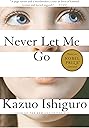
NOBEL PRIZE WINNER • From the acclaimed, bestselling author of The Remains of the Day comes “a Gothic tour de force" ( The New York Times ) with an extraordinary twist—a moving, suspenseful, beautifully atmospheric modern classic. One of The New York Times ’s 10 Best Books of the 21st Century • A Kirkus Reviews Best Fiction Book of the Century • A Los Angeles Times Best Fiction Book of the Last 30 Years As children, Kathy, Ruth, and Tommy were students at Hailsham, an exclusive boarding school secluded in the English countryside. It was a place of mercurial cliques and mysterious rules where teachers were constantly reminding their charges of how special they were. Now, years later, Kathy is a young woman. Ruth and Tommy have reentered her life. And for the first time she is beginning to look back at their shared past and understand just what it is that makes them special—and how that gift will shape the rest of their time together. Review: Wonderfully unique - Ishigiro's Never Let Me Go is beautifully written and the character development is excellent. I did not put this book down and read it in several hours. It's a wonderful example of modern literature and completely unique in the fact that we read the most unspeakable horror and swallow it up, wide-eyed and alarmed, all the while amazed that something so terrifying can be written so poetically. This is not a horror novel by any means! This is an examination of a certain aspect of our culture and how we can all be indoctrinated to accept it. I don't want to re-outline the entire plot, since so many reviewers have already done so. What makes this story so powerful is how understated it is. We watch these children grow from childhood to adulthood, always knowing how their lives will unfold. Cloned from their "models", they know that they will eventually be harvested for their vital organs. This is their purpose, and it is never questioned. Ever. Sometimes certain events or things will cause the protagonists to stop and almost reconsider their destinies, but they fail to consider it fully and go on with their lives as they've been taught to. Notably, there is an abandoned boat towards the end of the book. Kathy, Ruth, and Tommy make their way to the dock to peer at this ticket to freedom. Kathy notes the cabin size and condition and it's clear they could take that boat somewhere and be free. They don't. They don't even discuss it. They just watch it sitting there. Kathy and Tommy drive all over the English countryside-- it's clear they have their physical freedom. They drive to clinics to visit other donors, to stores to shop, cafes to relax in, and hospitals for pre-donation testing. There are no doors or bars holding these people in. They are conditioned from day one to live their lives knowing they will one day donate and "complete". Nobody they know has done otherwise. There are no rumors about anyone refusing their preordained destinies. Herein lies the books strength and its weakness. Throughout the novel, I thought it seemed as if it was leading up to a more climactic event. And, it did and didn't. The climax was a bit anticlimactic and the characters brought in to meet with the two heroes seemed flat (while empathetic) and lacking depth. The horror this meeting could have evoked was felt more fully through the use of Tommy's hopeful art, through some of the thoughts Kathy had and immediately disregarded. It seemed as if more could have and should have been done with that rather than this macabre meeting with the two former school administrators. Yet, at the same time, maybe this is the novel's strength. Freedom is hinted at, yet not taken. There is no prison, yet they are prisoners of society and their own minds. There is love, but maybe the passion is lacking because they know subconsciously there is no future. And, Kathy has seen her friends complete. She knows what's coming after donation number 4 for the man she loves. She changes the subject when he brings the subject up. She dismisses it because it's too difficult to openly discuss it. We know this and they know this. And, although this might be the book's strength, I do yearn for this discussion. I'm left without real closure and I want them to wake up. This is heartily recommended. Review: Would you rather have hope in a lie, or despair in the truth? - This book was deftly written and intensely, emotionally evocative. However, I struggled with how to rate it. 1. The author's ability to instill in readers a sense of the hopeless dread and despair that the characters feel was impressive. Much harder to accomplish than readers probably realize. 2. Ishiguro's exploration of the books theme: hope through illusion versus despair through reality was expertly handled from start to finish. Ruth's character clings to one fantasy after another. Kathy (our narrator) seeks truth. And Tommy instinctively knows the truth and struggles with balancing the two-wanting the fantasy Ruth offers but knowing it's a lie. The author explores this in every section of the book, including in the seemingly random events the characters experience. For both of these, the writing is 5-star quality. On the other hand, as other reviewers have expressed, I wondered why the characters didn't just flee and why the entire enterprise was economically feasible. These are significant plot holes, but since I viewed the purpose of the story as the exploration of illusion versus the disappointment of reality, I only subtracted one star. The book would have been even stronger though had these two elements been addressed. That said, it's still a powerful warning about science and its heedless "progress." And the theme I mentioned above is incredibly thought-provoking and well-executed. Overall, I really liked this book and would recommend it to anyone who can handle the melancholy read.


| Best Sellers Rank | #1,261 in Books ( See Top 100 in Books ) #15 in Contemporary Literature & Fiction #94 in Psychological Fiction (Books) #97 in Literary Fiction (Books) |
| Customer Reviews | 4.1 out of 5 stars 41,474 Reviews |
J**K
Wonderfully unique
Ishigiro's Never Let Me Go is beautifully written and the character development is excellent. I did not put this book down and read it in several hours. It's a wonderful example of modern literature and completely unique in the fact that we read the most unspeakable horror and swallow it up, wide-eyed and alarmed, all the while amazed that something so terrifying can be written so poetically. This is not a horror novel by any means! This is an examination of a certain aspect of our culture and how we can all be indoctrinated to accept it. I don't want to re-outline the entire plot, since so many reviewers have already done so. What makes this story so powerful is how understated it is. We watch these children grow from childhood to adulthood, always knowing how their lives will unfold. Cloned from their "models", they know that they will eventually be harvested for their vital organs. This is their purpose, and it is never questioned. Ever. Sometimes certain events or things will cause the protagonists to stop and almost reconsider their destinies, but they fail to consider it fully and go on with their lives as they've been taught to. Notably, there is an abandoned boat towards the end of the book. Kathy, Ruth, and Tommy make their way to the dock to peer at this ticket to freedom. Kathy notes the cabin size and condition and it's clear they could take that boat somewhere and be free. They don't. They don't even discuss it. They just watch it sitting there. Kathy and Tommy drive all over the English countryside-- it's clear they have their physical freedom. They drive to clinics to visit other donors, to stores to shop, cafes to relax in, and hospitals for pre-donation testing. There are no doors or bars holding these people in. They are conditioned from day one to live their lives knowing they will one day donate and "complete". Nobody they know has done otherwise. There are no rumors about anyone refusing their preordained destinies. Herein lies the books strength and its weakness. Throughout the novel, I thought it seemed as if it was leading up to a more climactic event. And, it did and didn't. The climax was a bit anticlimactic and the characters brought in to meet with the two heroes seemed flat (while empathetic) and lacking depth. The horror this meeting could have evoked was felt more fully through the use of Tommy's hopeful art, through some of the thoughts Kathy had and immediately disregarded. It seemed as if more could have and should have been done with that rather than this macabre meeting with the two former school administrators. Yet, at the same time, maybe this is the novel's strength. Freedom is hinted at, yet not taken. There is no prison, yet they are prisoners of society and their own minds. There is love, but maybe the passion is lacking because they know subconsciously there is no future. And, Kathy has seen her friends complete. She knows what's coming after donation number 4 for the man she loves. She changes the subject when he brings the subject up. She dismisses it because it's too difficult to openly discuss it. We know this and they know this. And, although this might be the book's strength, I do yearn for this discussion. I'm left without real closure and I want them to wake up. This is heartily recommended.
C**E
Would you rather have hope in a lie, or despair in the truth?
This book was deftly written and intensely, emotionally evocative. However, I struggled with how to rate it. 1. The author's ability to instill in readers a sense of the hopeless dread and despair that the characters feel was impressive. Much harder to accomplish than readers probably realize. 2. Ishiguro's exploration of the books theme: hope through illusion versus despair through reality was expertly handled from start to finish. Ruth's character clings to one fantasy after another. Kathy (our narrator) seeks truth. And Tommy instinctively knows the truth and struggles with balancing the two-wanting the fantasy Ruth offers but knowing it's a lie. The author explores this in every section of the book, including in the seemingly random events the characters experience. For both of these, the writing is 5-star quality. On the other hand, as other reviewers have expressed, I wondered why the characters didn't just flee and why the entire enterprise was economically feasible. These are significant plot holes, but since I viewed the purpose of the story as the exploration of illusion versus the disappointment of reality, I only subtracted one star. The book would have been even stronger though had these two elements been addressed. That said, it's still a powerful warning about science and its heedless "progress." And the theme I mentioned above is incredibly thought-provoking and well-executed. Overall, I really liked this book and would recommend it to anyone who can handle the melancholy read.
B**E
A Promising, Beautiful, Yet Perpetually Frustrating Novel
Nearly 600 reviews here for Never Let Me Go. What can I possibly add to the discussion? A few things. *** Mild spoilers ahead *** First, I love Ishiguro. He's an outstanding writer. The Remains of the Day is perhaps the greatest novel about unrequited love ever written in the English language. But even Ishiguro is a master at only a few themes. Simply put, his best works are about characters who are unable to break free from their predestined paths. They can be constricted by Victorian manners (such are the protagonists in Remains of the Day), or they are constricted by an inescapable understanding that they will will live very short lives (as the protagonists in Never Let Me Go). The idea to break free and escape never occurs to any of these charaters in Ishiguro's finest works. England might as well be a maximum security prison - a giant gray Alcatraz. And no matter what, none of his characters dare lose their dignity. Never Let Me Go is not science fiction, nor is it a dystopia novel (like 1984). The best way I can put it is that it is a brilliant short story or novella, expanded to novel length if for no other reason than to let the reader soak-in the sterile, gray environments the protagonists inhabit. The novel is written as a free form memoir, with a terribly irritating literary device. The narrator, Kathy H., has a habit of getting ahead of herself, telling us of a crucial turning point or event, but forces herself to backtrack in order to set-up the next major point (usually expressed as "I'll return to that later" or "more on that later"). And when she does divulge the details of this major turning point, it is usually a creepy, awkward conversation between her and one of her two closest friends, Tommy or Ruth. It becomes quite clear that these characters have a radically isolated and skewed worldview. For them (or at least Kathy H.) major events are not graduations, or moving to a new residence, or even death. No, major events are spilling secrets and making the occasional error of saying too much or being too harsh towards one's somewhat distant friend. In other words, they are totally old school British schoolchildren in a bubble. These schoolchildren inhabit an alternate England - one that has advanced science far greater than the real postwar UK. Never Let Me Go has scenes from this alternate England that you may never forget. The empty rural roads and service stations where Kathy H. finds peace driving her car. The perpetually gray skies. The refuse and trash collecting in the trees and barbed wire in a field somewhere in the east. The casual, passionless relationship the characters have with sex and death. The stiff upper lip attitude of wanting to make it to one's fourth 'donation'. It really is a brilliant work if you accept the argument that it is a dystopian story that avoids going into any details of the dystopia. In other words, this is not Children of Men. The Europe in this novel might be in the midst of a serious public health crisis, but Never Let Me Go neither hints at one nor explains what it might be. Or Europe might be so prosperous, so technologically advanced, that the creation of these children might have seemed as natural as any advancement in a First World society. Ishiguro gives nothing away, expect for a key line about how science advanced so quickly after 1946 that there 'was no time' to consider the morality or logic of those advancements. In other words, England had become a well mannered monster. By 1996, England was consuming living, breathing, beautiful children as easily as stocks were traded on the FTSE. These children will be throughly educated, grow up, experience two years of independent, sexually liberated life, and then work to fulfill their predetermined destinies. And this England, as you might expect, seems quietly proud of that achievement, despite having 'no time' to ponder the consequences. Because, I suspect, more important things in English society must be maintained. There are cricket matches and afternoon tea parties to attend, after all. Carry on, you English. I am certain Ishiguro is attracted to that theme given the similarities to 20th century Japan's adherence to honor, dignity, and constrained mannerisms. That alone is highly disturbing and original. And while I suspect Ishiguro was inspired by Dolly the Sheep in 1996, others with more sinister agendas have already looked to this novel for ideological ammunition. Opponents of embryonic stem cell research and abortion see parallels in this novel. They see how a society, with good intentions of advancing health and science, can destroy perfectly good lives. The difference they cannot escape, however, is that the children in this novel are not in a lab or in a uterus. But I am just rubbed the wrong way when I see 'Antis' flocking to a book by a secular British man as a source for their petty arguments. But as Kathy H. might say, let me return to what I was saying about the novel itself. I feel like such a picky reader when I complain that this could have been a novella or short story. As great and elegant a writer as Ishiguro is, even he has no serious justification for the length of this work. There is much creepiness and some suspense, but no tension. Rather it is a largely atmospheric work. At least the book gives us two amazing sequences, the road trip to Norfolk, and Tommy's moment of rebellion and passion (which may very well reflect the frustration of many readers of this book). Even a quiet, introverted student like Tommy has to let it all out when he (and we) discover that we were told so much and at the same time, so very little. But there is a glimmer of hope - the 2010 movie directed by Mark Romanek. Not only will the story line be tighter, it might play better in the medium of cinema, despite offering no answers as to what happened to this alternate world. And of course, that is Ishiguro's point. This novel is intended to make us think about our real world and our lives. For succeeding at that, I give him tons of credit. For reprising his themes of people locked in their manners, bubbles, and fates, I also bestow him much credit. But for stretching it to 287 pages, I feel I must deduct stars.
P**D
Simply a Masterpiece
At one level this is a deeply moving and extremely sad love story told by a young woman, the sole survivor of a love triangle. At another level it is a nightmarish horror tale whose protagonists have all come to life through cloning, and from day one were then raised at Hailsham, a special "boarding school" where, in total isolation, they were being prepared for an early death by organ donation to terminally ill but maculately conceived "normal" humans. Though as gothic a tale as has ever been imagined, this novel recounts scenes from the narrator's life, as mundane and ordinary as the comings and goings of some Jane Austen characters. The horror is encoded in the whole, not in its parts. One is reminded of that weird surface known as a Moebius strip, which though weirdly one-sided as a whole, in small regions looks like any run-of-the-mill two-sided surface. Stylistically, Ishiguro masterfully manages this large-scale/small-scale contrast by endowing the narrator with a very simple and restricted, yet truly poetic word usage. To emphasize ordinariness on the small scale, short everyday words are the rule throughout, along with some childish idioms, to such a point, that when the word "bonhomie" puts in a cameo appearance in this sad tale, it hits one like a bombshell. Besides, the pacing is so perfect, that the book is a real page-turner. The other remarkable literary ingredient --- maybe the one that attracted Ishiguro to this topic in the first place --- is that in this setting, time undergoes a rescaling. Unlike "normal" humans, whose actuarial life expectancy exceeds seventy years, Hailsham graduates can expect to "complete" (their euphemism for the verb die) before they even reach the age of thirty. One lives one's life according to the time at one's disposal. It is remarkable how the basic human emotions and interactions get deformed to accommodate the much-shortened lifetime of these characters. At some point all humans become aware of their mortality, but this point obviously gets much moved up when early "completion" becomes a virtual certainty. As a consequence, youth loses much of its easygoing freedom of care. This novel explores in some depth the extent to which mortality-awareness affects human feelings and actions. Yes, not only does Ishiguro deal in stylistic Moebius strips and rescaled time, but also in issues of life and death, the deepest human issues. The characters' marked humanity and the apparent short-term normalcy of their situation makes one gladly willing to suspend disbelief, even as it is clear that a world in which cloned humans are bred for the sole purpose of mercilessly harvesting their vital organs, is very far from late twentieth century England in which the novel is set. Yet, as a literary device, this fantasyland, or more precisely nightmare-land, comes in very handily for the exploration of some very deep issues. Apart from those I already mentioned, there is also the issue of artistic creation as a manifestation of one's humanity, an issue, which surprisingly turns out to be crucial in driving the most thrilling part of Ishiguro's plot. Some suspended disbelief is also called for when in the middle of nowhere teenage high-school graduates are found debating Joyce and Proust and aptly, if somewhat glibly --- though probably with Ishiguro's smiling approval --- putting down George Eliot's "Daniel Deronda." This is all the more bizarre, given that from the day they were born, these youngsters had been carefully sequestered from any interaction whatsoever with contemporary society at large, let alone with the societies described by all these long-dead writers. What I found most surprising, was the meekness of all these cloned humans, not one of whom manages to come up with the idea of fighting those who perpetrate this atrocity on them. Even Tommy, the male of the love triangle, though of a marvelously rebellious nature, does not take his fate in his own hands when it really matters. With an English stiff upper lip he goes through four organ-harvesting operations before he finally "completes." These are all minor quibbles, given what Ishiguro delivers on the big issues he so successfully tackles in this marvelous and absorbing masterpiece.
P**.
Virtuoso
This is the kind of book that win prizes, not the kind that becomes a bestseller. SPOILER ALERT In literary terms, this book is a masterpiece. It is SO well-written, you won't even remember the author is a man. Mr. Ishiguro gives a perfect voice for his characters, that is for sure. Kathy, the narrator, is a somewhat shy girl, who's always left aside by her bossy friend, Ruth. And the VOICE the narrator has is SO REAL I've often got myself wondering if that's what a real author is supposed to be like, to write like. The book tells the story of Kathy, Ruth and Tommy - three people who are born "special". They are clones, made to donate their organs once they reach a certain age. You would think the story would revolve around that - maybe they decide to rebel and flee, maybe they decide to kill themselves for love, or something like that. Well, surprise, that doesn't even cross their minds. Instead of focusing on the drama such a terrible predetermined fate could cause, Ishiguro focuses on the characters' lives and on how they deal with the inevitable. The story begins at Hailsham, a school for special people, where lots and lots of children are raised and educated for the future. However, they are never told directly about their fate, and that prompts one of their guardians to say they 'have been told but not told' about what's in store for them. The first part is pretty boring, and nothing really happens. In fact, it is just a way of presenting life at Hailsham. The children have no parents, and that isn't mentioned once. Where do they come from? Who are they? Why are they special? We are left wondering. But we have 'Madame' and her gallery. Her mysterious gallery. The children at hailsham are supposed to 'create art'. The best 'art' is taken away by 'Madame' to her 'gallery'. And that's one of the most important things in the book. The second part shows Ruth, Kathy and Tommy at 'the Cottages'. It is somewhat of an intermediary place - a place they go before they start their training to become carers (the people who take care of donors, before they become donors themselves). There the teenagers discover sex, and some form of love. They struggle with the agonies of youth, and they fight and argue among themselves over stupid things. It is good to be young. In the second part we are presented to the concept of 'possible', and that's when we discover the children are clones. Not clones of normal people, but clones of 'winos, prostitutes, criminals'. In fact, it is at that point you realise WHY they've never tried to run away or rebel (that isn't even mentioned in the book). At least in my opinion, since they know what they are, and where they come from, they realise they have no place in the 'real' world, beause they are not 'real' people. They were MADE, not born, for the single purpose of donating their organs. And that's what they do. The third part is where it all gets interesting. They begin donating their organs, but there is little focus on it. We learn of the pain the donors have to go through, and of how destroyed the carers become after a while, but that's pretty much it. We are thrown directly into the feelings of the main characters, something that never happens in the first two parts - we only get hints of what was going on. It is at the point we realise how deep these characters are, how REAL they are. At first we notice they are very flat, but that is only because they are still children. Ishiguro presents us with a real portrait of the uncertainties of infancy, the sufferings of youth, and then we get to see real, developed adults, in action. Although the book is marvelously written, and Ishiguro is surely a Virtuoso when it comes to writing (I've never read his other works, though), the book is very boring in itself. As I said at the beginning of the review, this is the kind of book that wins prizes, not the kind that becomes a best-seller. When it comes to good literature, this book is one of a kind. Here's an example: the book is a sort of memoir written by Kath, very unpresumptuous, very simple. It is something she feels she NEEDS to write down before she 'completes' (i.e., dies after donating too many organs). Since it is a memoir, you are taken through her memories, often in a very disorderly way. She remembers something, and that makes her remember something else, and then she remembers what she was talking about, etc. It may be weird at first, but that is precisely how our memory works, is it not? The fact that an author is able to capture that process in words is simply fascinating to me. And that is not all. As I've already said, Ishiguro creates very REAL characters. At first you think he is simply writing things his readers can relate to, but then you realise that's not the case. You can relate to his characters because they are pretty much real people. I think I am repeating myself already, and I don't want to make this anymore longer than it already is, so here goes a TL;DR: TOO LONG; DIDN'T READ - If you want an entertaining book, full of action, adventure and emotion, this IS NOT the book you want to read. If you want a book where you can savour literature at its best, where you can FEEL what's going on and learn how to write properly (or, in my case, just be jealous because you're probably never gonna be that good), then please, GET THIS BOOK. Although very boring if you are expecting something more interesting, this book is a marvelous piece of good literature.
F**N
A Booker Contender
There are some novels so intense that you are unable to read anything else immediately. NEVER LET ME GO is such a book. Reading this extremely well-written but devastating novel is a deeply emotional and troubling experience that will break your heart if you let it. The plot is such that the less said about it,the better, as there are many surprises along the way for the uninformed reader. A friend of mine sent me an e-mail saying something to the effect that "I'm reading the new Ishiguro novel. It's about___________." I'll never know then when I would have figured out what was happening nor will I ever know both the joy and shock of my own discovery. (I had the same experience with the movie THE CRYING GAME a few years ago when a gay reviewer gave the plot away so "other gay people" would not miss the movie.) So do not read reviews that are plot summaries and do not let your friends tell you about what happens either. The story is told by a first person thirty-one-year-old narrator whose name is Kathy H. We never know her last name or the last names of any of the other characters or even if they have last names. The narrator recounts her years as a child in Hailsham, a private school in England and her friendship with two other children, Ruth and Tommy, who also were at that school. You will remember these three tragic characters long after you've finished reading the novel. Mr. Ishiguro's transparent prose and pretty much without adjectives or other modifiers, but then he does tell a straight-forward tale most visceral. He raises questions about the ethics of scientific experiments and comments about the brevity of life, how utterly futile it is for friends to bicker and hold grudges. He also asks how much adults should warn children about what life has to offer them, how much should we shelter them from the real world, the loneliness of being different, the uncrossable gulf between the sick and the well, missed opportunities, how the smallest whiff of hope sustains us, the beauty of friendship and lasting love-- and finally, a sweet thought-- that the dead never leave us as long as we remember them. In a poignant passage the narrator remembers Tommy: "I half-closed my eyes and imagined this was the spot where everything I'd ever lost since my childhood had washed up, and I was now standing here in front of it, and if I waited long enough, a tiny figure would appear on the horizon across the field, and gradually get larger until I'd see it was Tommy, and he's wave, maybe even call. The fantasy never got beyond that-- I didn't let it--and though the tears rolled down my face, I wasn't sobbing or out of control. I just waited a bit, then turned back to the car, to drive off to wherever it was I was suuposed to be." You will not read a novel like this one again. It certain will be nominated for a Booker Prize.
B**Y
Eerie and Intriguing
It's very unusual for me to read any books with science fiction themes. I'd also call this a post-modern book except that Ishigoro states that it takes place in the 1990's. However, this novel wowed me. I could not put it down once I'd started it. The story is about a tight-knit group of students who go to a boarding school in England called Hailsham. On the surface, Hailsham is like any other posh place. However, once you look under the surface, there is something very odd lurking. The students have never been out of Hailsham and they are unfamiliar with the 'ordinary' world except for what they learn from their teachers or textbooks. There is no internet nor is there any computer learning. The students are preparing to be 'donors'. They know this but they don't really know what it is. As the book says, they are "told but not told". They are children raised by their teachers at Hailsham who are called guardians. They don't have families or parents. They have been created through some sort of cloning for the purpose of giving their organs to others once they reach a certain age. The main characters in the book are Ruth, Tommy and Kathy. Kathy is the narrator and the novel is told through her eyes. Ruth is the ringleader of their group, and her moodiness and opinions often set the tone for how the others feel. Tommy starts out as a young boy who is angry all the time, filled with tantrums and acting out. As he matures, he learns to control his anger and fit in with the rest of the students. Kathy is a pleaser. She wants everyone to get along, to make things right with others. The students are encouraged to be creative. About four times a year they have 'exchanges', a time when they are able to choose items that they or other students have created - poems, paintings, drawings, sculptures. However, before the students get to pick their choices, a mysterious 'Madame' comes to the campus and gets to go through the artwork first. The students have a rumor that she has a gallery somewhere. For creating this artwork, the students are given tokens and these tokens serve as their currency to buy things at 'sales'. About four times a year, a white van pulls into Hailsham and the students are given an opportunity to buy items that it delivers. I was struck that the most modern item mentioned is a CD headset. Throughout the book, their is an undercurrent of doom and gloom, conspiracy and intrigue. The students never are privy to anything in the ordinary world. They are not allowed to have hopes and dreams. Their future is set. They are to be either donors or carers. Usually, once they are in their late teens, they start as carers and then they become donors until they 'complete'. The word 'death' is never mentioned in this book. This is a book to immerse oneself in. I grew to care for the protagonists and had a sense of their world, eerie as it was. I felt for their lost hopes and dreams, their wonderment about where they came from and who they really were. I highly recommend this book.
S**S
It's almost time for me to let go
This is one of those books that I've "always meant to get around to." Knowing that the cinematic release is imminent is what finally moved it to the top of my towering TBR pile. I'm delighted to have finally read the novel, and I definitely enjoyed it, but I can't help feeling just a bit let down. I've been hearing raves for years, and my expectations were pretty high. I don't even know what to say about a book that has already garnered hundreds of reviews. It's got a plot that supposedly has a big reveal, so I want to be careful what I write, but that was also part of the problem for me. What was supposedly the big secret was obvious to me from the beginning, either because I've unconsciously picked up chatter over the years, or, um, it was just obvious. Anyway, it's a story told in reflection by Kathy, our 31-year-old first-person narrator. She's reflecting on the events of her life, thus far. The first lengthy section of the novel details her upbringing at an unusual British boarding school. There she formed the relationships that were pivotal in her later life, most notably with her best friends, Ruth and Tommy. She continues relating the events of her life after her schooling, and the continually evolving relationships she had with her friends as she slowly learns more about the world they're living in. That was sufficiently vague. The story is interesting, disturbing, and very, very thought-provoking. There were a few problems I had, but I want to emphasize that despite minor complaints, I thought there was real brilliance to this book. My biggest problem was that every single scene, some of them very emotional, was related by Kathy. And her recounting, in hindsight, was always somewhat flat and removed. An example, "...for a while things were okay between us. Maybe, looking back, there was an atmosphere of something being held back, but it's possible I'm only thinking that now because of what happened next." It was literally a case of being told, not shown. Instead of being directly in a scene, we get everything through the prism of Kathy's eyes. It wasn't that she wasn't a sympathetic character, but somehow I had trouble channeling her emotional connection to the events of her life. I sort of got sick of her deadpan voice, and the constant foreshadowing got a bit old, too. And my other complaint is related. Mr. Ishiguro is renowned for his beautiful prose. I have no doubt his reputation is justified, and I look forward to exploring more of his work in the near future. However, he so skillfully and consistently narrates in Kathy's voice, that all poetry is lost. That simply isn't who she is, and she tells her story in a straightforward and utilitarian manner. It's the haunting nature of her story (to us, if not to her) that is so powerfully effecting. I had a friend tell me that he loved the novel up until the ending, but then felt it was a let-down. My feeling was the opposite. Had it gone any other way, I might have been disappointed. There was so much in this book to digest, I'm not sure that I've taken it all in yet. I'll look forward to the film to spark further discussion, contemplation, and debate.
A**R
tragically Beautiful
Perfect, lyrically written prose with a plot and characters who will rip your beating heart from your sobbing body! This explodes the best and worst of humanity. Profoundly moving and thematically challenging this is a must read novel. Like Frankenstein it critiques the lack of scientific responsibility of humanity and the consequences of this selfishness. Like Blade Runner it convinces us that our creatures are,in fact, more human than human.Beautiful! An attempt to write the soul.
A**O
Good
Good reading
く**ま
日本のドラマを見て
原作がカズオ イシグロと知らずにドラマを見て、ドラマの方も興味深かったので、原作をぜひ読んでみたいと思いました。実はずっと読んでみたかった作家。なかなか機会がなくて、やっとでしたが、とにかくどんどん読み進めてしまう、とても引き込まれる作品でした。他の作品もぜひ読みたいと思いました。話の内容は重たい部分も多いのですが、個人的には著者の英語表現がすごく好きでした。
I**D
Science fiction without the science!!
This book was impossible to put down and I think that the quality of the writing and story is demonstrated by the fact that such an unlikely premise of cloned, young adults willingly accepting their fate remains so convincing. The text is not at all pretentious and I felt owed alot to another author I hugely enjoy, Ian McEwan. It is really difficult to understand why some reviewers appear to have struggled with this book. The only odd thing about it is that it is effectively a piece of science fiction although there is very little science mentioned within the pages as the clones are humanised to such an extent that the "normal" human beings come across as very much being the outsiders. Perhaps it is this lack of science that makes the reader accept the notion of an alterative Britain populated with clones created for immoral purposes ? Ishiguro's novel consists of the recollections of Kath, initially centring around her childhood at the school called Hailsham where it becomes apparent that this is a somewhat skewed perception of the 1980's and something isn't quite right. References to "donations" and "completion" are dropped into the text so that as the story progresses the fate that awaits the characters is increasingly more apparent. The story is revealed in a stream of flashbacks which deviate and meander to recall other incidents which eventually coalesce as pieces of a sinister jigsaw puzzle. Without spoiling the story, the clues are put together by one of the principle characters, Ruth, to reveal that some sort of salvation may be available and , at this point, the novel evolves along a tangent that will have you racing through the pages as clues have been set up from the very first chapter that things might take a tragic turn. I felt that the ultimate denouement of the story was both poignant and a huge surprise as the real reasons for things such as the encouragement for the children to express themselves through art became clear. The conclusion was both shocking but logical at the same time even if the author has cleverly sent the reader along a garden path. What I like about Ishiguro's resolution of the story is the contrast of the niave expectations of the protagonists and how accurately their previous experiences outlined within the novel dove-tail into the actions of the more liberal -minded characters in the book. (Albeit they are not necessarily those individuals who we might expect at first! )Ultimately, we learn that the Hailsham school was indeed unique. Sometimes you come across a novel that is so powerful that the images it stimulates stick in your head for ages after you have finished the last page. Books like McEwans' "Atonement", LP Hartley's "The go-between" and Alain-Fournier's "Le grand Meulnes" are good examples of this for me and I feel exactly the same as "Never let me go." This book is nothing short of brilliant. I would very much recommend this book and am now awaiting for "The remains of the day" to arrive in the post!
S**T
Kitap zaten beş yıldız
23:00 da verdiğimiz sipariş sabah 9:00 da gelmesi. Müthiş kargo hizmeti. Teşekkür ederim
Trustpilot
1 month ago
3 days ago